U.S. factory production beats forecasts in April on auto gains
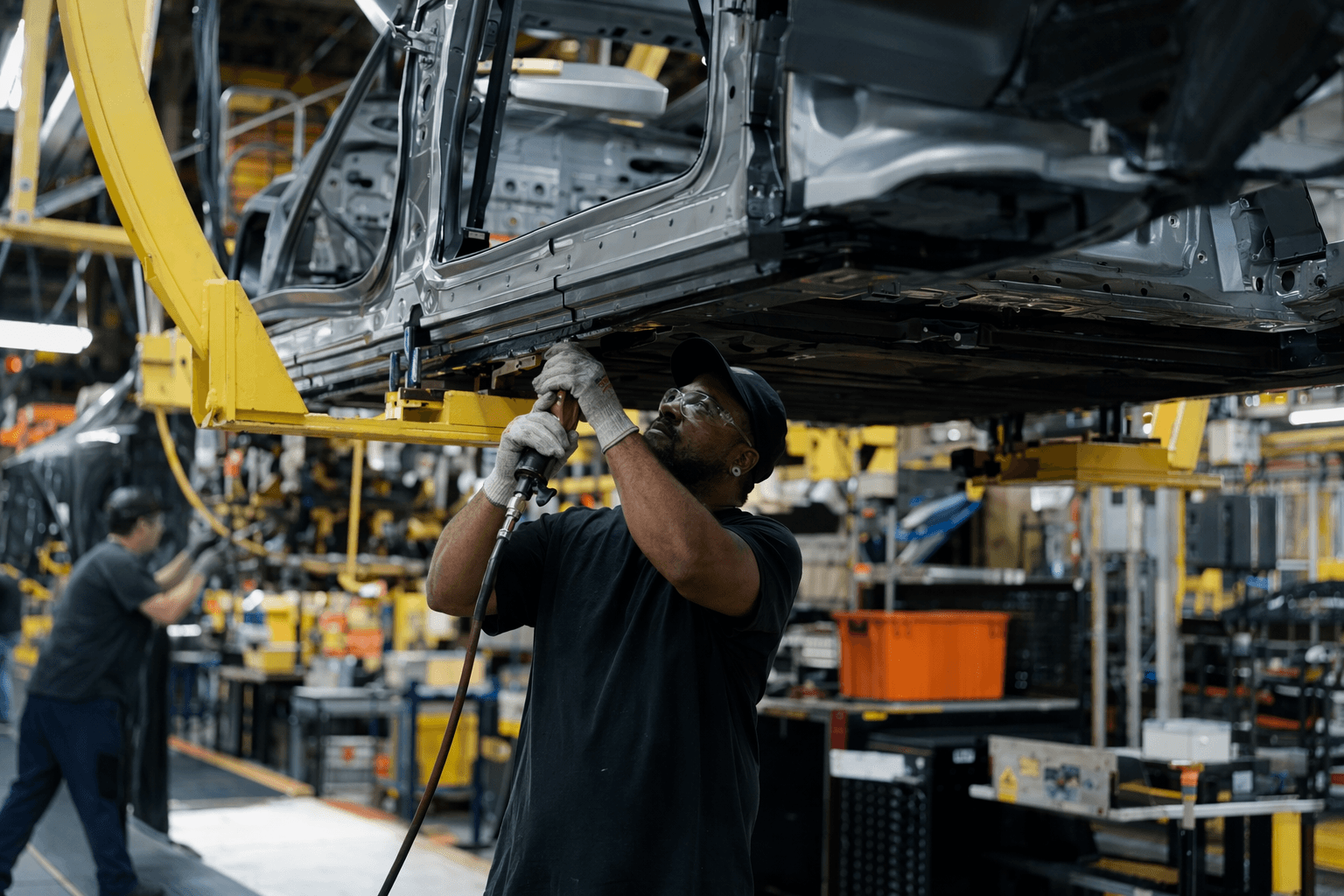
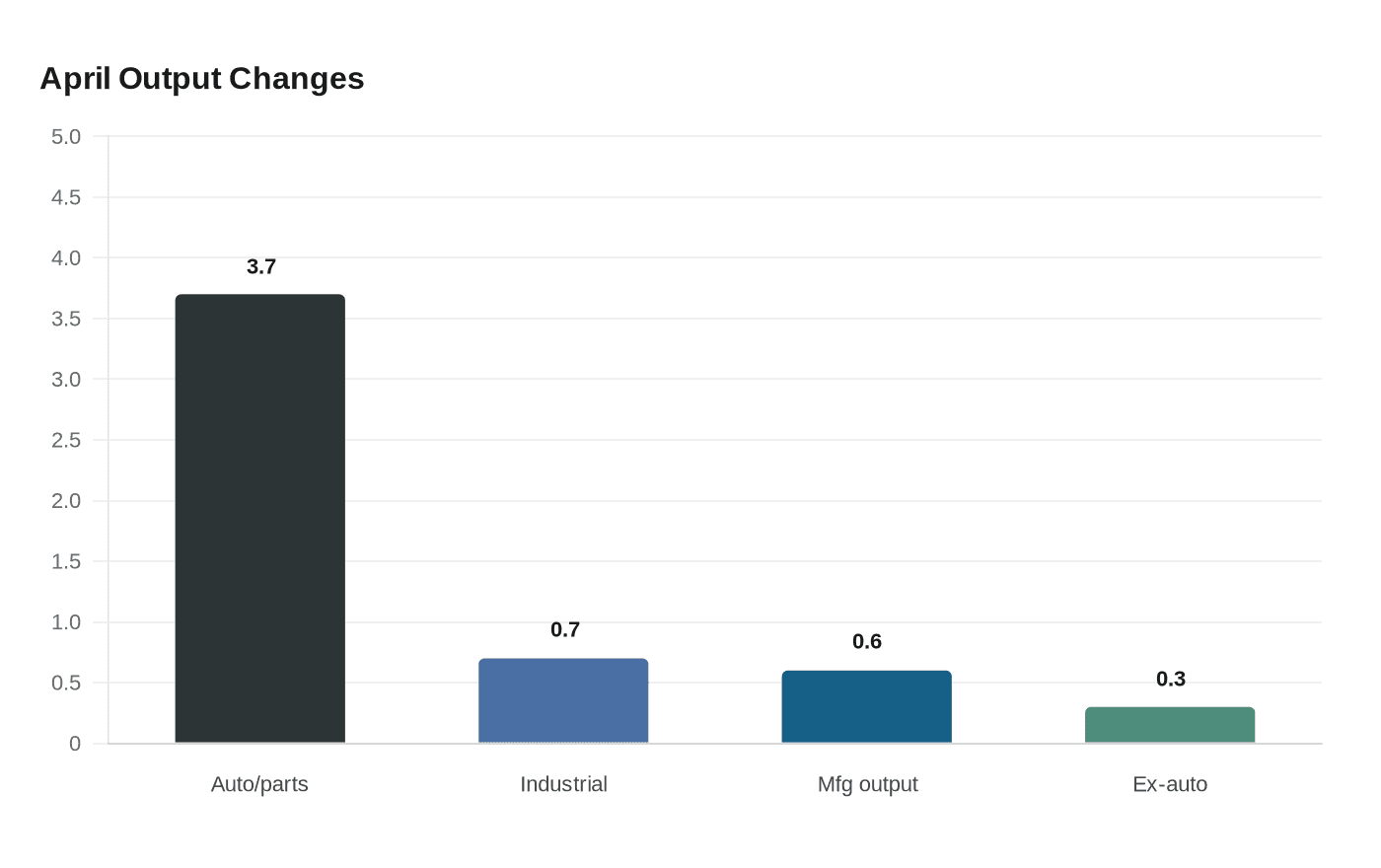
Motor-vehicle output jumped 3.7% in April, lifting U.S. factory production 0.6% and signaling strength that may be wider than autos alone.

Motor-vehicle output gave U.S. factories their biggest lift in more than a year, pushing manufacturing production up 0.6% in April and beating economists’ expectations for a 0.2% rebound. The Federal Reserve said auto and parts production rose 3.7% during the month, helping drive the strongest industrial gain in 14 months and extending a recovery after March’s revised 0.1% increase.
The report, released Friday, May 15, 2026, in Washington, D.C., showed a broader industrial economy that was still advancing, but not evenly. Total industrial production rose 0.7% in April after a revised 0.3% decline in March, while manufacturing output excluding motor vehicles and parts still increased 0.3%. That detail matters: the April rise was not just an auto story, even if the auto sector accounted for the sharpest move.
Year over year, factory output was 1.3% higher in April, a sign that manufacturing activity remained above its level a year earlier despite uneven demand across sectors. Capacity utilization moved up to 76.1%, but that was still 3.3 percentage points below its long-run average, underscoring that factories had room to expand and were not operating at anything close to full stretch.
For investors and policymakers, the question is whether April marked the start of a steadier industrial upswing or a temporary boost concentrated in one of the economy’s most volatile categories. Auto production often swings sharply from month to month as inventories, supply chains and model-year changes ripple through assembly lines. A strong vehicle reading can therefore inflate the headline even when the rest of manufacturing is moving more modestly.
That broader debate is complicated by the external risks hanging over the sector. Reuters noted that supply disruptions from the war with Iran were casting a shadow over manufacturing, raising the possibility that energy, shipping and input costs could weigh on output in coming months. April’s strength suggests manufacturers were still able to produce more goods despite that uncertainty, but the same factories that helped lift the headline could face a rougher path if those disruptions deepen.
The April figures leave the U.S. industrial sector with a mixed signal: enough momentum to beat forecasts, but still enough slack and external risk to keep the rebound from looking fully secure.
This article was produced by Prism’s automated news system from verified source data, official records, and press releases, then run through automated quality and moderation checks before publishing. The system is built and supervised by the people who set the standards it runs under. Read our full AI policy.
Did this article answer your question?

%3Amax_bytes(150000)%3Astrip_icc()%2FCertificate-of-deposit-2301f2164ceb4e91b100cb92aa6f868a.jpg&w=1920&q=75)
