U.S. Intel: China Planning Secret Air-Defense Weapons Shipment to Iran
U.S. intelligence flagged China's plan to deliver MANPADS and other air-defense systems to Iran within weeks, threatening to upend a fragile ceasefire and shift the region's air-war calculus.
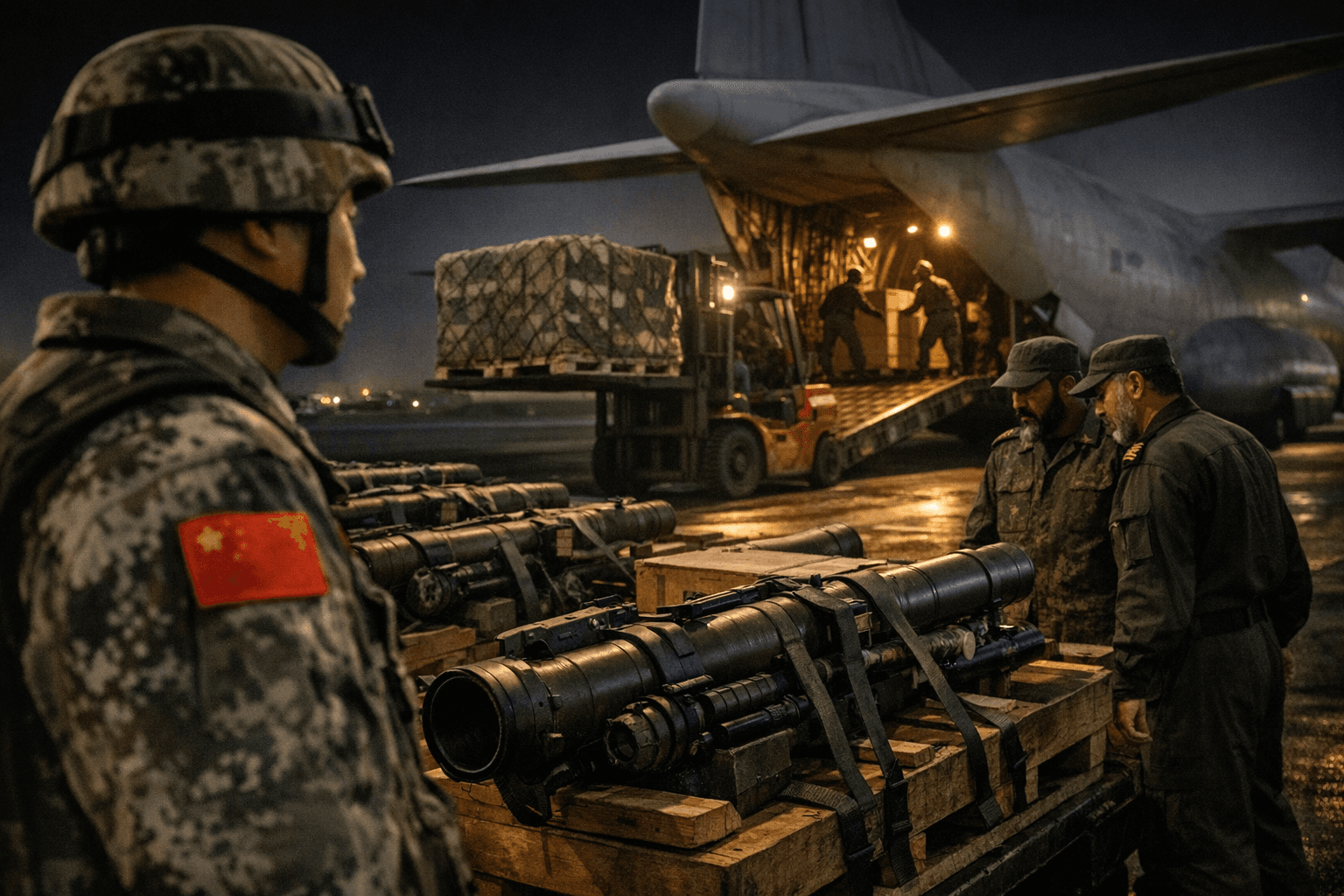
U.S. intelligence agencies identified preparations by China to deliver new air-defense systems to Iran, including shoulder-fired MANPADS and potentially larger platforms, with a delivery window of within the next few weeks, according to three people familiar with recent intelligence assessments. The finding arrived at a moment of particular sensitivity: just days earlier, an American F-15 was shot down over Iran after being struck by what President Trump described at a Monday press conference as a "handheld shoulder missile, a heat-seeking missile." Iran claimed a "new" air-defense system downed the jet but declined to specify its origin.
The timing sharpens the intelligence community's concern considerably. Whether that system was Chinese-manufactured remains unconfirmed, but the parallel between Iran's claimed capability and Beijing's alleged preparations was not lost on U.S. officials tracking the matter. The assessments indicated China intended to mask the shipments by routing them through third countries and intermediaries, a counter-detection technique that complicates both attribution and enforcement. U.S. officials said they were monitoring ship movements and transactional channels for signs of movement.
China's embassy in Washington flatly rejected the intelligence picture. "China has never provided weapons to any party to the conflict; the information in question is untrue," a spokesperson said. Days earlier, that same embassy had characterized Beijing's role differently, saying China had "been working to help bring about a ceasefire and end to the conflict" since the U.S.-Israel-Iran war began with coordinated airstrikes on February 28, 2026. The ceasefire, brokered through Pakistani mediation, obligates Iran to guarantee what the agreement terms a "COMPLETE, IMMEDIATE, and SAFE OPENING" of the Strait of Hormuz while negotiations continue.
The strategic stakes embedded in the intelligence assessment are direct. MANPADS pose an asymmetric threat to low-flying aircraft and helicopters, and a confirmed transfer to Iran would materially complicate air operations for Israeli, Gulf-state, and U.S. forces operating in or near Iranian airspace. Sources noted Beijing could assert that air-defense systems are inherently defensive, differentiating its posture from Russia's, which has provided Iran with intelligence sharing throughout the conflict. That framing, if invoked, would test Washington's willingness to draw a hard line between offensive and defensive hardware.
For the broader diplomatic effort to stabilize the region, the prospect of a Chinese-supplied air-defense upgrade carries cascading implications. Iran already sells China the bulk of its sanctioned oil, and Chinese companies have continued supplying navigation system components to Iranian forces. A direct government-to-government transfer of weapons systems, even defensive ones, would represent a qualitative escalation in Beijing's material involvement. Western diplomats told reporters that any confirmed transfer would trigger intensive diplomatic responses and potentially secondary sanctions targeting the financial and customs pathways used to route the equipment.
The intelligence community was careful to note that assessments remain incomplete. Whether Beijing's planning reflected final decisions or a set of contingency options under review was not resolved. The State Department, the White House, and China's foreign ministry had all declined to publicly confirm or deny the intelligence judgments as of the time of reporting. The use of third-party logistics, analysts noted, was precisely designed to preserve that ambiguity, shifting the burden of proof onto the allied intelligence-sharing architecture at the worst possible moment for ceasefire diplomacy.
This article was produced by Prism’s automated news system from verified source data, official records, and press releases, then run through automated quality and moderation checks before publishing. The system is built and supervised by the people who set the standards it runs under. Read our full AI policy.
Did this article answer your question?


