U.S. investigates cyclospora outbreak as 72 people fall ill
Federal officials were probing a cyclospora outbreak that sickened 72 people, with no product or state links identified yet. The parasite can cause severe diarrhea.
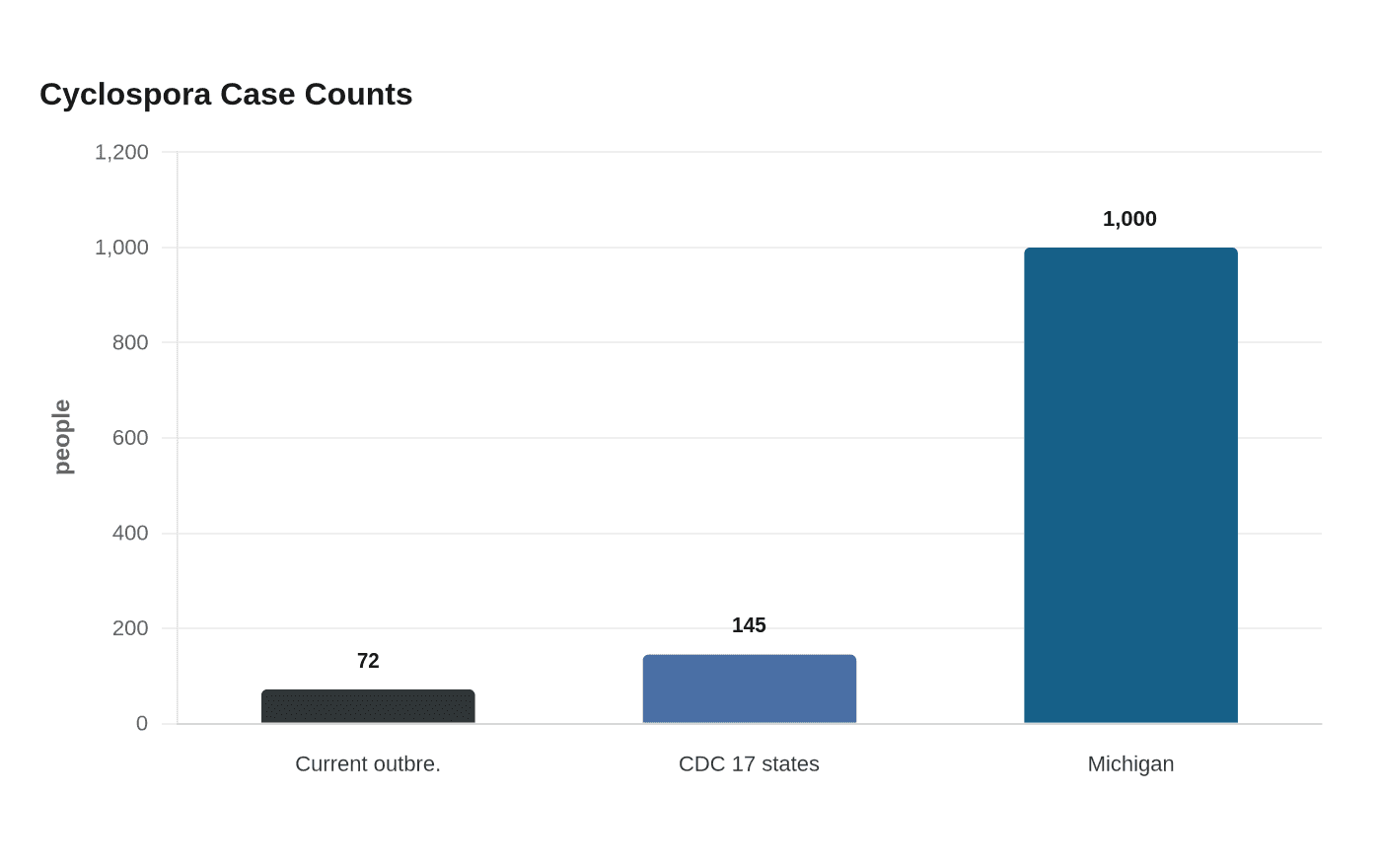
Federal health officials were investigating a cyclospora outbreak that had sickened 72 people, with the Food and Drug Administration still unable to identify the product or products tied to the illnesses. Officials had not said where the cases were located, leaving investigators to sort out a parasite that can move through fresh produce before the source is clear.
Cyclospora is a microscopic parasite that spreads through contaminated food or water and can cause severe diarrheal illness. Patients often mistake the first symptoms for a common stomach bug, which makes outbreaks harder to trace because sick people may not connect their illness to a shared meal or a single grocery item.
That delay matters because contaminated produce can move quickly through restaurants, grocery chains and imported supply lines. Public-health investigators typically have to compare where patients live, when they became ill and what they ate before they fell sick, then work with federal regulators to test foods and inspect the supply chain. When the source is finally identified, retailers may pull products from shelves and consumers may be told to throw out specific items or seek care if they develop diarrhea or dehydration.
Cyclospora has already caused larger, multi-state problems this year. CDC surveillance data have counted at least 145 cases across 17 states, with 20 hospitalizations, underscoring how far a foodborne parasite can travel before it is recognized. In Michigan, health officials said nearly 1,000 people had been diagnosed with the infection, the largest outbreak in that state’s history and one of the nation’s largest in years.
The outbreak also lands against a thinner federal tracking net. In 2025, FoodNet, the CDC-led Foodborne Diseases Active Surveillance Network, made cyclospora monitoring optional, a change that public-health advocates have warned could make it harder to spot clusters early. That is especially important for people most at risk from prolonged diarrhea, including older adults, young children and people with weakened immune systems.
For now, the open questions are basic but urgent: which food carried the parasite, where the patients are, and how many more people may be affected before investigators can close in on a source.
This article was produced by Prism’s automated news system from verified source data, official records, and press releases, then run through automated quality and moderation checks before publishing. The system is built and supervised by the people who set the standards it runs under. Read our full AI policy.
Did this article answer your question?