U.S. measles cases surge as vaccination gaps fuel outbreaks, deaths
Measles cases hit 1,792 by April 23, with a Texas-linked outbreak, three U.S. deaths in 2025 and a kindergarten vaccination drop leaving 280,000 children vulnerable.

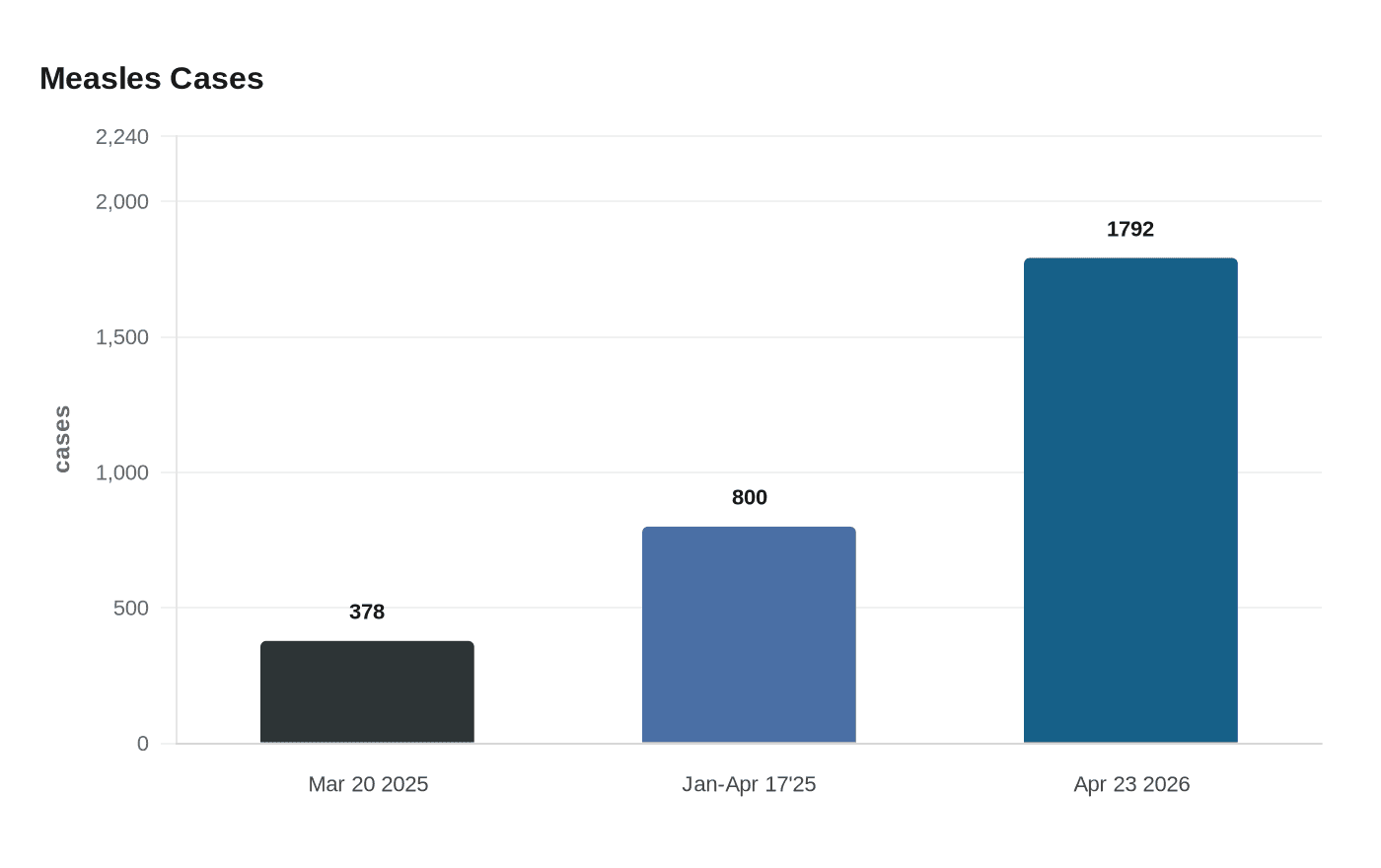
Measles has become a warning light for a broader breakdown in routine immunization, with the CDC counting 1,792 confirmed U.S. cases by April 23, 2026 after a West Texas outbreak that began in mid-January 2025 spread into New Mexico and other states. The virus is highly contagious, can linger in indoor air for up to 2 hours, and usually causes symptoms 7 to 14 days after infection. The United States declared measles eliminated in 2000, but that status can be lost if sustained transmission continues for 12 months.
The scale of the resurgence was already clear in early 2025. From January 1 to April 17, the CDC reported 800 measles cases, the second-highest annual total in 25 years. Eighty-two percent were tied to an ongoing outbreak in close-knit communities across New Mexico, Oklahoma and Texas. Eleven percent of patients were hospitalized, and three died. The World Health Organization later said 17 states had reported 378 cases by March 20, including two deaths, the first measles deaths in the United States in a decade.

Public health experts say the outbreak exposes a dangerous decline in vaccination coverage. Measles requires about 95% community vaccination to prevent spread, yet CDC-linked data cited by public health groups show kindergarten MMR coverage fell from 95.2% in the 2019-2020 school year to 92.7% in 2023-2024. That drop left about 280,000 children potentially susceptible. Researchers at Johns Hopkins Bloomberg School of Public Health, including Bill Moss, Jennifer Nuzzo, Mathew Kiang, Nathan Lo and Adam Ratner, have underscored how quickly a small decline in coverage can reopen chains of transmission that were once thought contained.
The institutional response now falls to the CDC, local health departments, the American Academy of Pediatrics and the World Health Organization, all of which have warned that misinformation, vaccine hesitancy and the erosion of trust in public health are helping drive the resurgence. The response also has had cross-border consequences: cases tied to the Texas outbreak were reported in Mexico, a reminder that gaps in one state can seed new clusters elsewhere. Local health departments are left to track exposures and rebuild confidence at the same time, even as new cases keep appearing.
The next test is whether the country can restore routine vaccination before measles becomes a marker for something larger. If confidence keeps slipping, physicians warn that other vaccine-preventable diseases, including rubella and polio, could find the same opening.
This article was produced by Prism’s automated news system from verified source data, official records, and press releases, then run through automated quality and moderation checks before publishing. The system is built and supervised by the people who set the standards it runs under. Read our full AI policy.
Did this article answer your question?