U.S. pressures Argentina and Chile to review Chinese telescope projects
A giant Chinese radio telescope in San Juan sat idle after customs delays, while Chile put a separate observatory park under review amid U.S. security warnings.

Great-power rivalry has landed in the Andes, where U.S. pressure pushed Argentina and Chile to scrutinize Chinese telescope projects that scientists say could have advanced astronomy but are now stalled by security fears and diplomatic suspicion.
In San Juan Province, the Chinese radio telescope at the CESCO observatory, described as the largest of its kind in South America, remained nonoperational after key parts were held at customs for about nine months. Argentina said procedural violations in renewing the deal with China kept the project from moving forward. U.S. officials repeatedly raised concerns with Argentine authorities that the telescope could be used to track U.S. satellites and communicate with Chinese ones, and the campaign began during the Biden administration and continued under Donald Trump.
The result has left Argentine astronomers caught between governments. Researchers had hoped the telescope could be shared with China and other countries, turning a remote installation into a multinational scientific asset. Instead, the project has become a test case for how national security concerns can interrupt research infrastructure before it ever reaches full operation.
Chile is facing a similar choice over the planned Ventarrones Astronomical Park in the Atacama Desert. Chile announced on March 19, 2025, that the project was under review and not canceled. The site, near Cerro Ventarrones in the Antofagasta region, sits in one of the world’s premier astronomical zones, where exceptionally dark skies have drawn observatories from across the globe.
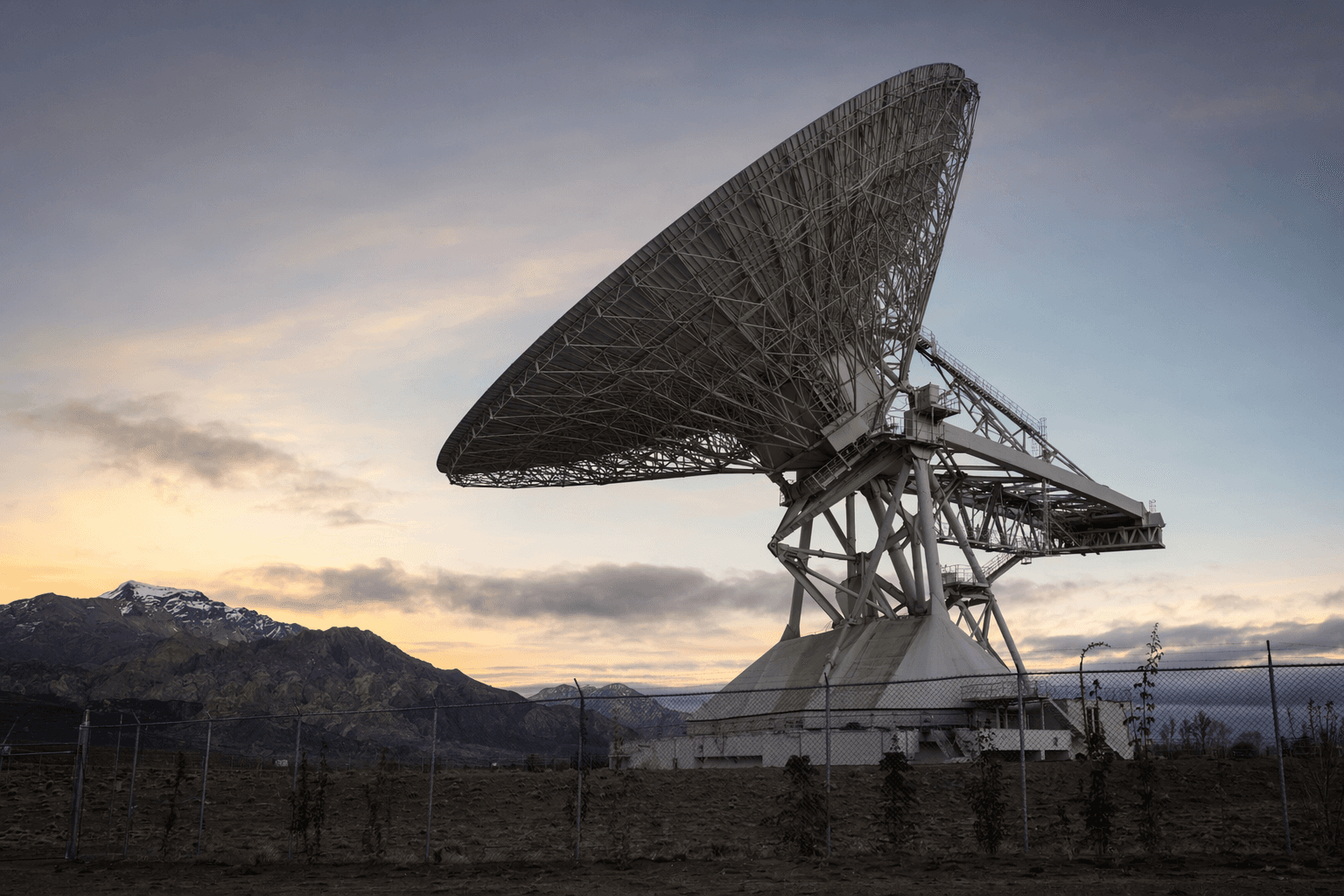
The Chilean project grew out of a broader understanding tied to Xi Jinping’s 2016 visit and a later 2023 agreement involving China’s National Astronomical Observatories, part of the Chinese Academy of Sciences, and the Universidad Católica del Norte. The Ministry of Foreign Affairs in Chile said the project was still under review, while the Chinese Embassy in Santiago described it as an open and transparent international initiative and accused some countries of interfering in legitimate technological cooperation.
U.S. officials and analysts have argued that China’s civilian space projects can have military uses, turning telescope arrays and communications links into points of strategic concern. That argument has gained traction as China has become the largest trading partner for several Latin American countries and expanded its reach through the Belt and Road Initiative.
For scientists in Argentina and Chile, the stakes are more immediate than abstract geopolitics. Access to the best skies in the Western Hemisphere is being shaped not only by astronomy, but by the widening contest over influence, technology and control in Latin America.
This article was produced by Prism’s automated news system from verified source data, official records, and press releases, then run through automated quality and moderation checks before publishing. The system is built and supervised by the people who set the standards it runs under. Read our full AI policy.
Did this article answer your question?