U.S. Proposes Iran Remove Enriched Uranium, Halt Missiles in Peace Deal
Iran rejected the U.S. 15-point peace plan as "maximalist and unreasonable," even as Trump claimed Tehran had already agreed to never pursue nuclear weapons.

Iran's government dismissed a U.S. 15-point peace proposal as "extremely maximalist and unreasonable" on Wednesday, even as President Donald Trump insisted in the Oval Office that Tehran "badly" wants a deal and has already agreed to never develop nuclear weapons, setting up a stark public contradiction at the center of diplomatic efforts to end a war that began February 28.
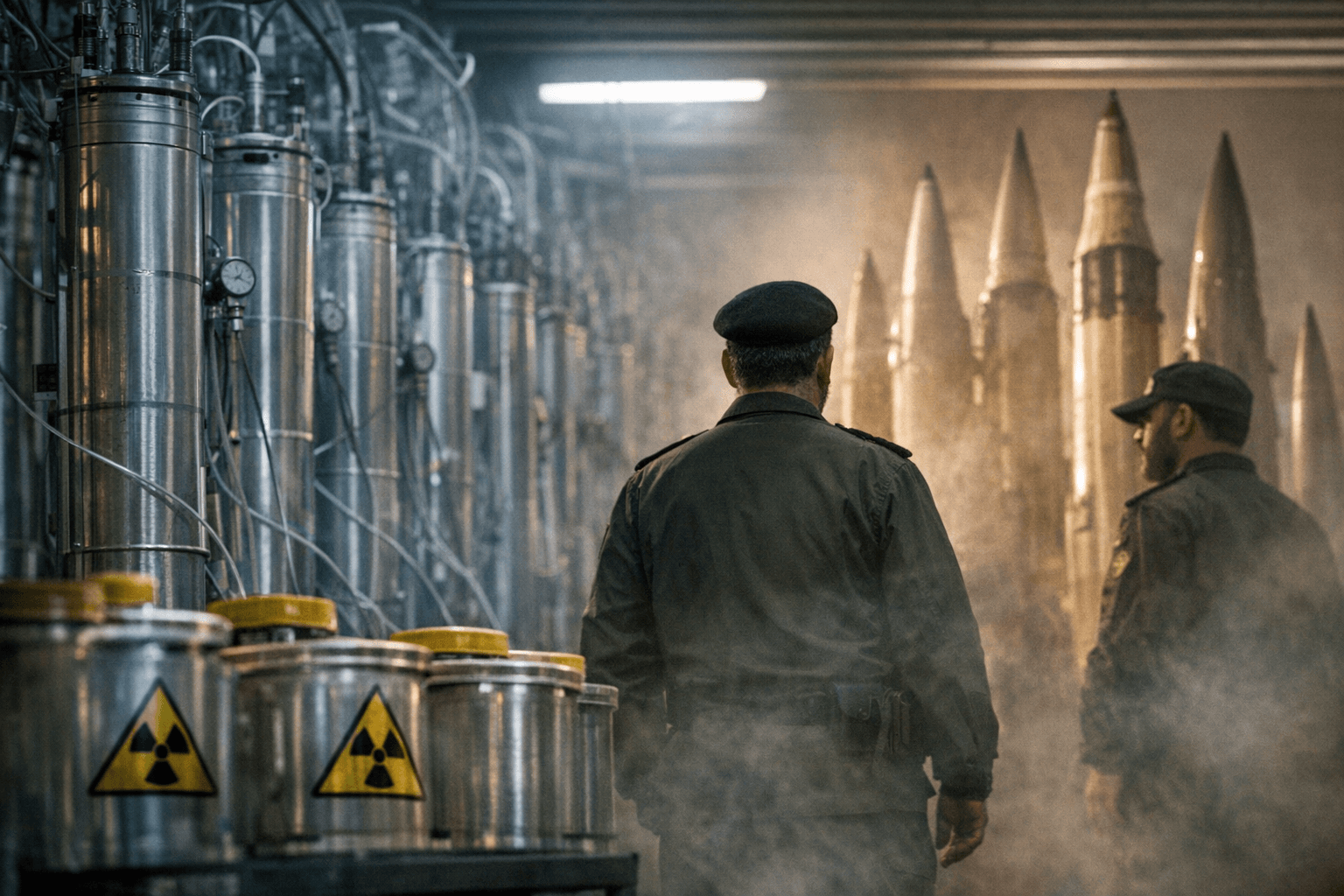
The proposal offered sanctions relief to Iran in return for the removal of all its enriched uranium and other U.S. demands, according to officials. Specifically, the plan required dismantling Iran's nuclear capabilities and requiring Iran to commit it will never pursue nuclear weapons, stopping uranium enrichment on its territory, and transferring enriched material to the International Atomic Energy Agency under an agreed timeline. Three of Iran's key nuclear facilities, Natanz, Isfahan, and Fordow, would be decommissioned.
Two officials from Pakistan described the 15-point U.S. proposal broadly, saying it addressed sanctions relief, a rollback of Iran's nuclear program, limits on its missiles, and the reopening of the Strait of Hormuz, through which a fifth of the world's oil and liquefied natural gas supplies are shipped. The plan also calls for limits on the range and number of Iran's missiles, ending Iran's support for regional proxies, and ending Iranian strikes on regional energy facilities. In exchange, all sanctions imposed on Iran would be removed alongside the UN mechanism that allows sanctions to be reimposed, and the U.S. would provide support for electricity generation at Iran's Bushehr civil nuclear plant.
Washington's proposal had been transmitted to Tehran via Pakistan. Israel's Channel 12, citing three unnamed sources, reported that the Trump administration was proposing a one-month ceasefire during which both sides would iron out the details of the proposal, similar to what happened in Gaza last year. Trump's special envoy Steve Witkoff and son-in-law Jared Kushner are reportedly leading that outreach, seeking Tehran's agreement to the monthlong pause before formal negotiations begin.
Trump made his most direct public claim about the state of talks while speaking to reporters. "We're actually talking to the right people, and they want to make a deal so badly, you have no idea how badly they want to make a deal," he said. He added that Iran had already agreed to relinquish nuclear ambitions: "They will never have a nuclear weapon. They've agreed to that." Trump also said the talks were being conducted with a "top person" but not Iran's supreme leader, a notable caveat given that it remains unclear who the U.S. would negotiate with, given a lack of clarity about Iran's power structure following the killing of Supreme Leader Ali Khamenei on the first day of the conflict.
Tehran offered a sharply different picture. A high-ranking diplomatic source confirmed that Iran received the 15-point plan from the United States, but told Al Jazeera that Tehran described it as "extremely maximalist and unreasonable," adding: "It is not beautiful, even on paper." Iran's state broadcaster Press TV cited an anonymous official saying Iran had rejected the proposal outright. Iran said it would negotiate over the status of its nuclear enrichment capabilities but not its missile program, and maintained that the Strait of Hormuz would not reopen until a peace deal was secured.
Iran also put forward its own five-point counterproposal: an end to the fighting, no further assassinations of its officials, a guarantee that no other war is started against it, reparations for the current conflict, and Iranian control over the Strait of Hormuz. Iranian President Masoud Pezeshkian framed his government's position starkly: "The only way to end this war was recognising Iran's legitimate rights, payment of reparations, and firm international guarantees against future aggression."
Despite publicly dismissing the White House's offer, some Iranian authorities are privately contemplating peace talks, with Iranian officials telling the New York Times that Tehran is considering meeting with U.S. negotiators in Islamabad to discuss Trump's proposal. Pakistan, Egypt, and Turkey have all pushed for the warring sides to come to the negotiating table.
White House Press Secretary Karoline Leavitt told reporters: "The president's preference is always peace. There does not need to be any more death and destruction." But she added that if Iran fails to accept "the reality of the current moment," Trump "will ensure they are hit harder than they have ever been hit before."
Trump has said he hopes to reach an agreement by Friday, though it is now unclear whether even an interim ceasefire remains under consideration following Iran's reported rejection. The gap between Washington's demand for full nuclear dismantlement and Tehran's insistence on reparations and Strait of Hormuz sovereignty suggests any deal, if one materializes, will require substantial concessions from both sides.
Know something we missed? Have a correction or additional information?
Submit a Tip