U.S. Removes Russian Banker Zadornov From Sanctions List in Administrative Action
Treasury's removal of Mikhail Zadornov from the SDN list reveals how OFAC's quiet petition process can undo high-profile Russia designations, even as allies watch for signals.
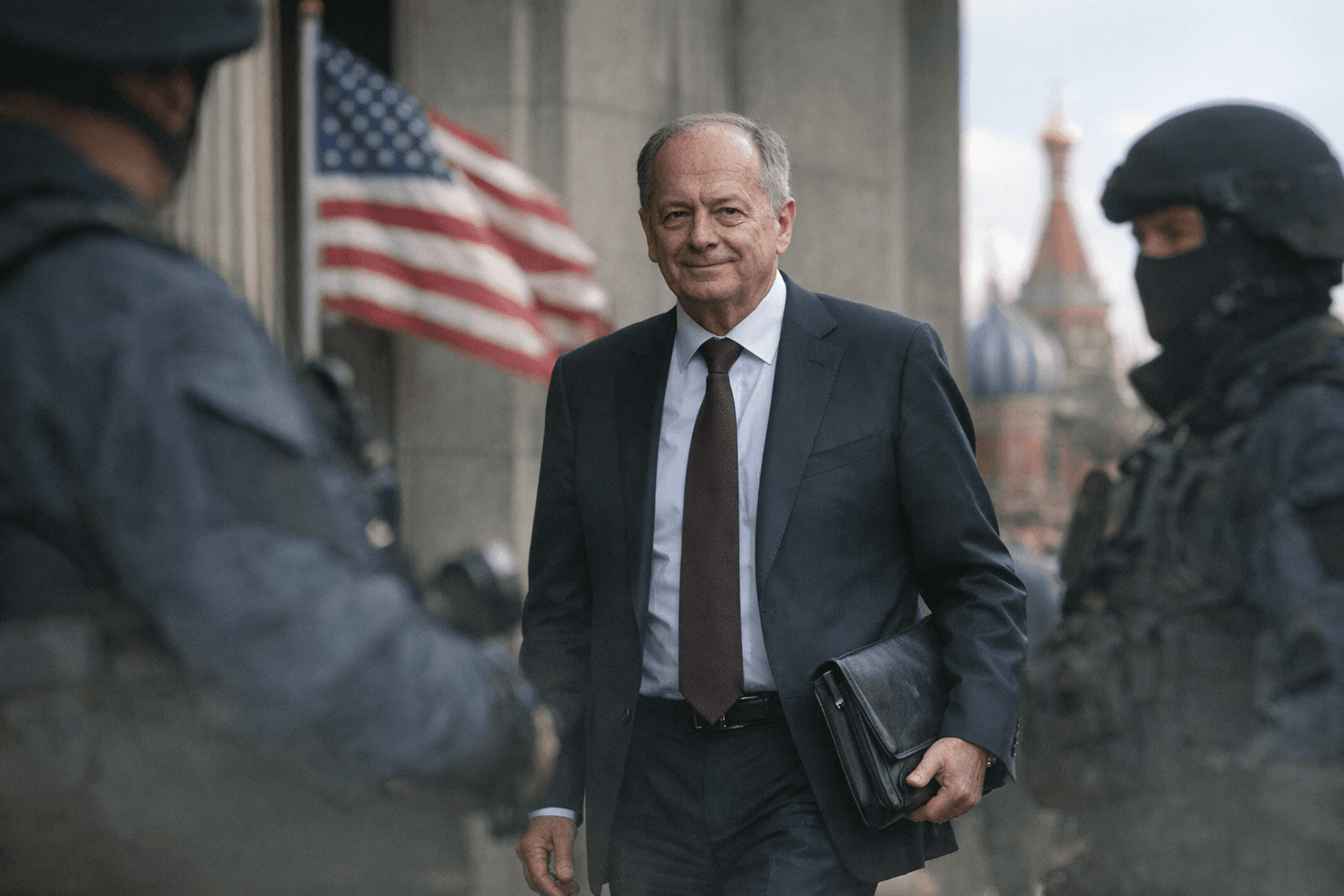
The U.S. Treasury's Office of Foreign Assets Control removed Mikhail Zadornov, a former Russian finance minister and longtime head of Otkritie Bank, from its Specially Designated Nationals list on April 3, making him the latest Russian figure to navigate successfully one of Washington's most consequential bureaucratic off-ramps.
Zadornov, born May 4, 1963 in Moscow and designated in February 2022 under Executive Order 14024 as Russia's full-scale invasion of Ukraine began, was listed specifically for his role leading Public Joint Stock Company Bank Financial Corporation Otkritie, which U.S. officials identified as a pillar of the Russian financial system. He served as Russia's finance minister from 1997 to 1999, including during the country's catastrophic August 1998 debt default, then helmed VTB24 from 2005 to 2017 before taking the top post at Otkritie. Treasury's public notice confirmed his removal on April 3. In 2024, Zadornov filed a lawsuit in a U.S. federal court seeking to have the designation lifted, arguing no sufficient basis existed for it. That legal pressure ran in parallel with the standard administrative reconsideration petition he filed with OFAC under 31 CFR § 501.807, the regulation governing SDN list removals.
That administrative pathway is narrow and heavily weighted toward OFAC's discretion. Under the regulation, a petitioner must submit arguments or evidence establishing either that insufficient basis existed for the original designation or that the circumstances behind it no longer apply. The State Department identifies four recognized grounds for delisting: a demonstrated positive change in behavior, the death of the designee, a finding that the original basis no longer exists, or a determination of mistaken identity. OFAC does not publish which criteria applied in any given case, and the Zadornov decision was no exception. No specific rationale was disclosed.
A U.S. official responded to Reuters by framing the action as routine. "Like the imposition of sanctions, removal of sanctions on persons, or delisting, is a tool to realize U.S. foreign policy goals," the official said, adding that the government routinely processes removal requests. A second source told Reuters the action was an individual administrative decision rather than a signal of broader policy change toward Moscow.
That framing, however, arrives in a context that complicates it. The Zadornov delisting is the latest in a series of Russia-related removals, following similar moves in late March. Each individual action may be defensible on procedural grounds, but the accumulation of delistings creates a pattern that Ukraine's allies and compliance officers at global banks are already parsing. Financial institutions that maintained screening alerts tied to Zadornov's name must now update their systems and re-examine what, if any, residual exposure they may have had. That recalibration is not trivial: sanctions compliance is not binary, and the removal of a name from the SDN list does not instantly resolve questions about prior transactions, counterparty relationships, or secondary exposure under other U.S. authorities.
Zadornov remains subject to sanctions in at least one other jurisdiction: the United Kingdom imposed a Director Disqualification Sanction on him as recently as April 9, 2025, meaning that his legal exposure in international markets has not been uniformly resolved. Otkritie Bank itself, the institution most directly linked to his original U.S. designation, remains on the SDN list under EO 14024.
The procedural framing of the Zadornov removal as a case-specific correction is legally coherent, but geopolitically it lands at a moment of intense scrutiny over whether the United States intends to maintain the financial architecture of pressure it built against Moscow in 2022. Other sanctioned Russian figures with means and legal counsel are watching closely. For them, the Zadornov outcome demonstrates that the SDN list, long treated as a near-permanent designation for senior figures tied to Russia's financial establishment, can in fact be exited through persistent legal strategy, even without a public change in the behavior that originally triggered the listing.
This article was produced by Prism’s automated news system from verified source data, official records, and press releases, then run through automated quality and moderation checks before publishing. The system is built and supervised by the people who set the standards it runs under. Read our full AI policy.
Did this article answer your question?


