U.S. Troop Presence in Saudi Arabia Gains Scrutiny Amid Iran War
Sgt. Benjamin N. Pennington, 26, died after a March 1 Iranian strike on Prince Sultan Air Base; more than 300 U.S. troops have since been wounded.

Army Sgt. Benjamin N. Pennington was 26 years old when he was wounded at Prince Sultan Air Base on March 1. He died days later, one of 13 U.S. service members killed since the Iran war began, and a human marker on a casualty count that crossed 300 this week.
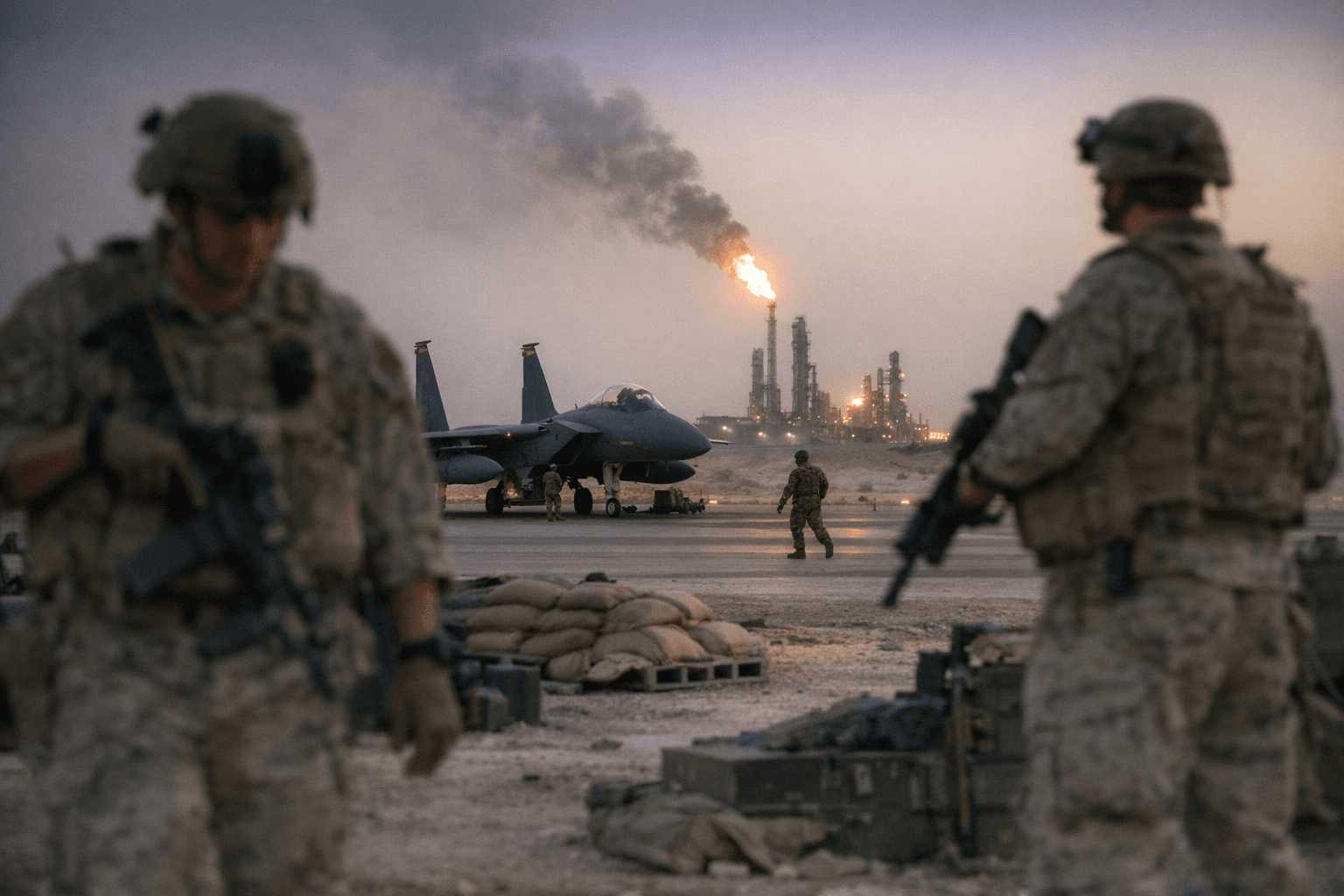
His death came at a base that has been under attack almost continuously since the conflict started. The installation, run by the Royal Saudi Air Force roughly 96 kilometers south of Riyadh, sits at the center of a growing question about how long American forces can absorb Iranian strikes on Gulf Arab soil. The war reached the one-month mark this weekend.
The latest Iranian strike on Prince Sultan Air Base wounded between 10 and 12 U.S. troops, two of them seriously, and damaged several U.S. refueling aircraft. A U.S. official familiar with the situation confirmed the attack involved an Iranian missile and unmanned drones. Satellite imagery appearing to show the damage circulated online before the official confirmation. More than two dozen U.S. troops were injured from attacks on the Saudi base in a single week. The overall toll now exceeds 300 wounded American service members, U.S. Central Command confirmed, though 273 of those injured had already returned to duty as of March 27.
Even as casualties mounted, the Pentagon moved additional forces into the region. Around 1,000 troops from an Army airborne unit were reported en route to the Middle East, with broader estimates placing the total reinforcement surge at several thousand.
President Donald Trump, speaking March 27 at a Miami event sponsored by the Saudi sovereign wealth fund, addressed both the war's toll and its diplomatic horizon. He criticized NATO's absence from the fight. "NATO made a terrible mistake when they wouldn't send a small amount of military armament, when they wouldn't just even acknowledge what we were doing for the world and taking on Iran," he said. He then cast doubt on Washington's mutual defense obligations to alliance members that had stayed on the sidelines. "Why would we be there for them if they're not there for us? They weren't there for us."
At the same event, Trump signaled a post-war diplomatic push. "It's now time," he said. "We've now taken them out, and they are out bigly. We got to get into the Abraham Accords." He called on Saudi Arabia and Israel to normalize ties once the fighting ended.
Rubio said the United States expected to wrap up its military operation in Iran within "weeks, not months" and believed it could achieve its goals without deploying ground forces.
Diplomacy moved in parallel with the fighting. Pakistan, which signed a defense treaty with Saudi Arabia last year, delivered a 15-point peace plan proposed by Washington to Tehran. Foreign ministers from Egypt, Turkey, Saudi Arabia and Pakistan met in Islamabad to discuss de-escalation. Pakistani defense analyst Lt. Gen. (Ret.) Muhammad Saeed told CNN the talks were unlikely to produce a "quick breakthrough."
The conflict's reach extended well beyond the Saudi base. Kuwait reported "material damage" to Shuwaikh Port in Kuwait City and the nearby Mubarak Al Kabeer Port, which is under construction as part of China's Belt and Road initiative, in what appeared to be one of the first strikes on a Chinese-affiliated project in the Gulf. Bahrain extinguished a fire at a targeted facility. The UAE said its defense teams engaged Iranian missiles and drones early on March 28. In Lebanon, two people were killed. Saudi Arabia's Defense Ministry said it shot down missiles and drones targeting Riyadh. China has continued purchasing Iranian crude throughout the conflict.
Know something we missed? Have a correction or additional information?
Submit a Tip

