Vietnam expands South China Sea island-building, narrows gap with China
Vietnam added 534 acres of new land in the Spratlys in a year, pushing its total to 2,771 acres and closing the gap with China.
Vietnam has pushed its South China Sea reclamation campaign deeper into the disputed Spratly Islands, adding 534 acres of artificial land over the past year and widening a network of harbors, hardened facilities and other military-support infrastructure across every feature it controls.
The Asia Maritime Transparency Initiative at the Center for Strategic and International Studies said Vietnam’s total reclaimed land in the Spratlys now stands at about 2,771 acres, with total reef destruction, including landfill-covered reefs and dredged channels and harbors, reaching roughly 4,120 acres. China still holds the larger footprint, with about 5,460 acres of artificial land in the archipelago and 6,224 acres of reef destruction, but the Vietnamese buildout has accelerated enough to narrow the gap in a way that is drawing close comparison to Beijing’s earlier island-building campaign.
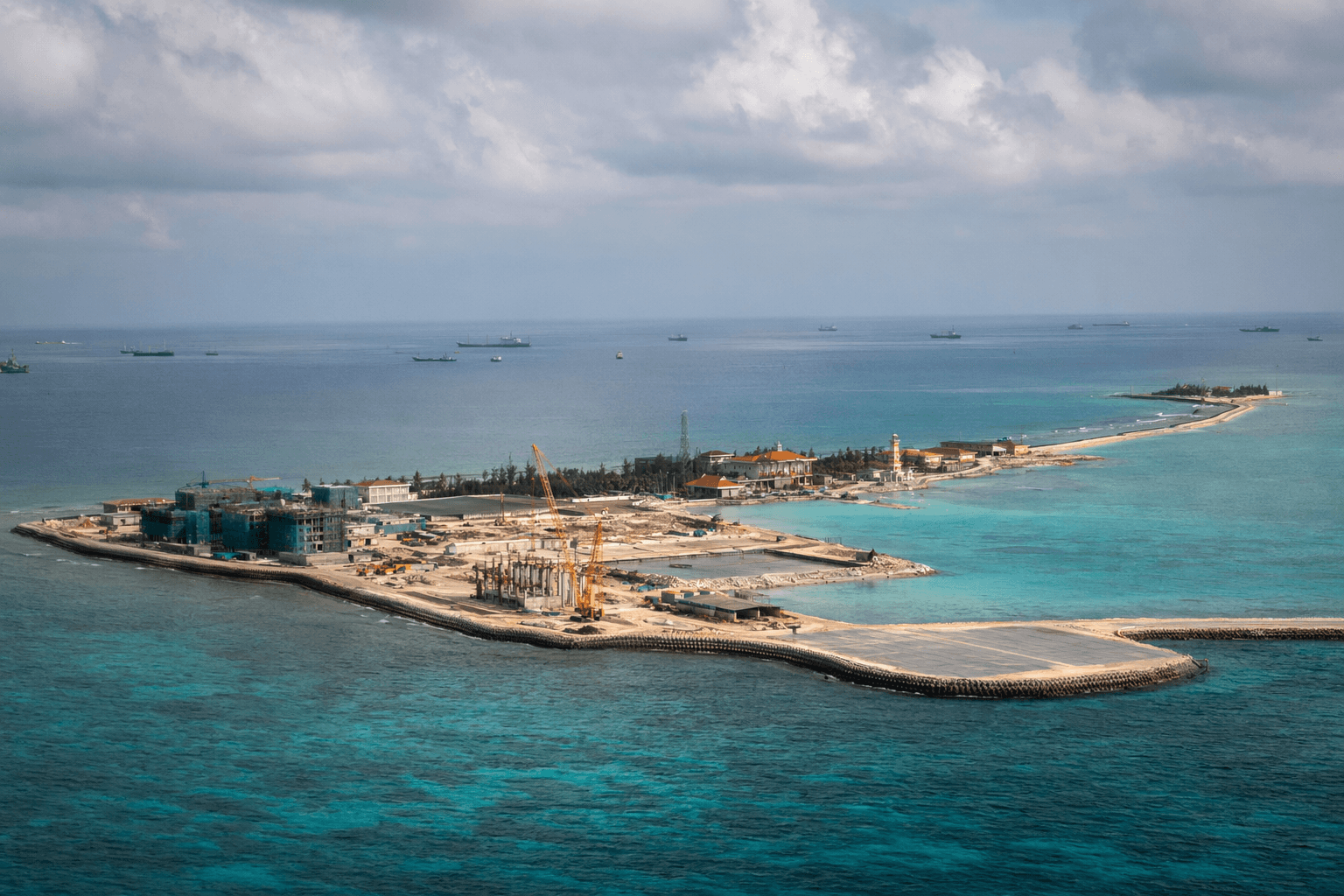
Barque Canada Reef has emerged as Vietnam’s largest base in the Spratlys, with landfill completed by spring 2025. Since then, smaller expansions have appeared at several other features, including Grierson Reef, Petley Reef and South Reef, while initial harbor construction is visible at Landsdowne Reef. AMTI said Vietnam now has 15 harbors in the Spratlys, up from four before 2021 at Sin Cowe Island, Southwest Cay, Spratly Island and West Reef. Eleven of those harbors have been created since 2021, a rapid expansion that changes how Vietnam can supply, patrol and sustain its outposts.
The buildout is not limited to docking facilities. AMTI said Barque Canada Reef is the only Vietnamese-held feature so far with the potential to host a 3,000-meter runway, while Vietnam’s existing Spratly airstrip remains the 1,300-meter runway on Spratly Island. The analysis also pointed to munitions-storage construction at several expanded reefs, including three depots at Barque Canada Reef, underscoring the military utility of infrastructure that can also support surveillance and logistics.
Vietnam’s reclamation now extends to all 21 reefs, shoals and sandbanks it controls in the Spratlys, part of a broader network of 49 to 51 outposts across 27 features in the South China Sea, including 14 DK1 platforms. The region remains strategically central because about one-third of global shipping passes through its waters, while competing claims from China, Taiwan, Vietnam, the Philippines, Malaysia and Brunei keep the dispute alive. China began its modern island-building drive in 2013, but Vietnam’s more recent push is now reshaping the same contest with quieter, incremental changes that alter the balance on the water and deepen the environmental cost.
This article was produced by Prism’s automated news system from verified source data, official records, and press releases, then run through automated quality and moderation checks before publishing. The system is built and supervised by the people who set the standards it runs under. Read our full AI policy.
Did this article answer your question?


