Vietnam Rice Output Cuts and Iran Tensions Fuel Global Food Supply Fears
Vietnam slashed rice export targets by 1 million tonnes as soaring energy costs squeeze farmers, while a fragile Hormuz ceasefire leaves global food supply on edge.
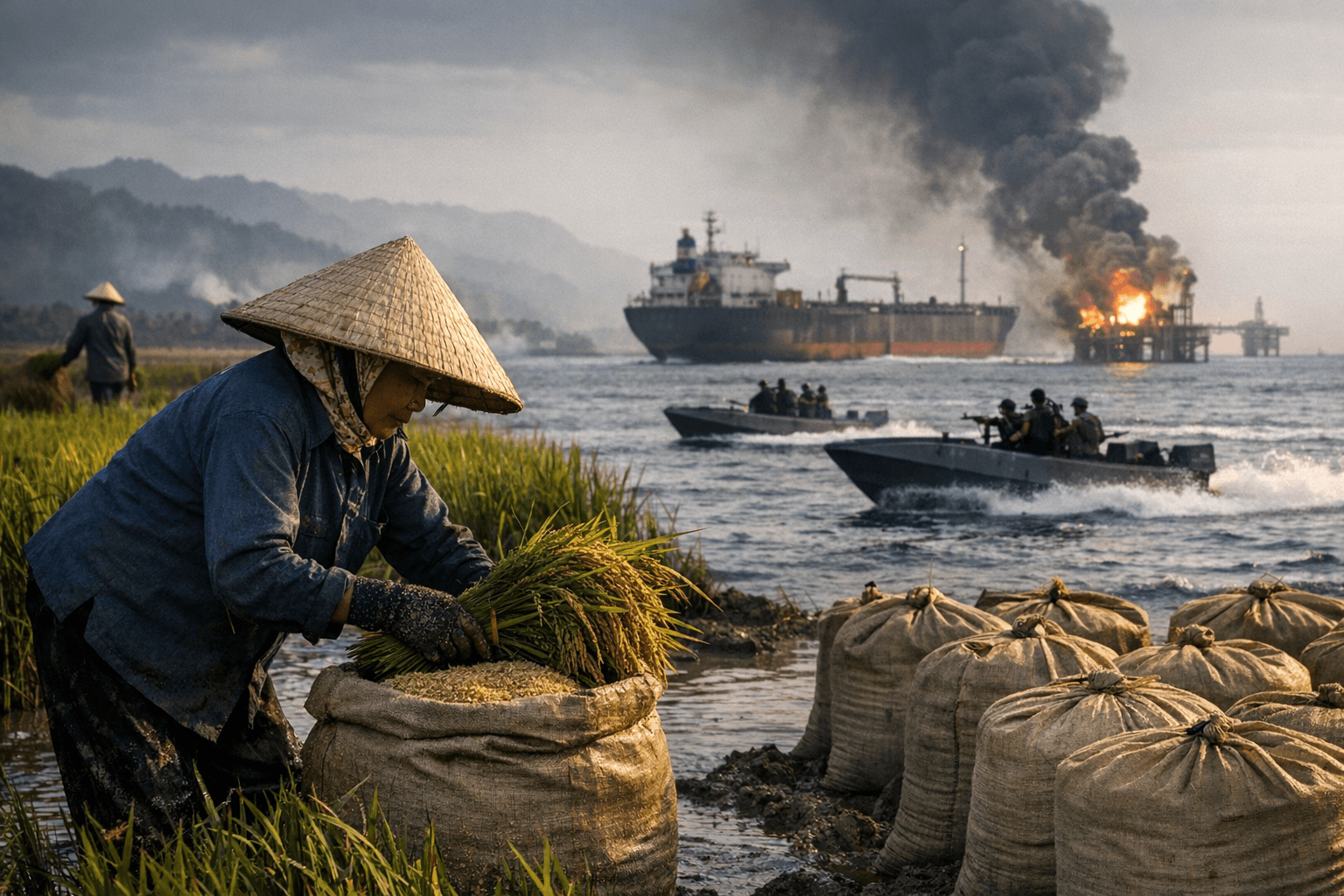
Vietnam's decision to reduce its rice export target to 7 million tonnes in 2026, down from 8 million tonnes last year, has landed at one of the worst possible moments for global food markets. The cut, announced by Do Ha Nam, chairman of the Vietnam Food Association, comes as surging energy costs driven by the Strait of Hormuz crisis have driven up every input cost in the country's rice production chain, from diesel-powered pumps in the Mekong Delta to the drones now widely used for seeding and fertilizer application.
The underlying problem, as agricultural analysts tracking Vietnam's sector have noted, is that the country's entire farming system runs on energy. Diesel prices in Vietnam soared roughly 70% as the conflict disrupted Gulf supply routes, and even the adoption of newer technologies offered no shelter. For the 2025-2026 winter-spring crop, planted area fell by more than 58,000 hectares nationwide, though modest efficiency gains kept total production roughly stable.
The broader trigger was the near-total closure of the Strait of Hormuz following joint U.S.-Israel strikes on Iran on February 28. The strait, which handles roughly one-third of global seaborne fertilizer trade, became a chokepoint that pushed phosphate and nitrogen-based fertilizer prices up between 20 and 45 percent, according to commodity analytics platform ChAI. Thailand, which imports more than 40 percent of its fertilizer through the strait, saw prices reach more than triple pre-crisis levels.
A two-week ceasefire announced on April 7 offered limited reassurance. As of Wednesday, ship-tracking data showed only about 11 vessels transiting the strait in the previous 24 hours, roughly 8 percent of normal daily traffic. Iran's Supreme National Security Council declared a victory; so did U.S. President Donald Trump. Formal negotiations between the two sides are set to begin April 10 in Pakistan, but Iran warned that "the war is not over."
The UN Food and Agriculture Organization has warned that a three-month window exists before risks "escalate significantly, affecting global planting decisions for 2026 and beyond." In the United States, food inflation stood at 3.1 percent in February, before the conflict erupted. The USDA's March projections, also drawn from pre-conflict data, forecast the same 3.1 percent average increase for the full year, a figure analysts say is almost certainly too low now.
The fertilizer crunch extends beyond the Gulf itself. Russia suspended exports of ammonium nitrate to protect its own supplies, while China blocked phosphate exports, removing roughly 25 percent of the global supply of that nutrient. Rice, wheat, and corn, all fertilizer-intensive crops, face the sharpest yield risks if producers worldwide have already cut back on application, as early surveys suggest many U.S. farmers have done.
Vietnam's export reductions and the Hormuz standoff are separate crises converging on the same pressure point: a global food system with little margin for simultaneous shocks. Even if the ceasefire holds through April 22, the food system, unlike oil markets, does not reset with a diplomatic announcement. Growing seasons run on their own calendar, and the planting decisions farmers are making right now will determine harvests months from now.
This article was produced by Prism’s automated news system from verified source data, official records, and press releases, then run through automated quality and moderation checks before publishing. The system is built and supervised by the people who set the standards it runs under. Read our full AI policy.
Did this article answer your question?


