Vote Reached Hours Before Trump's 8 p.m. Deadline to Reopen Waterway
Russia and China vetoed a UN Security Council resolution to reopen the Strait of Hormuz hours before Trump's 8 p.m. deadline, erasing the diplomatic path and raising the odds of U.S. strikes on Iranian infrastructure.
Russia and China killed the last viable diplomatic off-ramp at the United Nations on Tuesday, vetoing a Security Council resolution aimed at reopening the Strait of Hormuz just hours before President Trump's 8 p.m. Eastern deadline for Iran to unblock the waterway or face strikes on its power plants and bridges.
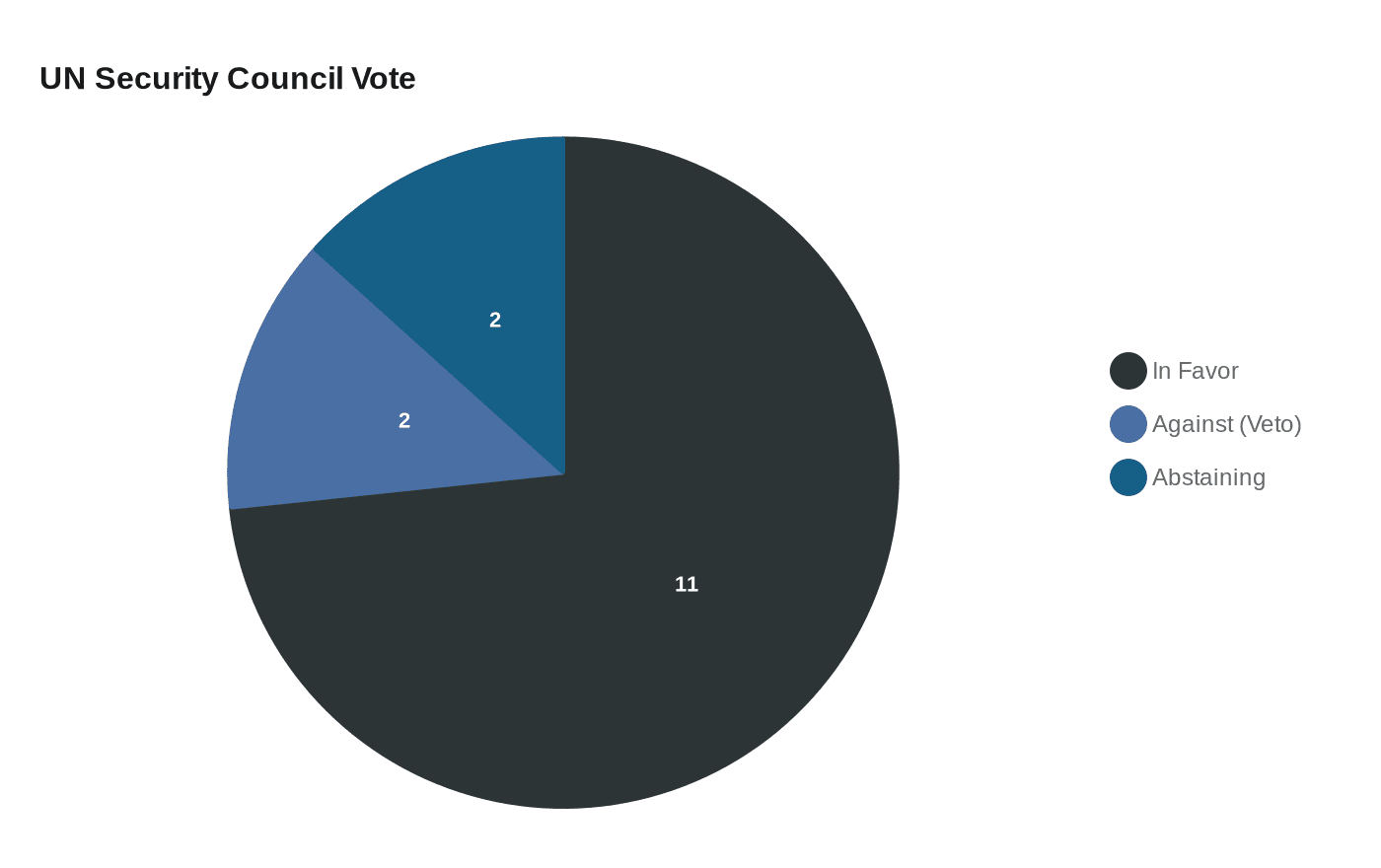
The vote was 11 in favor and 2 against, with Colombia and Pakistan abstaining. Because Russia and China hold permanent veto power on the 15-member Council, the measure failed despite broad support, including from the United States, France, the United Kingdom, and Bahrain, which led the resolution. The outcome leaves the United States and its allies with no multilateral legal cover for any naval operation to reopen the strait, now in its fifth week of effective closure.
The stakes for American consumers are direct and accelerating. One-fifth of the world's oil, roughly 20 million barrels per day, ordinarily passes through the Strait of Hormuz. Brent crude surpassed $100 per barrel on March 8 for the first time in four years and has since peaked at $126 per barrel, the largest supply disruption since the 1970s energy crisis, according to analysts tracking the conflict. U.S. gasoline prices crossed $4 per gallon, their highest level since late 2023, and Wall Street analysts have begun modeling scenarios in which oil reaches $200 per barrel if the closure persists. War-risk shipping insurance premiums have more than doubled for some tanker routes, rising from 0.125 percent to between 0.2 and 0.4 percent of a vessel's insured value per transit, an increase exceeding $250,000 per voyage for the largest oil tankers.
The resolution that failed Tuesday had already been stripped of its teeth in a final attempt to prevent a veto. An earlier draft authorized member states to use force to restore freedom of navigation. The version put to a vote Tuesday "strongly encourages" member states to "coordinate efforts, defensive in nature, commensurate to the circumstances," language designed to appeal to Moscow and Beijing. It was not enough. Bahrain's Foreign Minister Abdullatif bin Rashid al-Zayani, whose country chaired the session, said the vote "sends the wrong signal to the world." U.S. Ambassador Mike Waltz accused Russia and China of backing "a regime that seeks to intimidate the Gulf into submission."
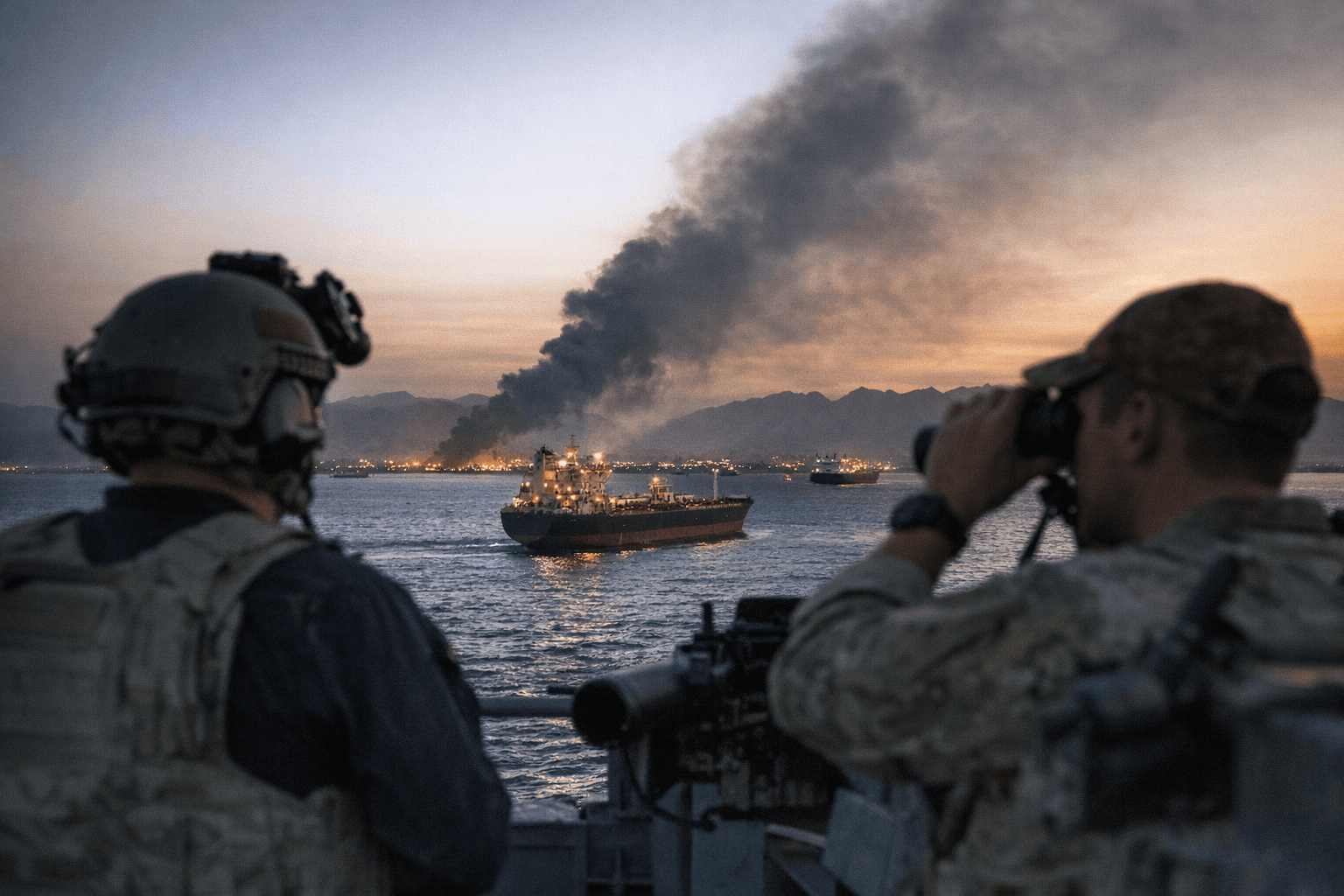
The veto closes off the U.N. track but does not eliminate action outside the Security Council framework. Seven American allies, including the United Kingdom, France, Germany, Italy, Japan, the Netherlands, and Canada, have signed a joint statement expressing readiness "to contribute to appropriate efforts to ensure safe passage through the strait" and to begin "preparatory planning." However, France, Germany, Italy, and Japan have each publicly ruled out deploying naval vessels to the strait, leaving the coalition's practical reach uncertain. Trump separately called on NATO members and oil-importing nations globally to send warships, warning that countries refusing to help would face "a very bad future."
Trump set the existential frame himself on Truth Social Tuesday morning, writing: "A whole civilization will die tonight, never to be brought back again. I don't want that to happen, but it probably will." Vice President JD Vance said Iran retains "two pathways" before the 8 p.m. deadline expires. The International Energy Agency has described the conflict's energy consequences as "the greatest global energy security challenge in history."
With the U.N. path now closed, the question is whether an improvised coalition of willing navies can accomplish what fifteen Security Council members could not agree to authorize.
This article was produced by Prism’s automated news system from verified source data, official records, and press releases, then run through automated quality and moderation checks before publishing. The system is built and supervised by the people who set the standards it runs under. Read our full AI policy.
Did this article answer your question?


