Voters say redistricting makes Congress less fair and democracy weaker
Most voters want fairer, more competitive House maps, yet GOP voters still favor Trump-aligned candidates, a split that keeps reform from sticking.
Voters say redistricting is making congressional elections less fair and U.S. democracy weaker, but the politics behind that judgment remain deeply partisan. A CBS News poll found that most Americans would prefer congressional districts that are more competitive and do not tilt toward either party, even as many Republican voters still want candidates who would back most or all of Donald Trump’s agenda.
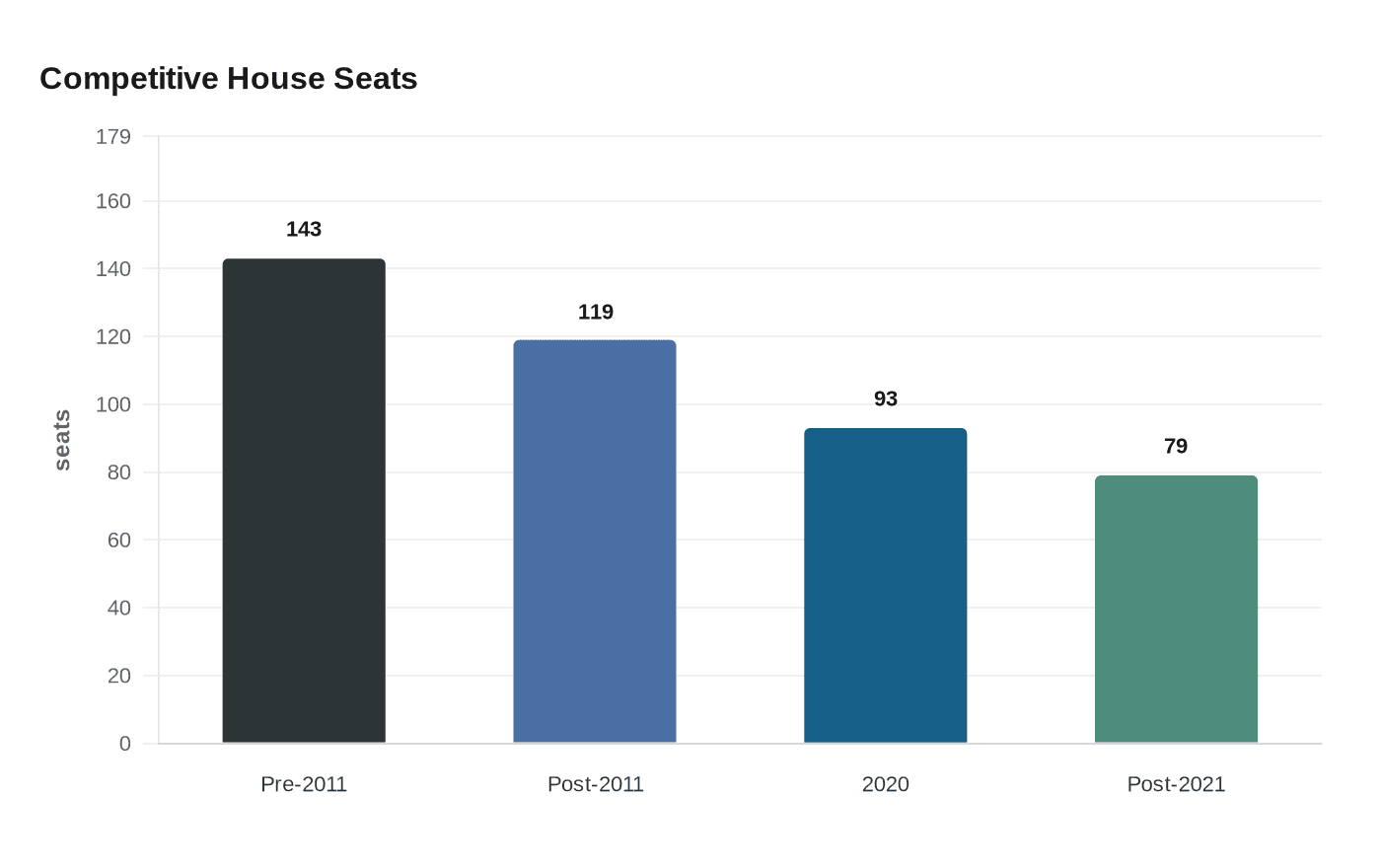
That contradiction sits at the center of the latest redistricting fight. The number of true swing districts has continued to shrink, and the newest map changes have made the landscape even less competitive. In the states that adopted new maps over the past year, the number of House seats with a presidential margin within 10 points in the 2024 election fell from 28 to 22, according to POLITICO analysis. The long slide is even clearer over time: there were about 143 competitive House seats before the 2011 redistricting cycle, about 119 after it, 93 in 2020 and 79 after the 2021 round of redistricting.
That decline matters because fewer competitive districts change how members of Congress behave. When a seat is safe, lawmakers often worry more about a primary challenge than a general election, which can pull them closer to ideological activists and away from bipartisan dealmaking. The Brennan Center for Justice estimated that partisan gerrymandering in the 2024 House map cycle gave Republicans an advantage of about 16 seats compared with fair maps, underscoring how line-drawing can shape the balance of power before a single vote is cast.
The fight over redistricting has also exposed how hard it is to turn reform into durable policy. The Freedom to Vote Act passed the House in 2022, but it stalled in the Senate when filibuster reform failed by two votes. Since then, both parties have kept pushing for maps that lock in advantage rather than competition. Virginia voters approved a referendum on April 21, 2026, allowing a 10-1 Democratic-leaning congressional map, while California’s redistricting plan shifted five GOP-held seats toward Democrats. Texas, Missouri and North Carolina also redrew their maps in ways that edged out at least one Democratic lawmaker.
The result is a system where voters can dislike gerrymandering in the abstract and still reward candidates who promise partisan loyalty. That tension helps explain why redistricting reform polls well as a democratic ideal, yet repeatedly collapses when it collides with the realities of power.
Know something we missed? Have a correction or additional information?
Submit a Tip