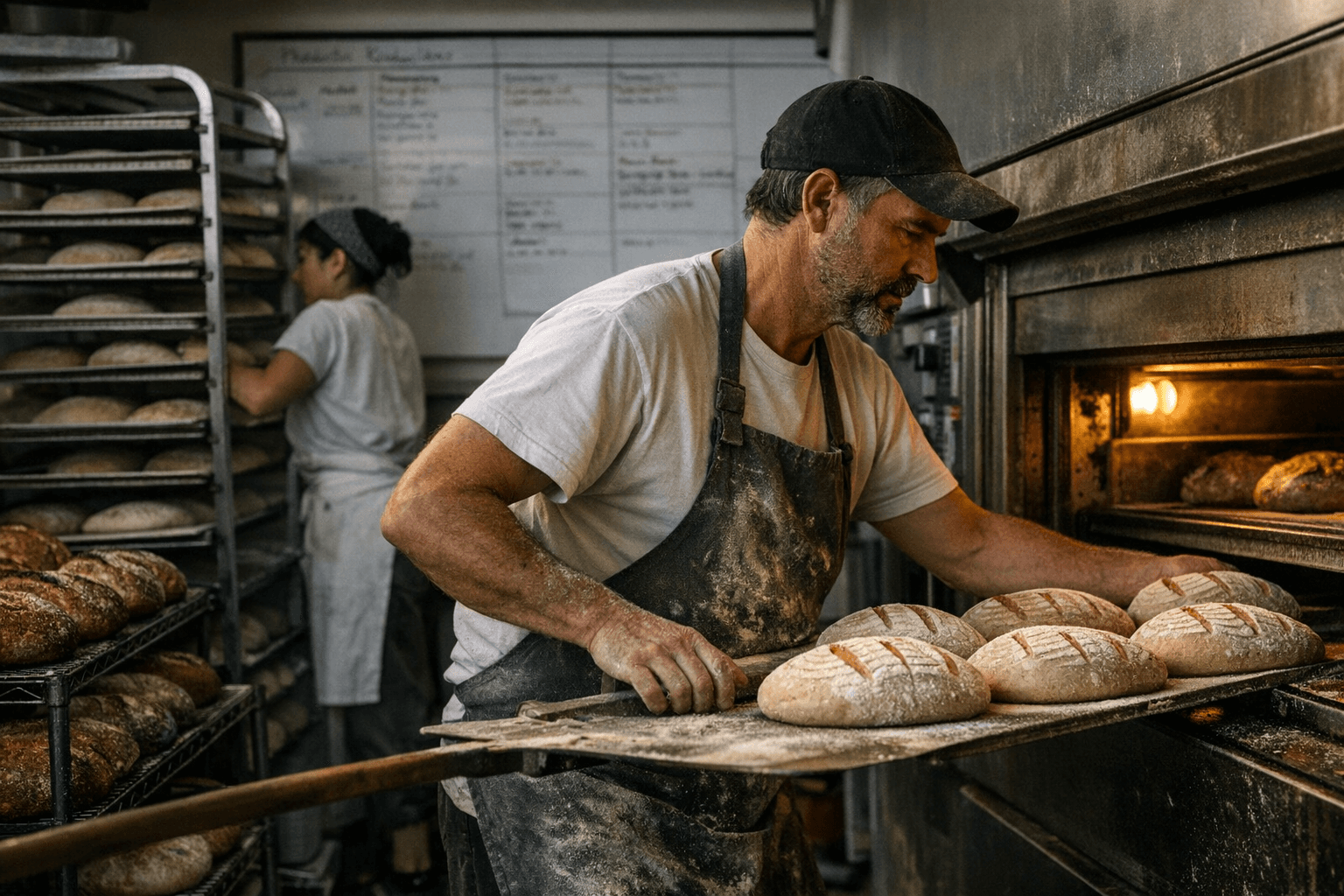
White sourdough demystified with flour choice, starter care, autolyse
Home bakers are choosing between fast, simple loaves and multi‑day, autolyse methods; flour protein, starter refresh and a thermostat matter for a crusty exterior and open crumb.
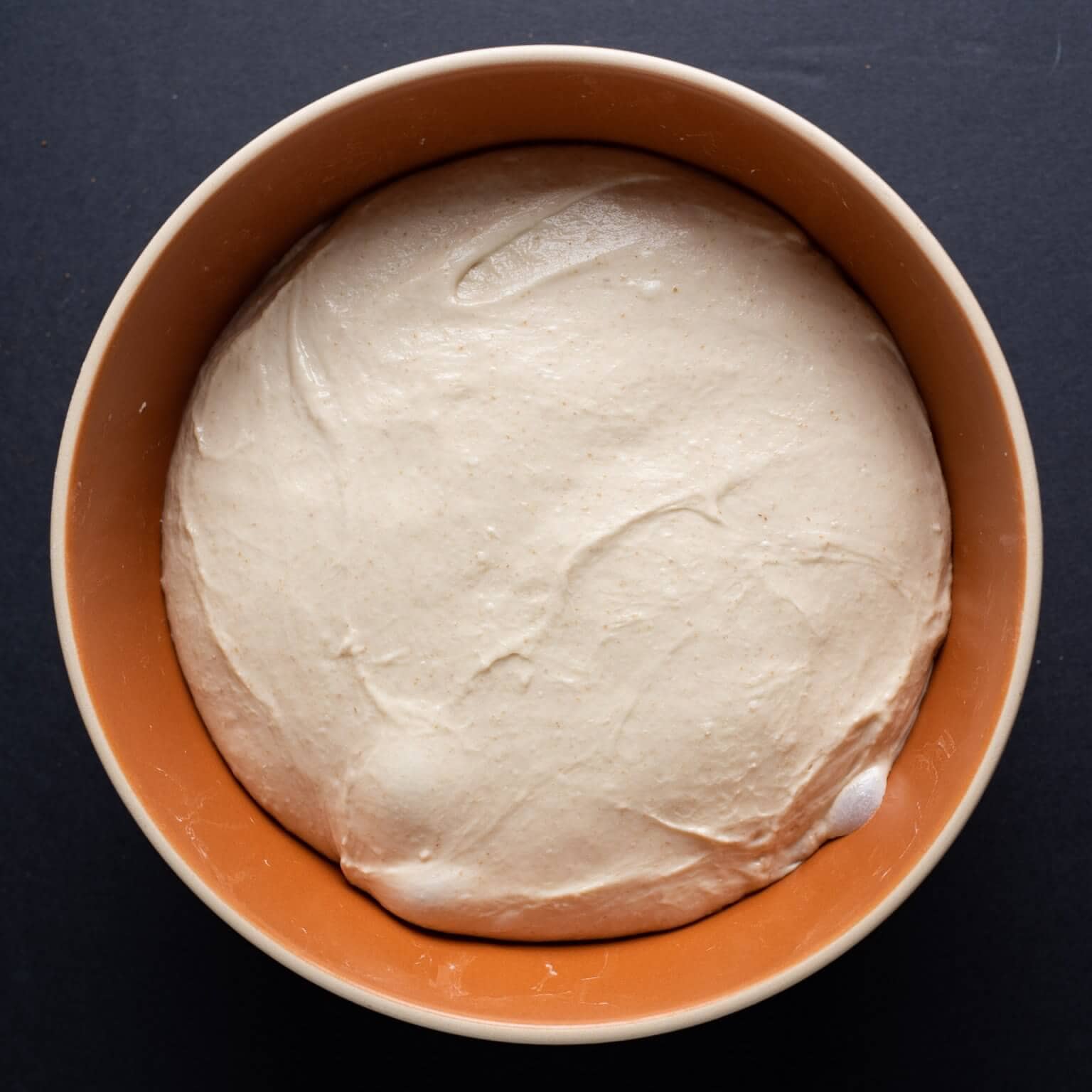
Natasha Krajnc’s beginner primer framed a common debate in home sourdough: which flour, which starter routine, and whether to autolyse. Her outline highlights flour selection, starter preparation and autolyse benefits, along with an unfinished note on “mixing and gentl” that mirrors the split in community practice between minimal and multi‑step methods.
Bakers now have three clear paths. Alexandra Cooks offers the quickest route: “There is no autolyse or preferment, which means the dough itself comes together in less than five minutes.” That recipe centers on 500 g bread flour, 375 g water, 50–100 g starter and 11 g salt, with a bench rest of 20‑40 minutes, a fridge proof of 12 to 48 hours, and a bake of 30 minutes covered at 450ºF followed by 15 minutes uncovered at 400ºF.
For those who want a middle ground, community posts on r/Sourdough provide a single‑loaf formula of 400 g strong white flour plus 100 g whole wheat, 350 g water and 100 g mature starter, and emphasize temperature control. One contributor wrote, “As the title suggests, I am a home baker who is relatively new to sourdough bread baking myself. This guide is specifically crafted to assist beginners in achieving their first delicious sourdough loaf.” That same thread recommends a starter refresh of 35 g starter, 35 g flour and 35 g water left at 75°F/25°C for about 4 hours and urges bakers to invest in a thermostat: “Investing in a simple thermostat, which can cost as little as $10, is highly recommended. Maintaining the right temperature is crucial for achieving the best results and producing delicious bread. Don't skip this essential tool for sourdough success.”
At the other end, the Cooking NYT approach prescribes a multi‑day refresh to energize refrigerated starter: decant 20 g, stir in 100 g water and 100 g flour, wait 10 to 12 hours until doubled, discard back to 20 g and feed again with 100 g water and 100 g flour before use. Its Day 2 autolyse mixes 700 g white bread flour with 300 g whole‑grain flour, adds 750 g lukewarm water, and rests at least 30 minutes to hydrate the flours before further work.
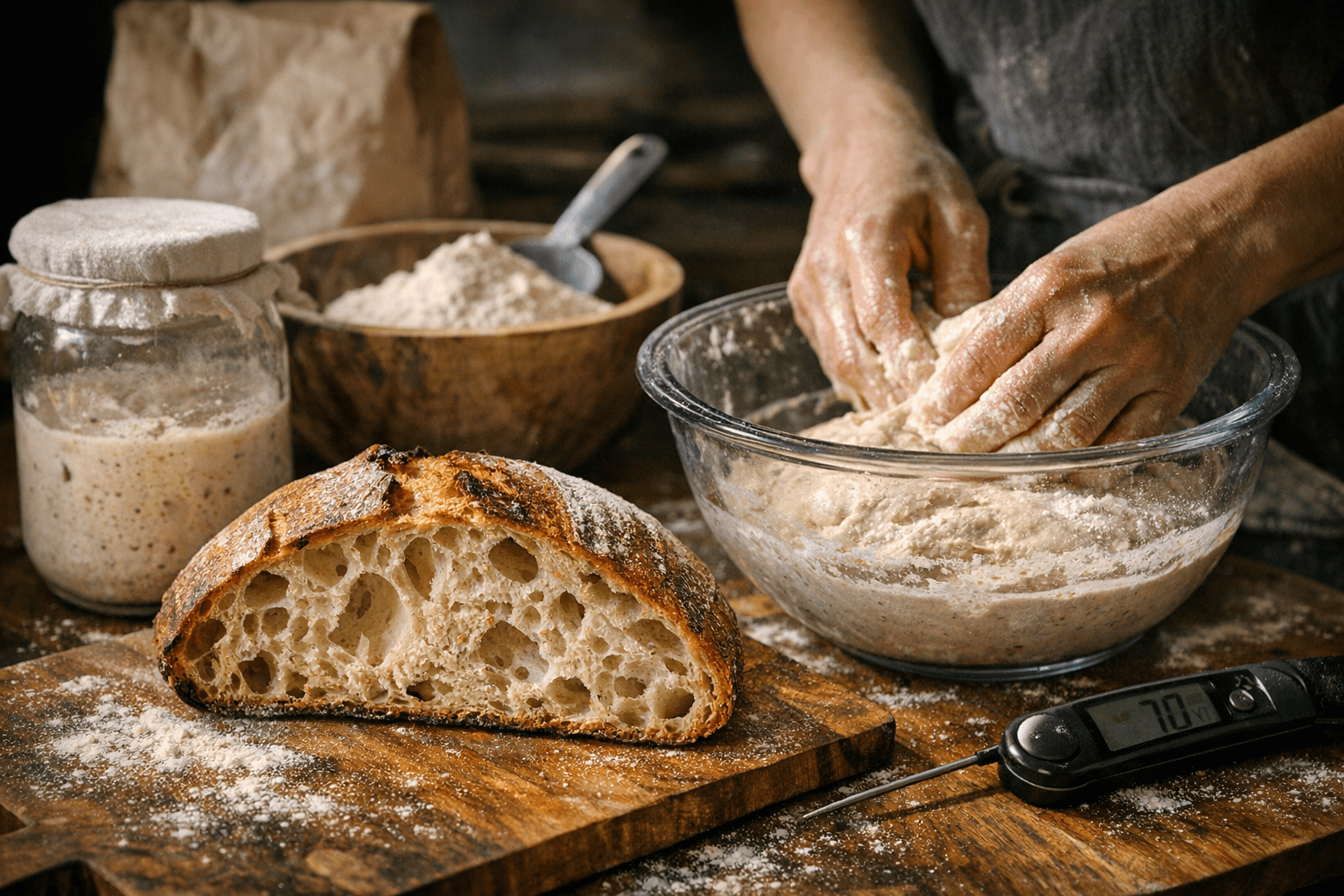
Mixing and hydration choices shape crumb. Reddit formulas sit near 70 percent hydration; Alexandra Cooks and NYT examples run about 75 percent. Little Spoon Farm recommends U.S. bread flour with 11.7% to 12.7% protein and advises, “We recommend using organic flour if possible because it is free from bleach, bromate and glyshophate, but any type of bread flour available and within your budget is ok to use!”
Tool recommendations are practical and specific: a banneton or bowl dusted with rice flour, a Dutch oven or covered baking vessel, a razor blade or bread lame for scoring, a digital scale and a small thermostat. For oven finish, TheCleverCarrot’s stepwise bake and doneness check remain useful: “Place the bread into the oven on the center rack (lid on) and reduce the temperature to 400° F/ 204° C. Bake for 20 minutes. Remove the lid, and continue to bake (uncovered) for an additional 40 minutes or until deep, golden brown. You can also take the internal temperature of your bread to double check that it is done. For sourdough, it should read about 205-210º F/ 96-98º C. Remove the bread from the oven, and cool on a wire rack for at least an hour before slicing. Don’t cut too soon or else the inside will have a damp and gummy texture.” That internal temperature is a reliable cross‑check across methods.
Choice matters: pick the method that fits your schedule and tolerance for steps. Use the thermostat and internal temperature to remove guesswork, match flour protein to the texture you want, and decide whether autolyse will buy you a more open crumb. Expect a tradeoff between hands‑on time and control, and then bake, cool for at least an hour, and share the results with your local sourdough community.
Know something we missed? Have a correction or additional information?
Submit a Tip