WHO and PAHO Launch Year-Long Campaign Urging Global Commitment to Science
WHO and PAHO launched a year-long "Stand with science" campaign on World Health Day, citing a 40% drop in maternal mortality since 2000 as proof of what global cooperation delivers.
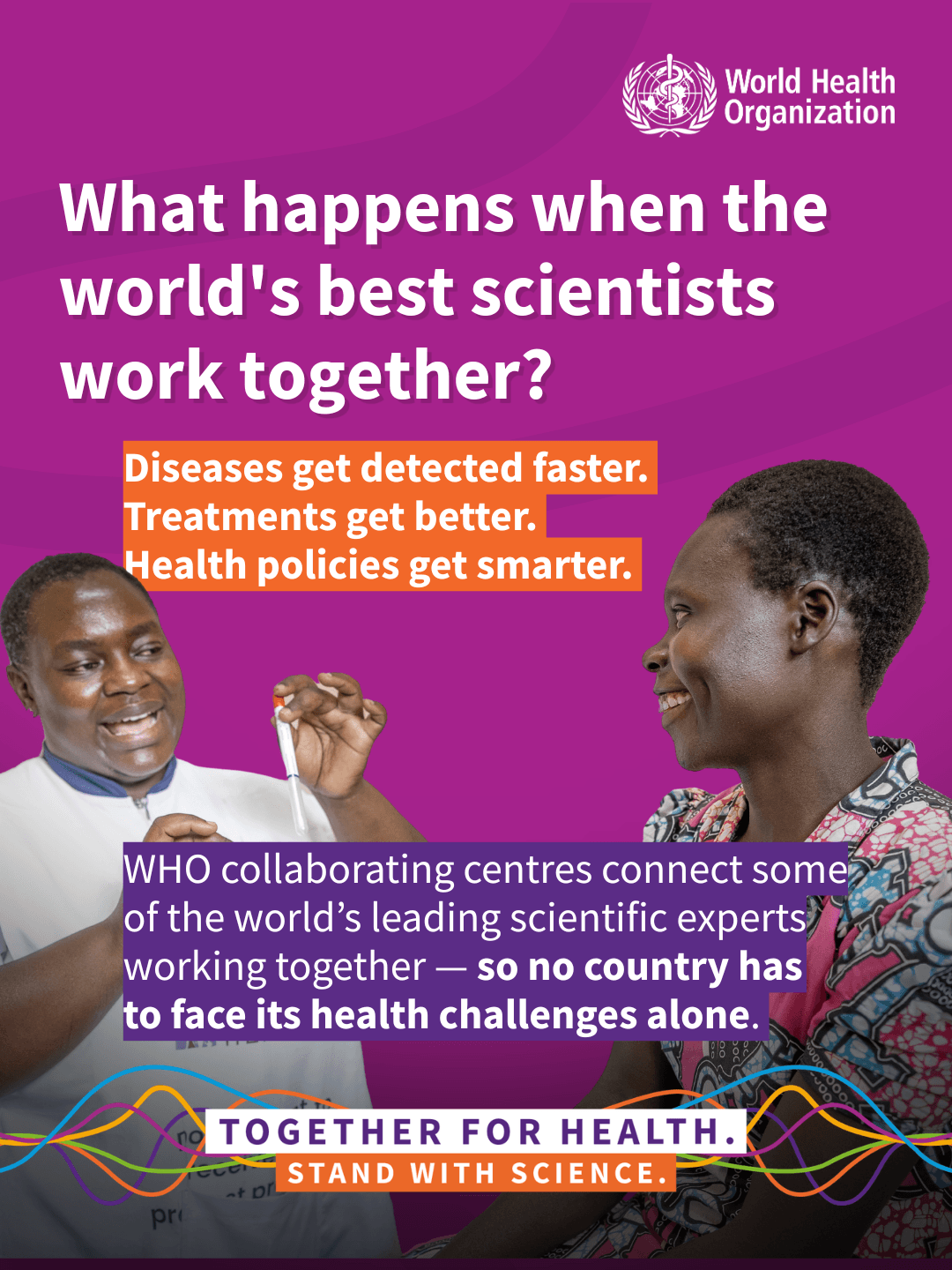
The World Health Organization and the Pan American Health Organization marked World Health Day on April 6 by launching a year-long campaign under the theme "Together for health. Stand with science." The initiative is a coordinated push for governments, funders and scientific institutions to treat investment in research not as discretionary spending but as foundational infrastructure for confronting the next epidemic before it becomes a catastrophe.
The launch, timed to coincide with WHO's founding anniversary on April 7, came with a pointed set of demands. WHO Director-General Tedros Adhanom Ghebreyesus set the stakes plainly: "Science is one of humanity's most powerful tools for protecting and improving health." His remarks highlighted vaccines, penicillin, MRI technology and the mapping of the human genome as the concrete achievements that modern health policy must build on, not take for granted.
The agencies cited hard numbers to make the case for what science-driven cooperation has already delivered. Global maternal mortality has fallen more than 40% since 2000. Deaths among children under five have dropped by more than half over the same period. Both gains trace directly to vaccines, antibiotics, diagnostic tools and coordinated cross-border public health work.
But WHO and PAHO were equally explicit about the fragility of that progress. Climate change, environmental degradation, strained health systems and new pathogens represent threats no single country can manage alone. The speed at which a pathogen is detected, contained and countered depends directly on how well surveillance networks share data across borders. Countries that invest in genomic sequencing, digital surveillance and research workforce training can identify novel threats weeks faster than those that don't, compressing the critical window between emergence and coordinated response. That gap matters everywhere, including in the United States, where delayed outbreak intelligence from overseas has repeatedly shaped domestic public health decisions.

The campaign sets out three programmatic priorities: raising science's profile in national budgets and policymaking, strengthening international research collaboration, and accelerating the translation of laboratory discovery into health technologies accessible to low- and middle-income countries. WHO and PAHO pointed to expanded access to surgical care, safer anesthetics and immunization gains as existing models for how cross-border adoption of innovation works at scale.
The call extends beyond health ministries. WHO and PAHO explicitly asked governments, private funders, universities and civil society to commit to research system strengthening, open data sharing and workforce development. Those commitments, if they materialize, would affect pandemic preparedness timelines, the pace of vaccine and drug development, and the reach of new medical advances into lower-resource settings, including the capacity to counter health misinformation with evidence that crosses political and geographic lines.
The campaign arrives as some countries accelerate investment in genomics and digital health infrastructure while others navigate political polarization around science and public health mandates. Whether the push translates into new funding agreements or binding research partnerships will become clearer over the next twelve months; the answer will carry consequences far beyond the countries that respond first.
Sources:
Know something we missed? Have a correction or additional information?
Submit a Tip