YouTube Expands TV Push With New Hires, Partnerships, and Bengaluru Hub
YouTube's Bengaluru hub anchors a TV-first push that turns the living room into interactive, ad-targeted software, reaching 75 million+ Indian CTV viewers and pressuring Roku and Netflix.
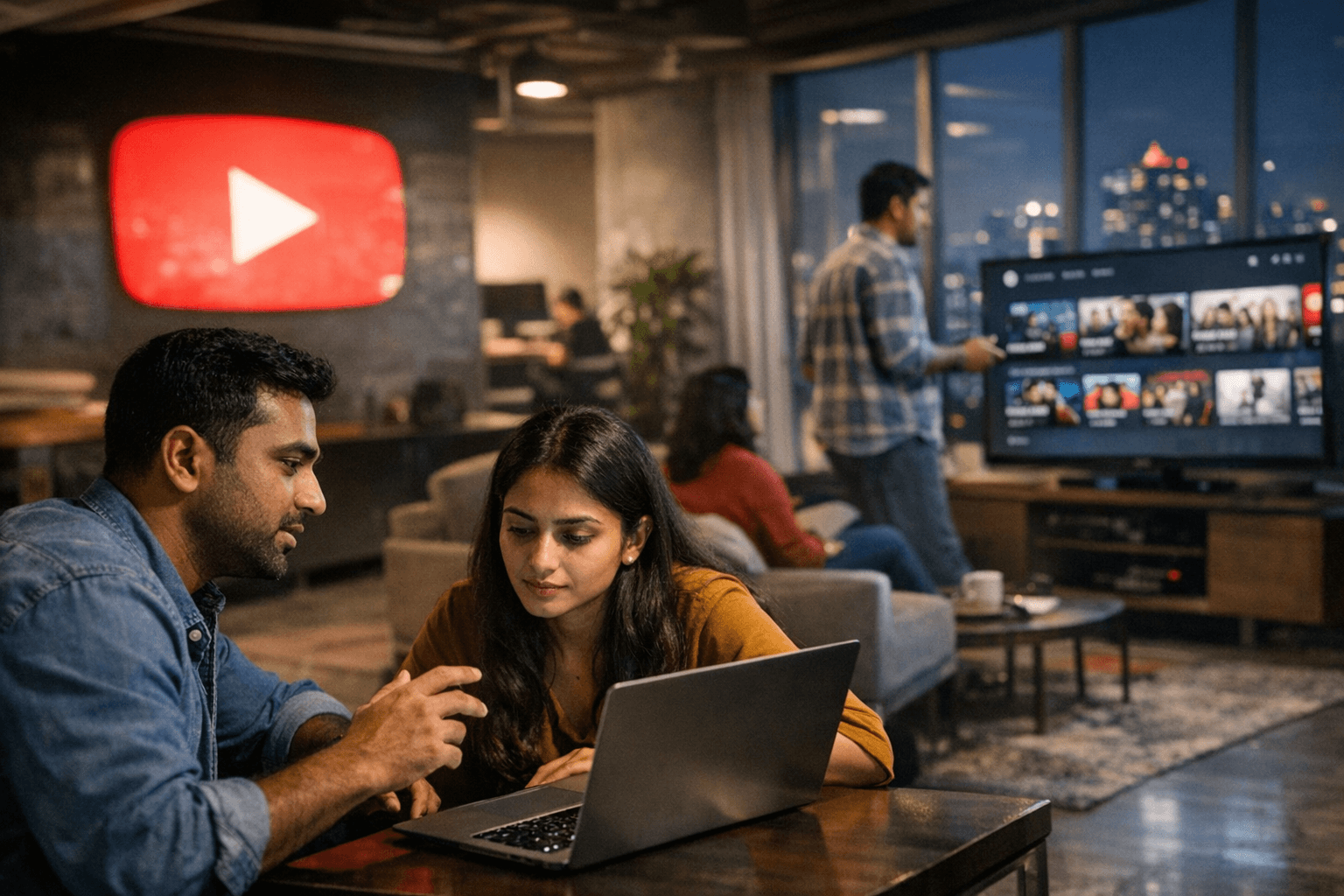
YouTube is restructuring its workforce, deepening advertiser partnerships, and leaning on a Bengaluru engineering hub as it accelerates its bid to make the television set the center of its business, not a secondary screen.
The platform's TV ambitions are underwritten by hard numbers. 2024 marked the year when YouTube viewing in the U.S. flipped, and TV surpassed both mobile and desktop as the primary screen for YouTube consumption. YouTube has dominated Nielsen's streaming TV ratings for nearly three years running. In India, the scale is similarly striking: the platform commands over 650 million monthly logged-in viewers on Shorts and a 75 million-plus connected TV audience aged 18 and above. Connected TV has been YouTube's fastest-growing screen in India over the last five years, and over half of watch time on the platform is now spent on content longer than 21 minutes, signaling a behavioral shift from scrolling to scheduled, immersive viewing.
The Bengaluru hub sits at the center of that India push. Google's longstanding engineering presence in the city provides YouTube with the product and technical talent to localize its CTV offering at scale, as the platform builds out tools specific to Indian advertisers and creators. YouTube introduced urban-rural ad targeting and a CTV Masthead in India as part of that effort, and its Peak Points technology, which uses viewer patterns, video context, and sentiment analysis to optimize ad timing, was among the tools unveiled for the market.
What YouTube is building in the living room is fundamentally different from what cable or even early streaming offered. The screen is becoming interactive, ad-targeted software. YouTube introduced a shoppable CTV ad format that displays products on the right side of the TV screen during ads, acting as a storefront where viewers can browse multiple products using their remotes. Non-skippable 15-second placements anchor the format. On the partnership side, YouTube unveiled a Creator Partnerships Hub, formerly known as BrandConnect, powered by Gemini AI, to help brands find creators and scale campaigns across every screen, giving advertisers tools for creator discovery, outreach, and unified measurement inside a single interface.
The measurement angle is where YouTube's leverage over advertisers becomes most pronounced. More than 75% of YouTube Select campaign impressions ran on TV screens in the U.S. during the first half of last year, and the platform now offers brands a takeover option to buy out all inventory against the top 1% of creator content. Google SVP and Chief Business Officer Philipp Schindler told investors that YouTube had driven more than one billion conversions in the 12 months leading up to mid-2024, a figure that frames the platform's pitch: TV reach, digital accountability.
That combination puts direct pressure on rivals who have long owned either the living room or the measurement stack. CTV ad spend in the U.S. is projected to reach $26.9 billion in 2026, continuing its double-digit growth trend, and platforms like Roku, Netflix, and Disney+ are competing for the same upfront budgets. The tradeoff for viewers is less visible: smart TV data collection, watch-behavior targeting, and remote-control commerce are now embedded in what looks like passive entertainment. Streaming accounted for a record 47.5% of total TV usage by December 2025, and as that share grows, so does YouTube's ability to set the terms for how the living room screen is bought, measured, and experienced.
For creators, the revenue implications cut both ways. Tighter brand-to-creator pipelines through the Creator Partnerships Hub promise more campaign volume, but also route more of those economics through YouTube's own tooling. As the platform converts the TV into a transactional surface, the gap between what viewers watch and what they buy narrows, and YouTube sits squarely in the middle of that transaction.
This article was produced by Prism’s automated news system from verified source data, official records, and press releases, then run through automated quality and moderation checks before publishing. The system is built and supervised by the people who set the standards it runs under. Read our full AI policy.
Did this article answer your question?