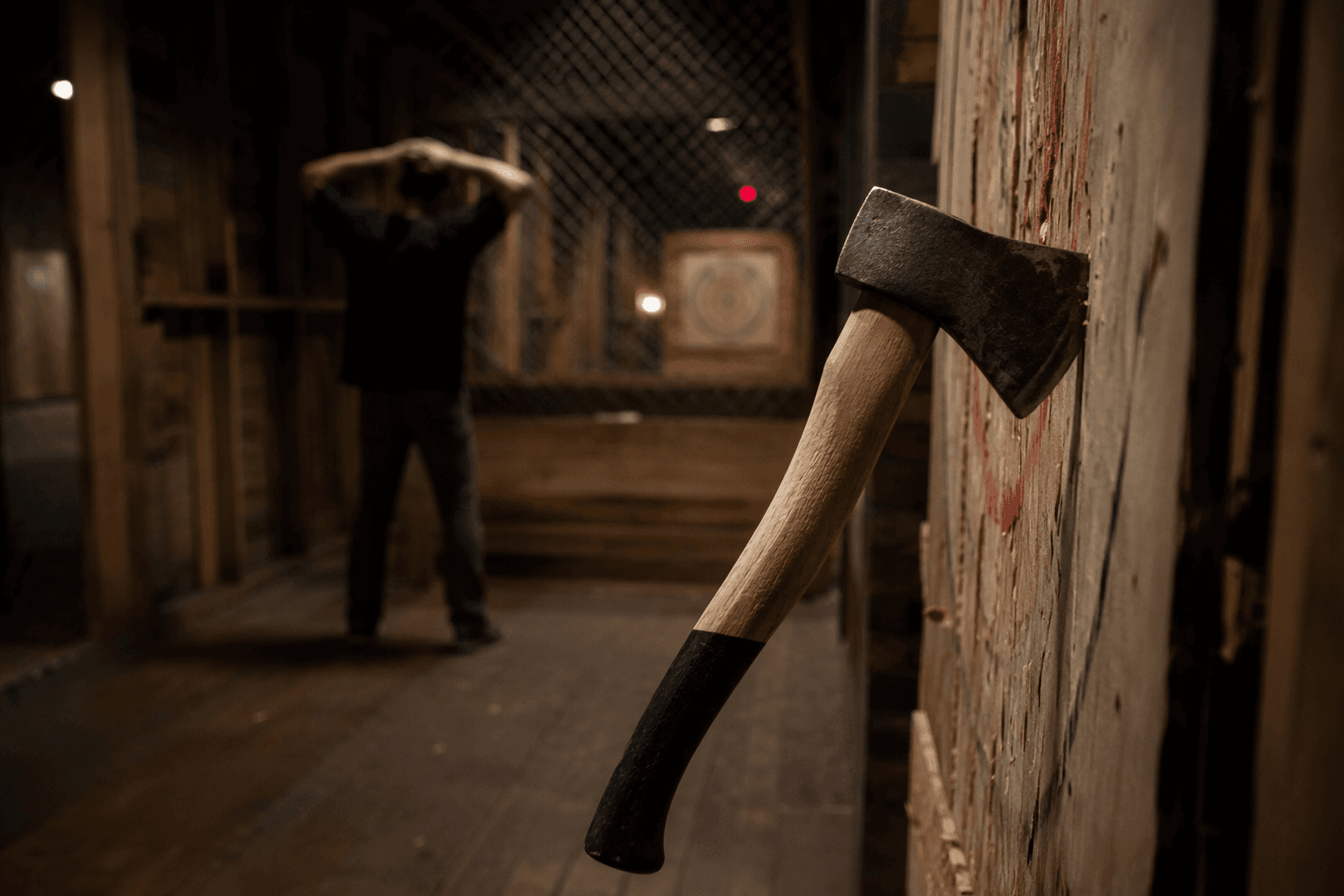
Axe throwing records go beyond distance with speed and accuracy tests
Guinness tracks axe-throwing target hits and catches in one minute, and those records show the sport’s real edge is repeatable accuracy under pressure.

The most revealing axe-throwing records are not the long bombs. Guinness World Records tracks “most targets hit with axes in one minute” and “most axes caught in one minute,” and the World Axe Throwing League keeps its own world-records page, which together show how much of the sport lives in speed, rhythm and control. That is the part many newcomers only notice after the first loud throw fades and the real challenge starts to look less like spectacle and more like precision.
Accuracy is the headline, not distance
A distance throw can be dramatic, but it tells only part of the story. The one-minute target-hitting record rewards a very different skill set: a clean release, a repeatable motion and the ability to stay calm while the clock is running. It is a better test of sustained precision than of one heroic launch, because the athlete has to reset immediately and trust the same mechanics again and again.
That is why the one-minute format matters so much to the sport’s identity. A typical league thrower is not chasing one lucky, thunderous hit so much as building a rhythm that survives pressure. The record categories make that visible by turning repetition into the achievement itself.
Guinness’s separate axe-catching record adds another layer. Catching axes in a timed format is not about power at all, but reaction time, timing and control under stress. Put beside the target-hitting category, it shows that the official record ecosystem now measures more than distance, and more than one kind of hand-eye coordination.
What the clock exposes
Timed records are revealing because they strip away the romance of the big throw and expose the fundamentals. Under a one-minute limit, rushed mechanics get punished fast. The thrower has to keep stance, grip and release consistent enough that the axe’s rotation stays predictable from throw to throw.
That is the difference between a casual crowd-pleaser and a record attempt. A first-time visitor at a venue can often get one decent stick with a little instruction, but repeating that motion quickly is where the real sport begins. The one-minute format turns an ordinary axe throw into a test of endurance, because staying accurate for 60 seconds requires the same body control on the last throw as on the first.
The best performers in these categories are not simply strong or fearless. They are the ones who can avoid over-throwing when adrenaline spikes and who can keep tempo without breaking form. In axe throwing, the pressure is not only in the hit; it is in doing the same thing again before your breathing changes the release.
The sport trains for repeatability
That emphasis on repetition is reflected in the teaching material around the sport. In its March 22, 2024 video, “Throw like a PRO - Advanced Axe Throwing Techniques,” the World Axe Throwing League says pro-level throwers use advanced techniques to reach championship level. The message is clear: elite axe throwing is built, not guessed.
Bad Axe Throwing made the same point in its Sept. 25, 2020 accuracy video, which says the key to better accuracy is to “reduce your movement” and that the best throwers are “much closer to playing darts than baseball.” That comparison lands because darts rewards stillness, repeatability and a compact motion, while baseball celebrates a larger, more explosive one. Axe throwing, at its best, lives much closer to the darts end of that spectrum than the baseball end.
For a league regular, that means the path to better scores is usually not a bigger windup or a more theatrical release. It is a steadier setup, a cleaner follow-through and fewer extra motions that can throw off the axe’s rotation. The records make those small details look glamorous because they are what separate a solid session from a timed benchmark.
A governed sport with a growing footprint
The record categories also make more sense when you look at how organized the sport has become. The World Axe Throwing League describes itself as the “Global Governing Body of Axe Throwing” and says it has 300+ affiliated venues across 20 countries worldwide. It also keeps a world-records page of its own, which places the record chase inside a broader competitive structure rather than leaving it as a novelty stunt.
That structure is visible in the calendar too. WATL says 2026 Season 2 runs from Apr. 13 through Jun. 21, and it has already pointed to the 10th World Axe & Knife Throwing Championship in April 2027 in Appleton, Wisconsin. Those dates show a sport that is not just producing one-off clips, but building a recurring competitive circuit with seasons, affiliation and a championship destination.
The broader lesson is simple. The distance throw may be the image people remember first, but the one-minute records reveal what judges, coaches and serious throwers value most: repeatable precision under pressure. In axe throwing, the real test is not whether you can launch one axe far enough to impress a crowd. It is whether you can make the same perfect throw, or the same clean catch, when the clock is already running.
This article was produced by Prism’s automated news system from verified source data, official records, and press releases, then run through automated quality and moderation checks before publishing. The system is built and supervised by the people who set the standards it runs under. Read our full AI policy.
Did this article answer your question?