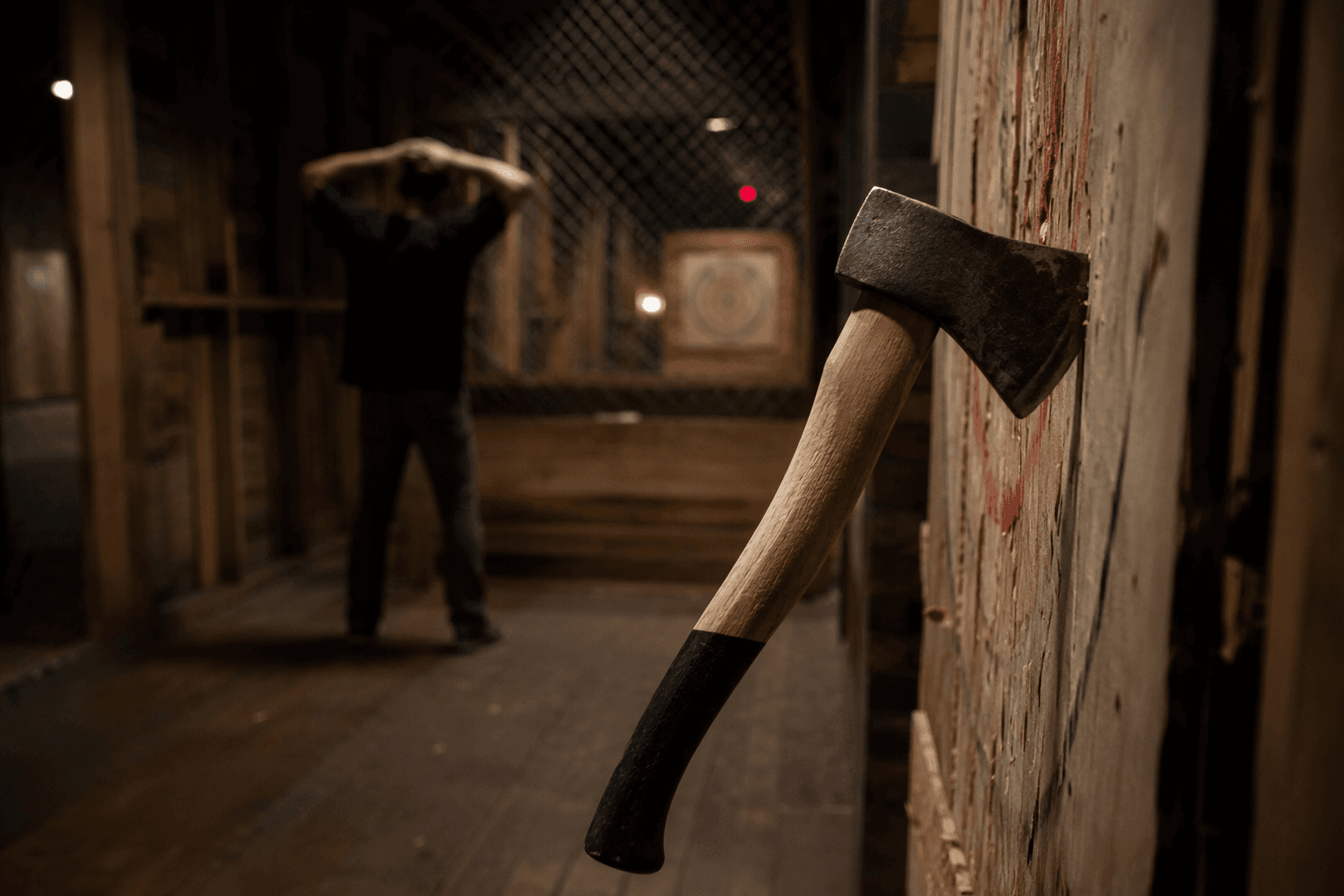
How the double-bit axe evolved from tool to sport
The double-bit axe survived because its balance still matters: old logging geometry now drives modern throws, while the lore mostly lives in the branding.

The double-bit axe did not become a sport accessory by accident. It moved from forestry to the throwing lane because the tool already had the traits that matter in competition: a balanced head, two identical edges, and a flight path that can be repeated. Gränsfors Bruk places that history in plain view, noting that double-bit axes were common from the mid-19th century until chainsaws took over forestry in the mid-20th century, especially among forest workers in Canada and the USA.
Why modern throwers should care about the old design
The performance story starts with utility. Gränsfors Bruk says the original advantage of the double-bit axe was simple: each edge could be ground differently, so a worker only had to carry one multi-purpose axe. That matters now because the sport still rewards a tool that feels deliberate in the hand, not random in the air. The shape was born for repeated use in the woods, and that repeatability is exactly what throwers are chasing on the lane.
The modern version is not a museum piece dressed up for league night. Gränsfors Bruk says its Double Bit Axe is based on North American working axes but modified for axe throwing, with both edges identical and the center of gravity and handle carefully positioned so the axe rotates well in flight. Those are the details that affect performance. The rest, the old logging aura and industrial romance, is part of the story’s identity, but it does not make the axe stick better.
From forestry tool to sporting object
The historical arc is clean. For roughly a century, double-bit axes belonged to working woodsmen, then mechanization changed the job. Once the chainsaw became the dominant forestry tool in the mid-20th century, the practical need for the double-bit faded, but the tool did not vanish. It survived in sport, where the same geometry that once helped a worker carry one versatile axe now helps a thrower send a consistent rotation toward a target.
That transition is why axe throwing feels different from a generic bar game. It is one of the few sports built around an implement that came directly out of labor, survival, and industrial change. The thrower is not borrowing a fantasy weapon so much as reusing a real working tool whose purpose changed when the industry around it changed.
The older lineage goes beyond logging
The double-bit story sits inside a much older axe tradition. Gränsfors Bruk says throwing axes usually had a short handle, and that such weapons were used by Teutonic tribes during the Migration Period, about 400-500 AD, and by the Franks. Its historical axes line also traces roots to the period between 600 and 1200 CE, as a continuation of ancient axe-forging traditions in Sweden and Scandinavia.
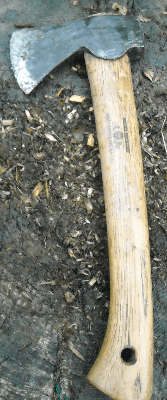
That lineage matters, but mostly as context. It explains why axe throwing feels old even when the format is new. The direct performance lessons still come from the industrial-era double-bit: balance, symmetry, and a handle shape that suits repeated throws. The ancient references deepen the culture around the sport, yet they do not change the fact that the modern lane is built around controlled rotation.
How the sport became organized
The sport’s modern structure is no longer improvised. A World Axe Throwing League video on the origins of the league was posted on September 15, 2021, and the International Axe Throwing Federation publishes rules and guidelines for axe throwing, knife throwing, big axe, doubles, and ambidextrous formats. BATL also frames axe throwing around leagues and tournaments, showing how quickly the activity moved from novelty to organized competition.
One venue history page says axe throwing became popular in Canada in the early 2000s as entertainment in bars and taverns. Modern roots are also often traced to BATL in 2006. Put those together and you get the sport’s real growth pattern: it spread through social spaces first, then hardened into leagues, rules, and standardized formats. The bar-era story explains access; the federation pages explain legitimacy.
What is history and what is performance
This is where modern throwers need to be sharp about the difference between substance and styling. The hand-forged pedigree matters because Gränsfors Bruk says its axes have been hand-forged since 1902, and it backs them with a 20-year warranty. That signals craftsmanship and durability. It does not, by itself, explain why one axe flies better than another.
The real performance factors are the ones Gränsfors Bruk names directly: identical edges, a center of gravity set for flight, and a handle positioned to help the axe rotate cleanly. The heritage side of the story, the Mid-Atlantic logging history, the Scandinavian forging tradition, the Teutonic and Frankish references, gives the sport its texture. But the throwing lane still respects physics first. The double-bit survived because the useful parts were never just nostalgia, and modern axe throwing still runs on that original engineering.
This article was produced by Prism’s automated news system from verified source data, official records, and press releases, then run through automated quality and moderation checks before publishing. The system is built and supervised by the people who set the standards it runs under. Read our full AI policy.
Did this article answer your question?