How standardized lanes turn axe throwing into a true sport
Fixed throwing lines, target specs, and sturdy subframes are what make axe throwing fair from venue to venue. That standard is what turns a board and a hatchet into a real sport.

On May 1, 2021, the International Axe Throwing Federation announced rules changes after 14 years of developing the sport with input from members, throwers, and key focus groups. Once the line, the board, and the structure behind the board are standardized, axe throwing becomes a repeatable test of release point, accuracy, and nerve that can be judged the same way in different buildings.
Why the lane is the sport
Lane rules are not decorative. They are the part of the game that keeps one match comparable to the next.
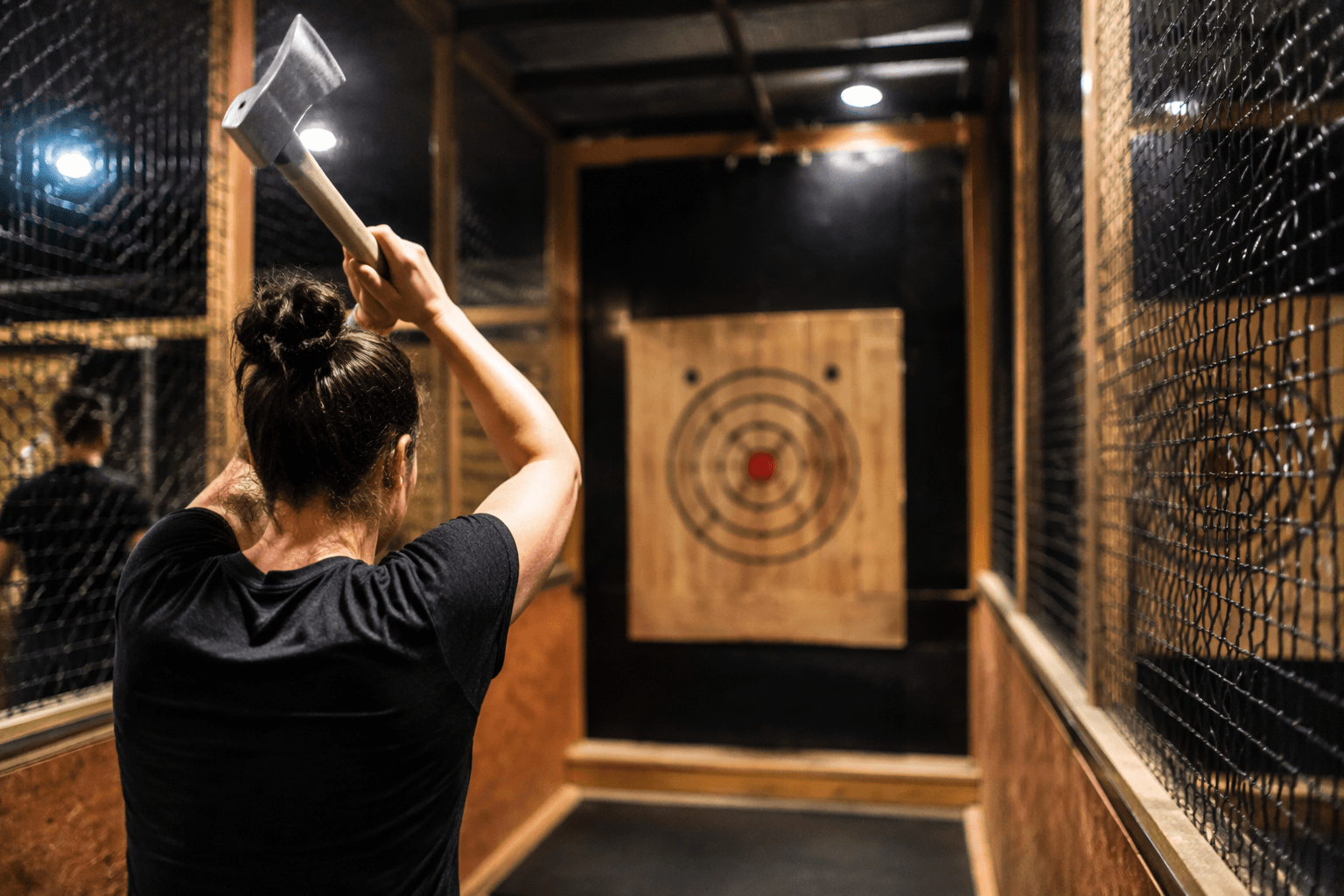
When a venue builds to an official lane standard, the thrower can trust the same distance, the same sight lines, and the same target setup every time. That removes a hidden variable from the scorecard. A player is no longer fighting a new floor plan, a different board angle, or a wandering release point every time the venue changes.
The throwing line decides whether distance is skill or noise
The throwing line is where fairness starts. The IATF treats lane dimensions and throwing line measurements as official standardized elements, and that consistency keeps distance from turning into a venue-by-venue surprise.
If the line is placed consistently, the throw becomes a skill problem instead of a geometry problem. Judges can call line faults with a stable reference point, sight lines stay familiar, and throwers can judge their own release point against the same distance they practiced on elsewhere. If that line shifts even a little from one lane to another, the sport stops rewarding the same mechanics.
A thrower who has trained to release at one distance should not have to relearn timing because a local setup is a few inches off. In a competition lane, the line is part of the scoring environment.
Target dimensions change how a match feels
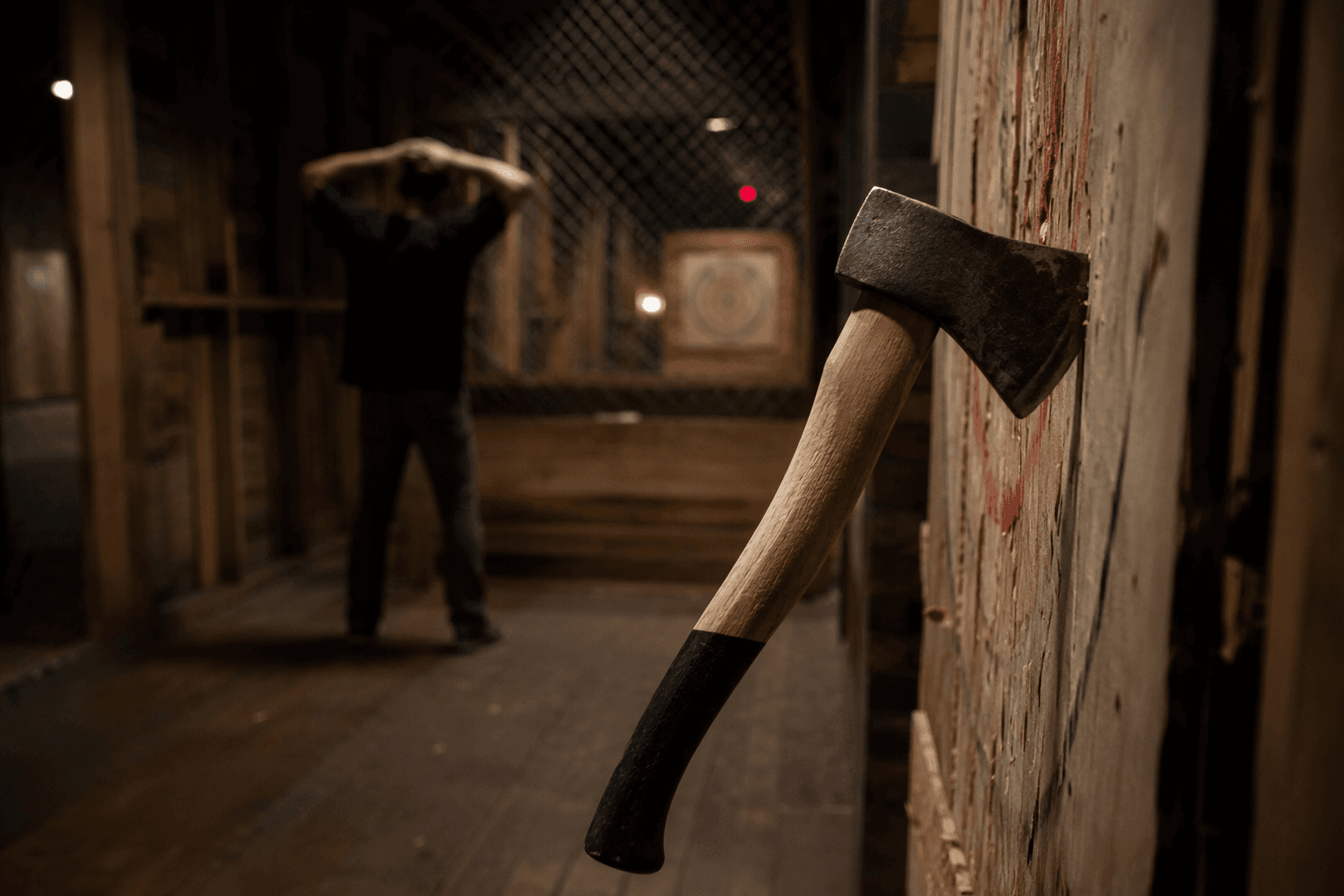
The target is more than wood on a wall. The IATF standardizes target dimensions because the playable area, scoring zones, and board feel all depend on that geometry. A correctly built target gives throwers one muscle memory to trust instead of forcing them to adjust for a different board from week to week.
That standardization also shapes how clean sticks turn into pressure points. When the target dimensions are stable, the scoring zones feel more compact and the margin for error is easier to read. Top-level throwers care about that because a small change in board size or layout can alter how a match swings when both players are landing clean sticks.
Bounce characteristics matter too. A standard target is meant to produce more predictable rebounds, which helps keep the competition from being distorted by a board that plays too hot or too dead.
The subframe is the part most people never notice
A proper subframe sits behind the target, and it is doing more work than it gets credit for. The IATF includes subframe construction among the official elements of the lane because the hardware behind the board affects both safety and stability.
That structure keeps the target aligned and makes the environment more controlled. It also matters when a board needs to be inspected or replaced, because the face should come off and go back on without changing the sport’s basic feel. If the subframe is loose, warped, or improvised, the target can drift out of alignment and the whole lane starts behaving differently.
This is where competition lanes separate from casual recreation lanes. A bar setup may look fine to a newcomer, but a sanctioned lane has to hold up under repeated use, repeated inspection, and repeated comparison.
A tournament-ready lane checklist
If you are evaluating whether a local venue is built for real competition, the details below tell you more than the neon sign outside.
- The throwing line is fixed, clearly marked, and set to the official distance used by the governing body running the event.
- The lane geometry stays consistent from board to board, so sight lines and release-point judgment do not change across the room.
- The target uses the official dimensions for the rule set being played.
- The board face is mounted on a proper subframe that keeps it aligned and stable.
- The target can be inspected or replaced without changing the way the lane plays.
- The setup supports clear line-fault calls and stable judging from the throw line to the board.
- The lane feels the same when a player steps in a second time.
If a venue cannot keep distance, alignment, and target construction consistent, then it is offering a version of axe throwing that cannot be compared cleanly to another site.
Why the wider league structure matters
The World Axe Throwing League calls itself the global governing body for urban axe throwing, and its footprint shows how far standardized lanes have traveled. WATL lists 300-plus affiliated venues across 20 countries worldwide, which means the same basic conversation about distance, board build, and stability is happening far beyond one city or one region.
On its calendar, WATL lists 2026 Season 3 as running from July 13 through September 13 and the 10th World Axe & Knife Throwing Championship as taking place in April 2027 in Appleton, Wisconsin, USA.
This article was produced by Prism’s automated news system from verified source data, official records, and press releases, then run through automated quality and moderation checks before publishing. The system is built and supervised by the people who set the standards it runs under. Read our full AI policy.
Did this article answer your question?