Baylee Rayl takes CrossFit coaching journey from London to Scotland
Baylee Rayl’s Scotland stop shows how elite results become coaching value only when education, repetition, and community enter the frame.
From Games pressure to coaching purpose
Baylee Rayl Christophel’s latest CrossFit chapter is not about chasing a leaderboard. It is about learning how to teach the sport she once lived at full speed, and the shift starts in Episode 2 of Drop-In Diaries with a trip from London to Edinburgh and then to Gorebridge for the CrossFit Level 2 Certificate Course at CrossFit Lùths.
That move matters because it captures a larger truth about CrossFit’s culture: competitive credibility opens doors, but it does not automatically make someone a coach. Rayl’s path shows how the sport’s best athletes often have to build a second skill set, one rooted in observation, correction, and communication rather than reps, splits, and finish times.
Why the Level 2 course is the real pivot
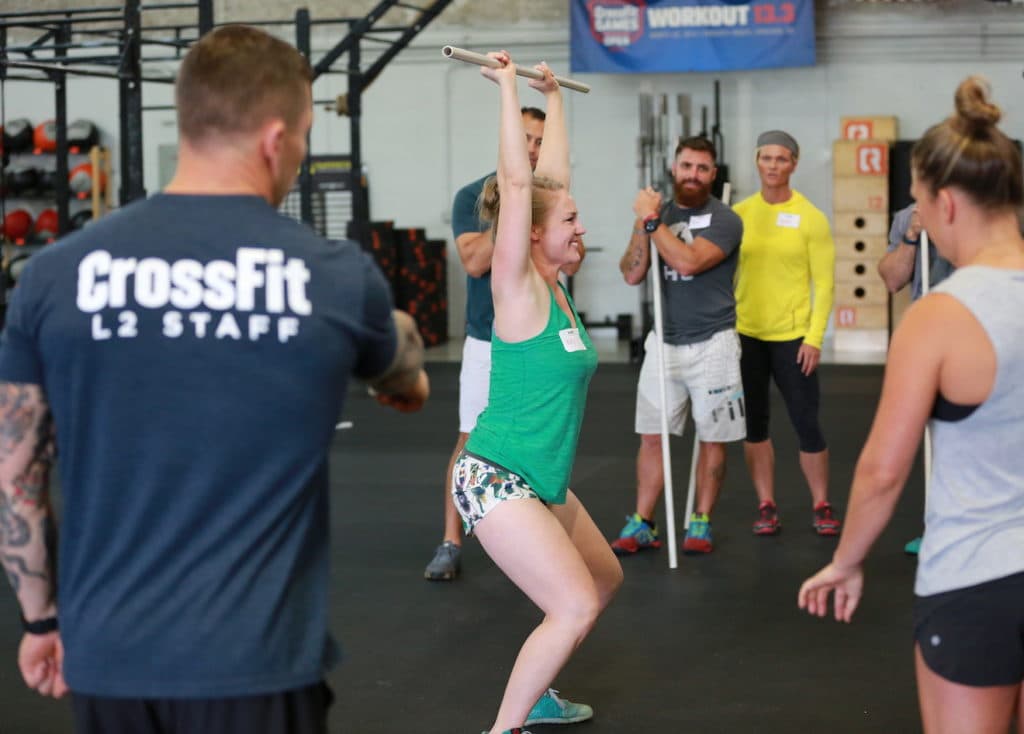
CrossFit frames the Level 2 Certificate Course as an intermediate-level step built on the ideas introduced in Level 1. It is designed for trainers who are serious about delivering quality coaching, and it goes deeper into CrossFit methodology, program design, and implementation.
The structure of the course reinforces that shift from athlete to instructor. CrossFit says Level 2 includes two days of classroom work, one-on-one training, and group sessions, with participants expected to coach movements and workouts as part of the experience. That is a different test from the one Rayl faced on the competition floor. Instead of proving output under pressure, she is being asked to explain movement, read athletes, and guide execution.
For anyone with competition experience who is thinking about coaching, that distinction is the lesson. Performance earns attention. Education turns that attention into authority.
The Scotland route is really a story about community
Drop-In Diaries uses Rayl’s journey to do more than document travel between gyms. CrossFit says the series follows her across affiliate doors in the United Kingdom, including London, Wales, and Scotland, with the goal of reconnecting her with the people who made her fall in love with CrossFit in the first place.
That framing is important because it pushes the sport away from the idea that its value lives only in the Games or in sanctioned competition. The episode suggests that CrossFit’s deeper identity is built in affiliates, on coaching floors, and in the relationships that form around the methodology. Rayl is not just visiting places. She is re-entering the network that keeps the sport alive between seasons and beyond podium finishes.
In that sense, the Scotland leg of the series becomes a reminder that community is not a side story in CrossFit. It is the infrastructure.
CrossFit Lùths is the right setting for that transition
CrossFit Lùths gives the episode a fitting backdrop. The affiliate is located at 114A Hunterfield Road, Gorebridge, Midlothian, EH23 4TX, and CrossFit describes it as more than a gym. It has over 190 weekly classes, a self-serve café, and even a hair salon upstairs, which makes it feel less like a box and more like a full community hub.
That detail matters because it shows what modern CrossFit spaces can become when they are built around regular participation, not just competition prep. A gym with that kind of weekly volume is not only producing athletes. It is shaping coaches, regular members, and the social rhythms that keep people returning.
It also sets up the next step in the series. CrossFit says Episode 3 follows Rayl putting the Level 2 learning into practice by coaching a full class at CrossFit Lùths and meeting affiliate owner Eilidh. That progression, from student to coach on the same floor, gives the whole project its strongest visual argument: learning only matters if it shows up in practice.
What elite credentials do, and do not, guarantee
Rayl’s CrossFit Games profile adds another layer to the story. Her record shows multiple individual seasons in 2021 through 2026, along with earlier team seasons with CrossFit 417. That kind of resume carries real weight in CrossFit. Athletes and members recognize it immediately, and it can create instant credibility when someone steps onto a coaching floor.
But the Level 2 journey makes the limits of that credibility clear. Being able to perform at a high level is not the same as being able to diagnose movement, structure a session, or help different athletes get better in the same class. Coaching asks for a different kind of expertise, one that rewards clarity, patience, and the ability to adapt.
That is where CrossFit’s education pathway comes in. Level 2 sits inside a broader credential structure, and CrossFit says Level 3 sits above it for trainers who complete Level 1 and Level 2 and then pass the CCFT exam. The progression signals that the brand sees coaching as a craft that can be built, measured, and refined, not as an automatic extension of athletic success.
The bigger business and cultural signal
CrossFit is smart to tell this story now. The sport’s audience knows the Games, the podiums, and the personalities, but the long-term health of the ecosystem depends on what happens in affiliate spaces and education tracks. A story like Rayl’s helps connect those dots for fans who mostly see the finished product.
It also reflects a broader shift in how elite athletes build careers after competition. Some move into commentary, some into programming, and some into full-time coaching. Rayl’s journey suggests that the most sustainable transition may be the one that keeps her closest to the floor, where teaching, not just training, becomes the measure of value.
That is why the Scotland episode resonates. It is not simply a travel piece or a profile of a former elite athlete looking for a new challenge. It is a case study in how CrossFit turns competition into education, and education into community impact. Rayl’s route from London to Scotland shows that the sport’s most important credential may be the one that teaches an athlete how to serve the next person in line.
This article was produced by Prism’s automated news system from verified source data, official records, and press releases, then run through automated quality and moderation checks before publishing. The system is built and supervised by the people who set the standards it runs under. Read our full AI policy.
Did this article answer your question?