CrossFit podcast explores high-intensity exercise for Parkinson’s disease
CrossFit’s latest podcast puts Parkinson’s and high-intensity training in clinical terms, but the evidence supports movement as an adjunct, not a cure.
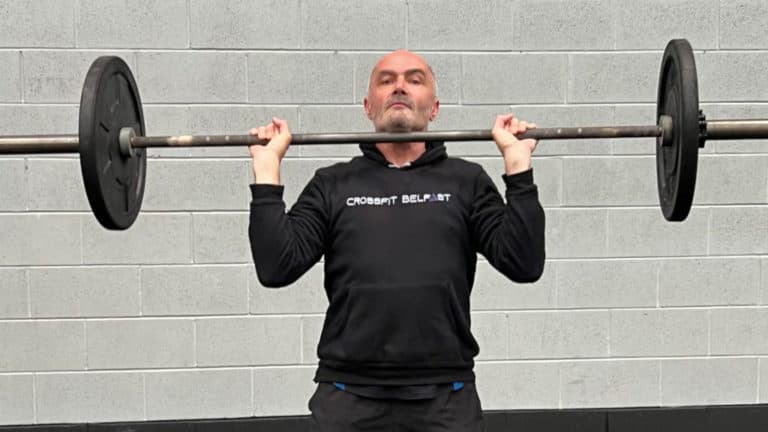
On June 24, CrossFit paired host Jocelyn Rylee with Michelle Hespeler and Dr. Sule Tinaz of Yale School of Medicine for a podcast on Parkinson’s disease. A companion essay published June 23 frames high-intensity exercise as a plausible intervention framework rather than a glossy fitness slogan.
Why this episode lands differently
CrossFit is using its media platform to discuss exercise in clinical language, with neuroplasticity, dopamine signaling, and movement control at the center of the conversation. Parkinson’s disease involves the gradual loss of dopamine-producing brain cells in the substantia nigra pars compacta, and CrossFit’s June 23 framework essay places exercise-induced neuroplasticity in the middle of the disease discussion.
The episode connects CrossFit’s methodology to independence, quality of life, and the everyday challenge of keeping movement possible as symptoms evolve. It also makes the company’s message more concrete for affiliates, because the conversation is about how coached, structured training might fit into broader care.
The people in the frame
Hespeler was diagnosed with Parkinson’s disease at age 40, and CrossFit identifies her as a former physical education teacher who later experimented with structured, high-effort training. That background turns the discussion from theory into practice: this is someone who knows movement from the classroom, then had to rethink it under a neurological diagnosis.
As a Yale movement-disorders specialist, Tinaz gives the episode the kind of medical authority CrossFit needed if it wanted to move beyond generic inspiration. The episode pairs a patient perspective with a physician from Yale School of Medicine.
What the current evidence supports
The strongest case for exercise in Parkinson’s is not that it reverses the disease, but that it can support function, training tolerance, and day-to-day movement. CrossFit’s June 23 essay, the Parkinson’s Foundation’s updated recommendations, and Yale research all focus on function, training tolerance, and day-to-day movement.
On February 17, 2026, the Parkinson’s Foundation and the American College of Sports Medicine announced updated exercise recommendations for people with Parkinson’s disease. The guidance covers aerobic activity, strength training, balance, agility, flexibility, frequency, intensity, time, type, volume, and progression, a broad prescription that shows the field has moved well past the old idea that only light movement belongs in a Parkinson’s plan.
In one Tinaz lab study, participants are asked to perform the Beat Parkinson’s Today exercises at least three times per week for six months. The study uses neuromelanin MRI and dopamine transporter PET imaging to examine possible brain effects.
In a small high-intensity exercise study, the exercising group showed little disease progression on neurological exams. In a larger observational study of 237 patients followed for five years, higher activity was associated with better daily functioning, cognitive processing speed, posture stability, balance, and gait.
What CrossFit is claiming, and where the line should be drawn
CrossFit’s June 23 framework essay argues that structured exercise may be a plausible intervention framework. That is a fair way to describe the current direction of the science, but it is not the same thing as proving that CrossFit itself treats Parkinson’s disease.
The episode can support a broader point that intensity, consistency, and coached movement may be useful tools in a Parkinson’s care plan. It cannot be stretched into a promise that high-intensity exercise stops progression, replaces medical care, or works the same way for every athlete. Parkinson’s is a complex neurological condition, and the clinical question is not whether movement helps at all, but what kind of movement, at what dose, and for whom.
Parkinson’s affects nearly one million people in the United States and about 8.5 million worldwide. CrossFit’s timing is notable: the podcast arrives just days after that update and places the brand inside a larger clinical conversation already moving across the field.
What CrossFit athletes, coaches, and affiliates should take from it
CrossFit is being discussed less as a sport-only brand and more as a structured training environment that may have a role in chronic-disease management. For athletes, that means the methodology is increasingly being tested against real-world health questions, not just competition performance. For coaches, it means intensity has to be paired with scaling, consistency, and sound judgment if the goal is functional movement over time.
Affiliates should read this as an invitation to be precise, not promotional. The evidence supports exercise as part of Parkinson’s care, including aerobic work, strength, balance, agility, flexibility, and progression. It does not support overselling the box as a medical solution.
This article was produced by Prism’s automated news system from verified source data, official records, and press releases, then run through automated quality and moderation checks before publishing. The system is built and supervised by the people who set the standards it runs under. Read our full AI policy.
Did this article answer your question?