CrossFit podcast tackles Murph programming at affiliates
CrossFit’s new Murph podcast turns a Memorial Day staple into an affiliate operations guide. The real takeaway: run it safely, scale it smartly, and make the day feel communal.
Murph becomes an affiliate operations test
CrossFit is using Murph season to talk like a gym owner, not just a fan. The latest episode of *The CrossFit Show*, *Running Murph at Your Affiliate*, brings in CrossFit NCR co-owner Paul Tremblay and general manager Sam Meahan to break down how they run the Hero workout in a real Canadian affiliate full of members, not just social-media clips.
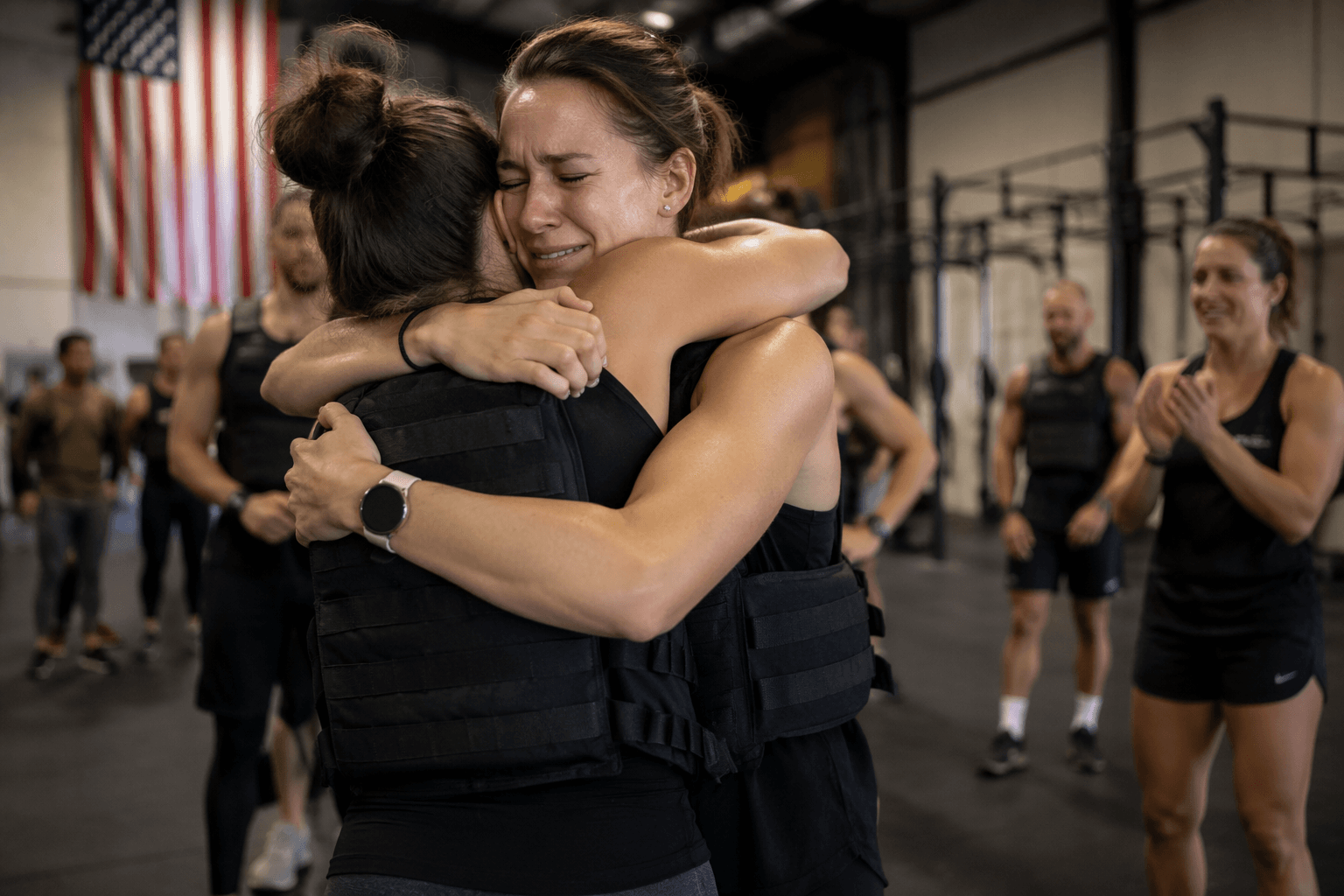
That shift matters because Murph is bigger than a benchmark. Thousands of CrossFit gyms program it each Memorial Day, and for many boxes it is one of the few workouts that pulls competitive athletes, newer members, veterans, families, and casual drop-ins into the same space. The question this year is not whether to do Murph, but how to make it work without losing the meaning behind it.
Why Murph still carries weight
Murph was introduced as a CrossFit Hero workout on Aug. 18, 2005, and its original description still explains why it endures. The workout honors Navy Lt. Michael P. Murphy, 29, of Patchogue, N.Y., who was killed in Afghanistan on June 28, 2005. CrossFit also noted that it was one of Murphy’s favorites and that he had named it “Body Armor,” a detail that gives the workout its own personal history instead of making it just another annual challenge.
That history helps explain why Murph has become a cultural ritual inside CrossFit. CrossFit’s own framing says the Memorial Day version grew organically inside the affiliate community, and the company has continued to reinforce that connection with editorial attention, including a Murph history story on May 12 and a 2024 note that affiliates could choose Memorial Day Murph or another Hero workout from the list. In other words, the workout has become both a tribute and a programming decision.
What the podcast angle tells affiliates
The real value of the podcast is that it reframes Murph as an event day problem to solve. Programming it for a full class schedule means thinking about heat management, space, scaling, and the rhythm of the room long before the first run starts. A gym that treats Murph like a single hard class can end up with chaos; a gym that treats it like a community event can turn it into one of the most memorable days on the calendar.
CrossFit NCR gives that conversation a concrete backdrop. The Ottawa-area affiliate’s public staff listing includes owner Reza Mashkoori, co-owner Paul Tremblay, and coach Sam Meahan, which grounds the discussion in a real gym operation rather than a generic programming theory exercise. That matters because affiliates are not only protecting performance, they are also protecting the tone of the day.
How to build a better Murph day
The best Murph planning starts with flow. You want enough structure to keep athletes moving and enough flexibility to make the workout feel inclusive rather than rigid, especially when your room includes experienced competitors alongside first-timers and community guests.
A few practical ideas follow directly from the way CrossFit frames the workout:
- Run heats or waves so the floor does not collapse into a bottleneck at the pull-up rig or the run turnaround.
- Build scaling options in advance for pull-ups, push-ups, and squats so members know where they fit before the clock starts.
- Separate the tribute piece from the workout logistics so the opening of the day still feels intentional.
- Plan for heat, hydration, and clear movement standards, because volume is part of Murph’s identity.
- Keep the coaching cues simple and repeated, since the workout’s size is what creates both its challenge and its risk.
That last point is especially important. Murph is famous because it is accessible in concept and punishing in execution: a one-mile run, 100 pull-ups, 200 push-ups, 300 squats, and a final one-mile run. Any affiliate that wants the day to feel meaningful has to preserve that structure while making sure every athlete, from Rx regulars to scaled newcomers, can participate with confidence.
The elite side still matters
Murph is not only a community workout. CrossFit Games coverage has noted that it made its Games debut in 2015 and returned in 2016, which reinforces its dual identity as both a broad public ritual and a benchmark that can still show up in elite competition. That crossover is part of why Murph keeps drawing attention: it can live in a neighborhood gym and on the sport’s biggest stage without losing its identity.
That dual use also explains the broader audience pull. CrossFit has built a season around high-end performance, but Murph is one of the rare workouts that reaches outside the core competition crowd and into the wider public. It is the kind of day when the gym becomes a gathering place as much as a training floor, and that has social value well beyond the scoreboard.
What affiliates should be aiming for this year
The smartest Murph programming does three things at once. It protects the tribute, it manages the logistics, and it gives members a shared experience they will remember after the soreness fades. CrossFit’s podcast push suggests the brand knows affiliates need more than a workout prescription right now; they need a repeatable way to handle one of the most loaded dates on the calendar.
If Murph is treated as a production problem instead of a rite, it loses part of its power. If it is treated as a community event with clear heat flow, thoughtful scaling, and careful coaching, it becomes what CrossFit has always suggested it should be: a hard workout with a purpose, and a Memorial Day tradition that still has room to grow.
Know something we missed? Have a correction or additional information?
Submit a Tip