Research says CrossFit is not uniquely dangerous for the lower back
The lower back gets blamed for CrossFit more than the data do. The real issue is not avoiding load, but managing it with better coaching, scaling, and mechanics.

CrossFit’s lower-back problem is usually described in the wrong language. The question is not whether the sport asks a lot of the lumbar spine, because it absolutely does. The real question is whether that load makes CrossFit uniquely dangerous, and the research says no. The better read is sharper and more useful: the back is a common stress point, but with the right coaching, progression, and supervision, it is also one of the areas that can get stronger and more resilient.
The back is a pressure point, not a verdict
The June 9 feature gets the central tension right: serious CrossFit training depends on the lower back, which means it will always be part of the conversation. That does not automatically make it a liability. Across the studies it summarizes, injury rates generally landed below four injuries per 1,000 training hours, which sits in the same broad neighborhood seen in other recreational fitness activities, including Olympic weightlifting, powerlifting, running, and Zumba.
That context matters because CrossFit often gets singled out whenever someone tweaks a back in the gym. The research does not support the idea that the methodology itself is uniquely harmful. What it does support is a more disciplined approach to loading, because the movements that build the engine are the same ones that expose weak mechanics when athletes rush the work.
What the injury studies actually show
The strongest version of the anti-CrossFit argument tends to blur injury data into a simple conclusion: more intensity means more damage. The evidence is more complicated than that. A 2017 systematic review of 13 studies, covering 2,326 participants, concluded that CrossFit is comparable to other exercise programs in both injury rates and health outcomes. That is not a free pass, but it is a useful baseline.
A 2021 systematic review and meta-analysis added an important caveat: CrossFit injury research has long suffered from inconsistent definitions of what counts as an injury. When studies used stricter definitions, such as time-loss or medical-attention criteria, the injury estimates still landed in a range comparable to other sports. In other words, the alarm bell is often louder than the data.
A retrospective injury survey helps explain why the sport feels riskier than the numbers suggest. In a group of 885 CrossFit participants, 295 athletes reported injury, a rate of 33.3%. The back was the most common injury site, with 95 of those 295 injuries, or 32.2%, followed by the shoulder at 20.7%. Squats and deadlifts were the exercises most often linked to injury. That should not be read as a case against the movements themselves. It is a reminder that the lifts CrossFit leans on most heavily are also the ones that demand the cleanest mechanics.
Why the lower back shows up so often
The lower back is not special because it is fragile. It shows up because it is central to nearly everything serious athletes do in the sport. Hinging, squatting, pulling, bracing under fatigue, cycling barbell work, rowing hard, and holding positions under time pressure all ask the back to do a lot of work, often while the heart rate is screaming and form starts to drift.
That is why the most useful reading of the injury data is not panic, but pattern recognition. Back injuries do not mean the sport is broken. They usually mean something in the chain broke down: load climbed too fast, mechanics slipped under fatigue, or the athlete was exposed to volume they had not earned yet. The back is the first place many athletes feel that mistake, but it is rarely the only root cause.
The newer evidence points toward supervision, not avoidance
The latest piece in this puzzle is a 2025 observational study of 379 adults, and it pushes the conversation in a more interesting direction. CrossFit participants reported lower low-back-pain prevalence than sedentary adults, 41% versus 69%. They also reported fewer annual pain episodes, 3 versus 14. That is a big gap, and it should force a rethink of the lazy assumption that lifting and intensity inevitably wreck the spine.
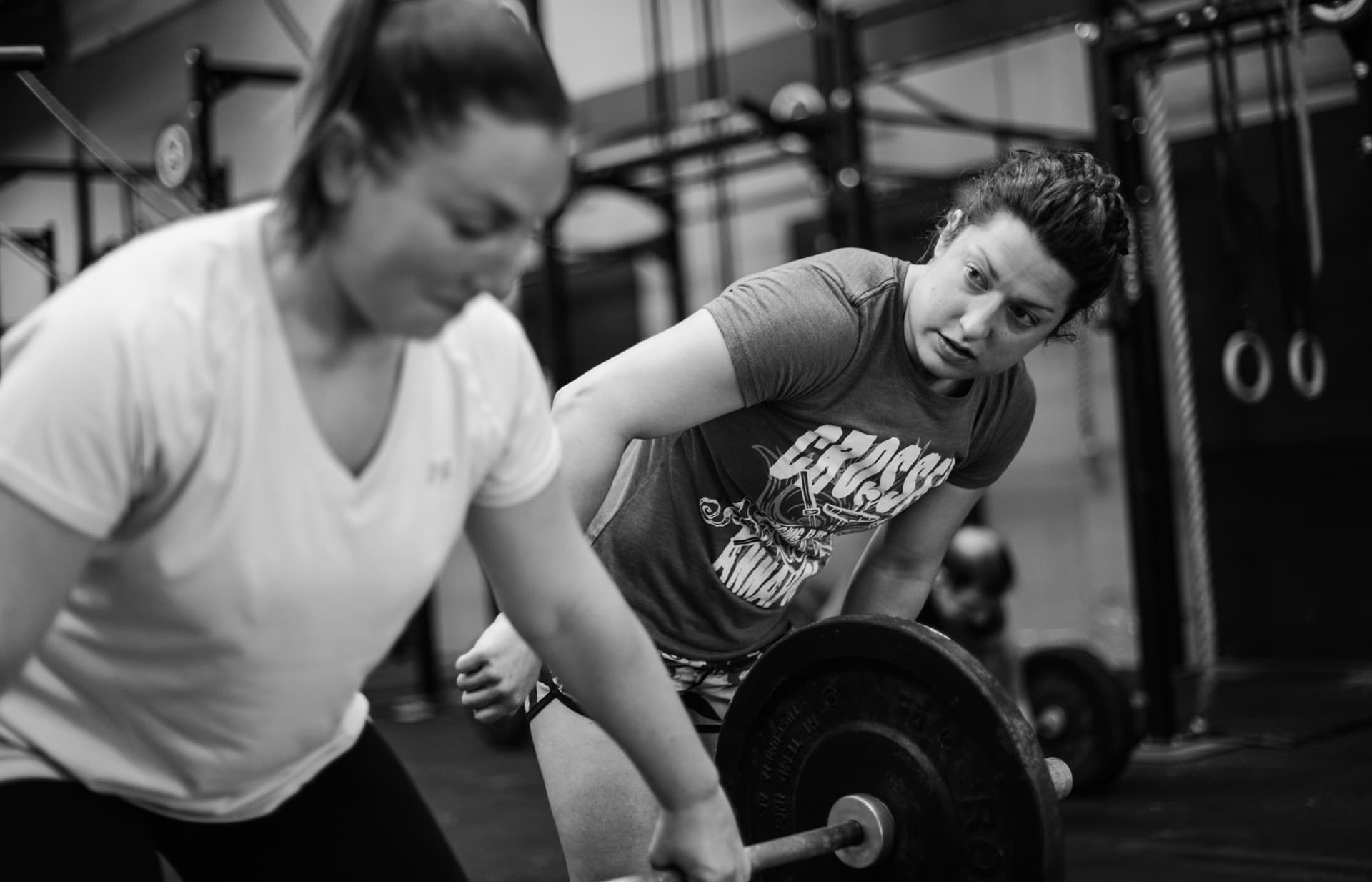
The same study also found that lack of trainer supervision was associated with more severe low-back pain and a greater need for additional treatment and medication. That may be the most actionable finding in the bunch. The issue is not simply that people are training hard. It is that hard training without enough oversight, feedback, or scaling turns ordinary risk into avoidable risk.
What experienced CrossFitters should actually do
If you already know the sport, the takeaway is not to tiptoe around the barbell. It is to train like someone who expects to stay in the game for years. The research points to a few practical adjustments that matter more than fear-based caution.
- Keep progressive loading honest. If the back is the weak link, it usually gets exposed when intensity outruns tissue tolerance.
- Treat technique as load management. A rep that looks fine at moderate speed can fall apart when fatigue, volume, or competition pace kicks in.
- Use supervision when the session gets technical or heavy. The 2025 study makes clear that guidance is not cosmetic, it changes outcomes.
- Scale with purpose, not ego. The goal is not to avoid the movements that stress the back, but to make sure the dose matches the athlete.
- Respect the hinge. Squats and deadlifts showed up most often in the injury survey, which makes sense because they are foundational and unforgiving when rushed.
The practical mistake many athletes make is assuming that “toughing it out” is the same as training hard. It is not. The evidence argues for smarter dosage, more consistent mechanics, and better feedback loops, not for retreating from the lifts that define the sport.
Why this matters for the competitive athlete
For competitive CrossFitters, the stakes are simple: your back is not a problem to be hidden from the program, it is a system to be trained well. That means separating normal training soreness from actual injury risk, and separating real risk factors from mythology. Heavy hinging, squatting, rowing, and high-volume work are not the enemy. Sloppy progression is.
That is the real value of the research. It does not promise a pain-free sport. It shows that CrossFit is not uniquely dangerous for the lower back, and that the athletes who stay healthy usually do the boring, unglamorous things well: they scale when they should, they listen to coaching, they respect load, and they keep chasing adaptation instead of just surviving the workout.
This article was produced by Prism’s automated news system from verified source data, official records, and press releases, then run through automated quality and moderation checks before publishing. The system is built and supervised by the people who set the standards it runs under. Read our full AI policy.
Did this article answer your question?