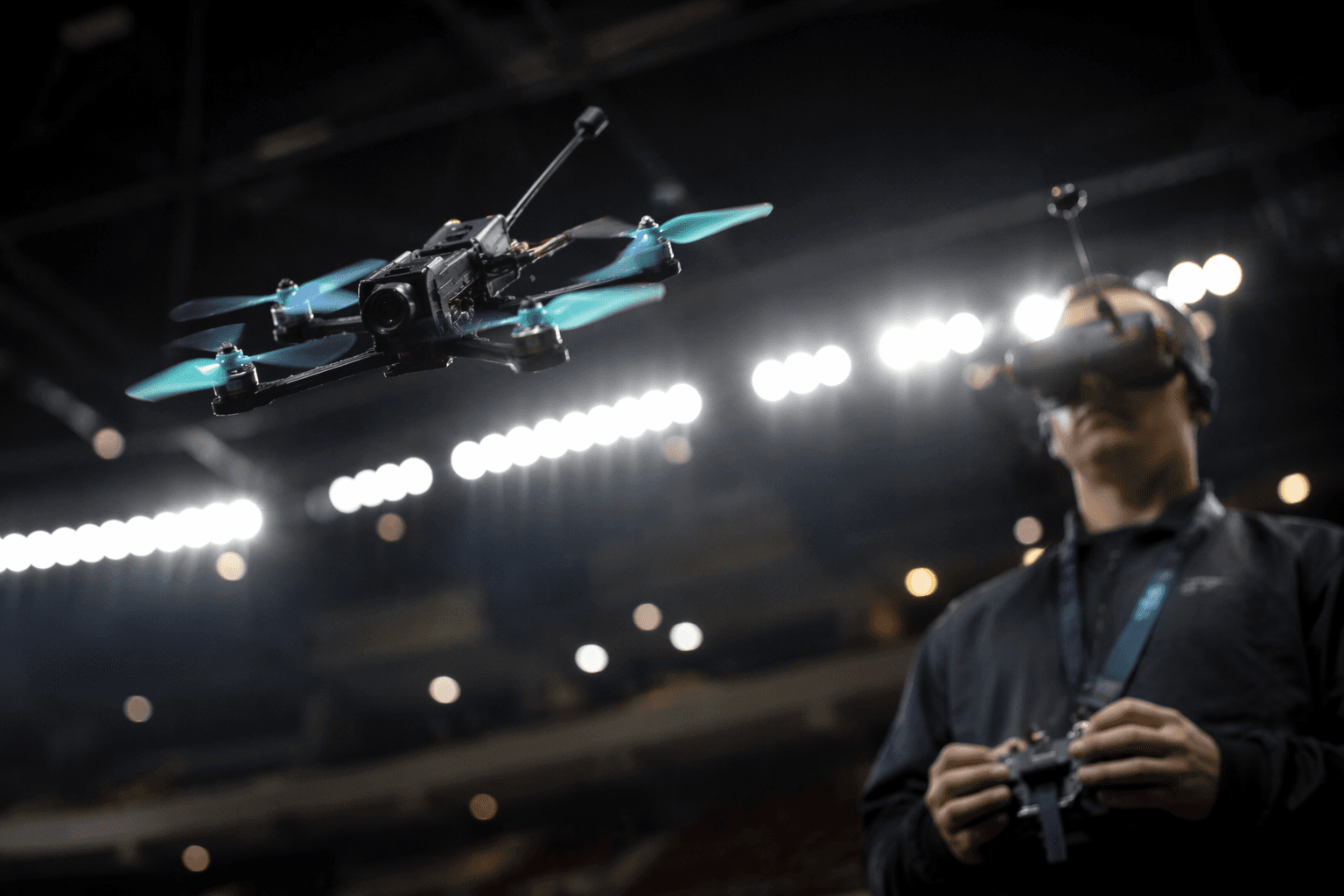
Australian-built Blackbird quadcopter hits 453.6 mph in unofficial test
Blackbird’s 453.6 mph downwind blast reset the FPV speed conversation, but its 685 km/h average still fell short of official record rules.

Blackbird just dragged FPV quad design closer to the edge of the map. In an unofficial May 2026 test, the Australian-built machine reportedly hit 730 km/h, or 453.6 mph, on a downwind pass, then backed that up with a 640 km/h return run for a 685 km/h average, the kind of number that makes even veteran drone racers stop talking about lap times and start talking about physics.
That matters because the benchmark in this arms race is still the official Guinness World Records mark of 657.59 km/h, or 408.60 mph, set by Luke Bell and Mike Bell in Cape Town, South Africa, on December 11, 2025. The Bells had already ratcheted the bar from 480 km/h in 2024 to 580 km/h in June 2025 before their Peregreen V4 run became the one that counted. Blackbird’s number is faster, but speed alone does not make a record. Guinness requires measured runs in opposite directions with witness-backed verification, which is why a one-direction blast, even one this outrageous, stays in the unofficial column.

The build itself is what makes Blackbird more than a stunt. It is reported to be a 40 cm, 2 kg gyro-stabilised quadcopter made from 3D-printed plastic, carbon fibre, and off-the-shelf components, built for about AUD 3,000 over 18 months. Benjamin Biggs, who works at Melbourne drone-cinematography company XM2, has been at the center of the project, and his day job explains part of the edge here. He flies high-speed drones for film work, including car chase sequences in John Wick 4, so this is not a hobbyist throwing parts at a wall. It is an engineer chasing the outer limit of what a prop-driven multirotor can survive.

Biggs has said that practical ceiling sits somewhere between 800 km/h and 900 km/h, where propeller tips go supersonic and efficiency falls apart. The latest Blackbird attempt showed how brutal that boundary is. The team reportedly lost one of two Blackbird drones during testing, while the surviving machine pulled about 400 amps for roughly ten seconds and pushed its batteries to about 80 C. The newer setup used hand-made carbon-fibre propellers with a sawtooth leading edge, replacing earlier APC 7x15 blades, and that change tells the real story: this is no longer about raw motor hype. It is about drag, heat, blade shape, stability, and whether a race-worthy idea can be made durable enough to matter beyond a single headline.
This article was produced by Prism’s automated news system from verified source data, official records, and press releases, then run through automated quality and moderation checks before publishing. The system is built and supervised by the people who set the standards it runs under. Read our full AI policy.
Did this article answer your question?