Avata 360 test reveals obstacle avoidance stutter versus Avata 2
Avata 360 looked like DJI’s FPV upgrade, but Jeven Dovey’s back-to-back test found it stuttered near trees and flew less sharply than the Avata 2.
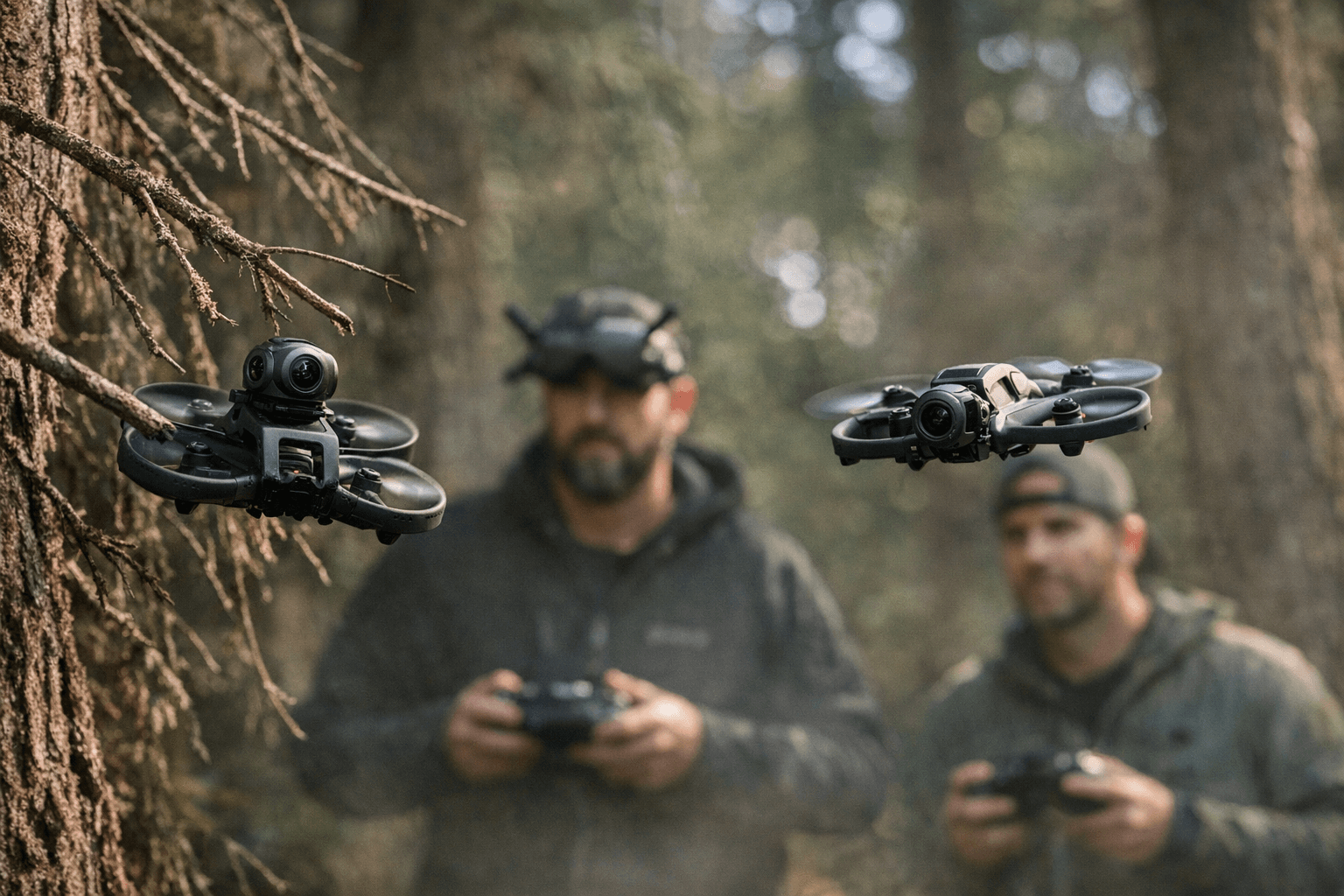
DJI’s newest FPV-style camera drone lost the cleanest kind of real-world test: a side-by-side flight run against the older model it is supposed to outclass. In Jeven Dovey’s back-to-back trial, the Avata 360 repeatedly stuttered near trees and other close obstacles, while the Avata 2 came across as sharper, steadier, and easier to trust in fast, precise flying.
That matters because the Avata 360 arrived with a heavy feature pitch. DJI officially launched it on March 26, 2026 as an 8K 360-degree flagship drone with 1-inch-equivalent sensors, O4+ video transmission, omnidirectional obstacle sensing, integrated propeller guards, and support for DJI goggles, motion controllers, and remote controllers. U.S. orders opened on April 13, just weeks later, putting the drone in front of buyers fast and giving early flight impressions extra weight.
The test setup was designed to keep the comparison fair. Dovey flew the same trail and baseball-field routes with the motion controller and FPV goggles, and the footage was matched for color profiles and exposure, with both drones later re-shot in D-Log M and graded identically. Even with that control, the Avata 360 showed a problem that matters more than spec-sheet bragging rights: its obstacle sensing kicked in around nearby trees and created a stop-start feel that broke the flow of the line.
That is a serious issue for any pilot who wants a practice or cinewhoop-style platform that can build good habits. Dovey reportedly turned obstacle avoidance off to stop the stutter, then crashed into a tree, a blunt reminder that safety systems can also shape how confidently a pilot can fly. The Avata 2, which DJI positions as an FPV drone with improved imaging, safety, and battery life, felt more responsive in close passes, dives, and altitude changes, which is exactly where race-style precision shows up.
The weight gap only sharpened that difference. DJI lists the Avata 360 at about 455 grams and the Avata 2 at about 377 grams, a 78-gram, roughly 20.7% increase that could be felt in the air. Both drones are rated for about 23 minutes of flight time under controlled test conditions, with maximum flight distance listed at 13.5 kilometers for the Avata 360 and 13 kilometers for the Avata 2. The Avata 360 also adds a 360-degree shooting mode and a Single Lens mode for 4K/60fps FPV-style footage, plus DJI Fly and DJI Studio workflows for reframing after the flight. For buyers deciding which drone actually helps them fly better when pace and precision matter, this test gave the answer in plain sight: the newer model has more creative tricks, but the Avata 2 still looks like the better-handling FPV tool.
This article was produced by Prism’s automated news system from verified source data, official records, and press releases, then run through automated quality and moderation checks before publishing. The system is built and supervised by the people who set the standards it runs under. Read our full AI policy.
Did this article answer your question?


