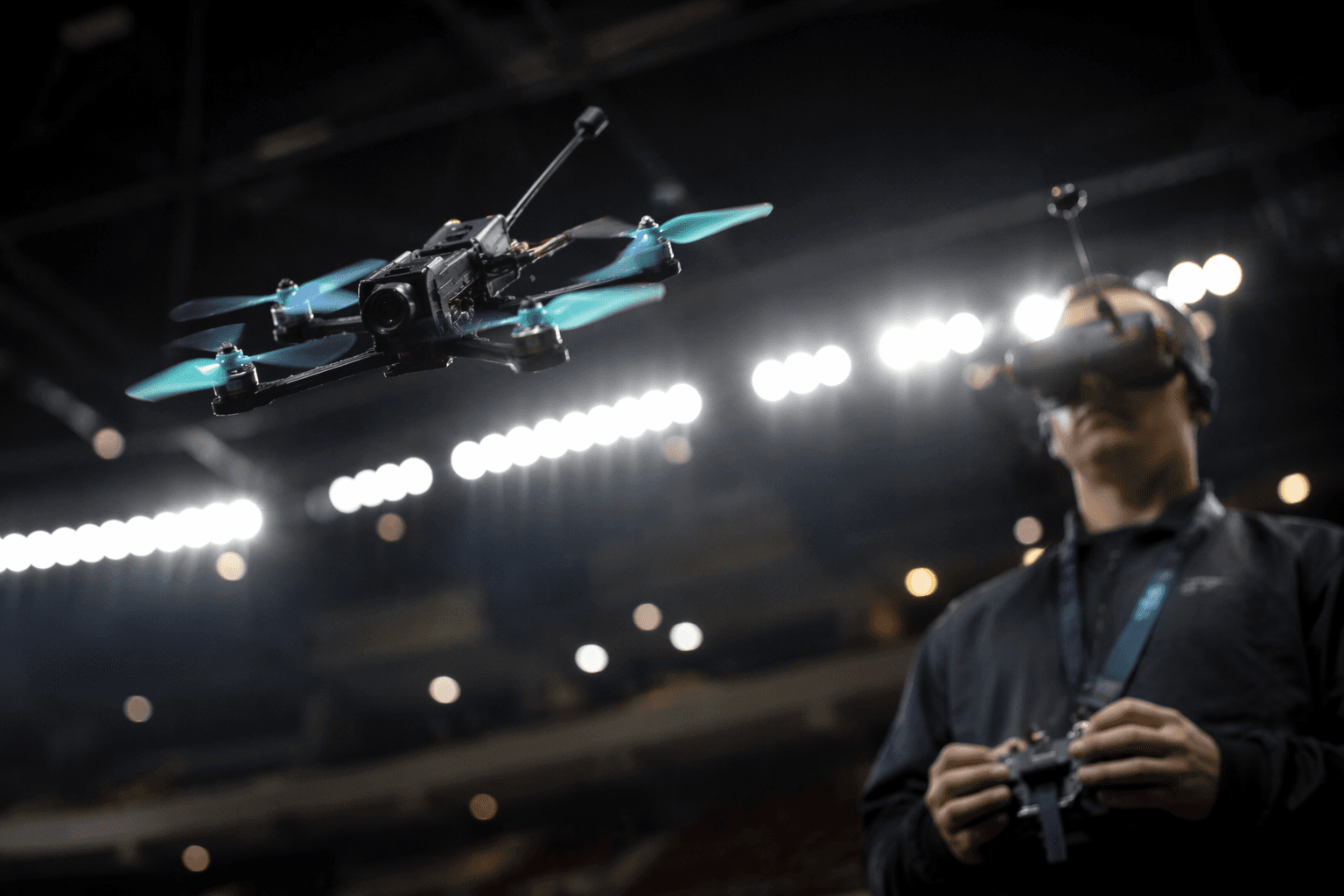
Best Long-Range FPV Drones for Hobbyists and Distance Racers in 2026
Long-range FPV racing is evolving fast, and the gap between a mediocre build and a competition-ready distance machine comes down to a few critical hardware choices.
Long-range FPV flying sits at an interesting crossroads in 2026: the technology has matured enough that ready-to-fly platforms can genuinely compete with custom bind-and-fly builds, yet the choices available have never been more overwhelming. Whether you are chasing horizon-to-horizon distance records or simply want to explore terrain well beyond line-of-sight, the drone you fly matters enormously. Digital video systems like DJI's O4 and O3 have reshaped what pilots expect from a long-range setup, delivering low-latency HD feeds at ranges that analog systems could only dream of a few years ago. What follows is a ranked breakdown of the best long-range FPV platforms available to hobbyists and distance-focused racers right now, drawing on hands-on testing of both RTF and BNF configurations.
1. DJI Avata 2 (O4 System)
The Avata 2 sits at the top of this list because it represents the most complete out-of-the-box long-range FPV experience available. Powered by DJI's O4 transmission system, it delivers a rock-solid HD video link at ranges that routinely exceed several kilometers in open terrain, with low-latency performance that keeps the flying experience intuitive and responsive. The integrated design means there are no compatibility headaches between camera, VTX, and goggles, making it the default recommendation for hobbyists who want to focus on flying rather than wrenching.
2. DJI FPV Combo (O3 System)
The original DJI FPV Combo remains a formidable long-range platform despite being a generation behind on the transmission side. Running the O3 digital system, it still outperforms most analog setups in video clarity and range reliability, and its large 245mm wheelbase gives it the stability that long-distance flights demand. For pilots who can find it at a discounted price point in 2026, the FPV Combo represents exceptional value per kilometer of reliable range.
3. iFlight Chimera7 Pro V2 (BNF)
iFlight's Chimera7 Pro V2 is the bind-and-fly option that comes up repeatedly among distance racers who want more control over their radio and receiver setup than an RTF package allows. The 7-inch prop configuration hits a sweet spot between efficiency and raw speed, giving pilots meaningful endurance without sacrificing the thrust needed to handle wind at altitude. iFlight has paired it with a robust frame design that survives the inevitable hard landings that come with pushing range limits.
4. BetaFPV Pavo35 Brushless Whoop
The Pavo35 earns its place on a long-range list because of how effectively it punches above its size class. At 3.5 inches with ducted props, it generates enough thrust to carry a DJI O3 air unit while remaining light enough to extract serious flight time from a 4S battery. For hobbyists flying in suburban or semi-urban environments where a full-sized 5-inch or 7-inch quad draws unwanted attention, the Pavo35 delivers long-range digital video capability in a form factor that stays inconspicuous.
5. Flywoo Explorer LR 4 HD
Flywoo built the Explorer LR 4 HD specifically for the distance market, and the design philosophy shows in every component choice. The 4-inch prop size, combined with an ultra-light frame, gives it one of the better efficiency profiles in this category, translating directly into extended range on a single charge. Pilots running this platform with an O3 air unit have reported cross-country-style cruising that would be impossible on a conventional racing quad.
6. IFlight Nazgul Evoque F5D V2
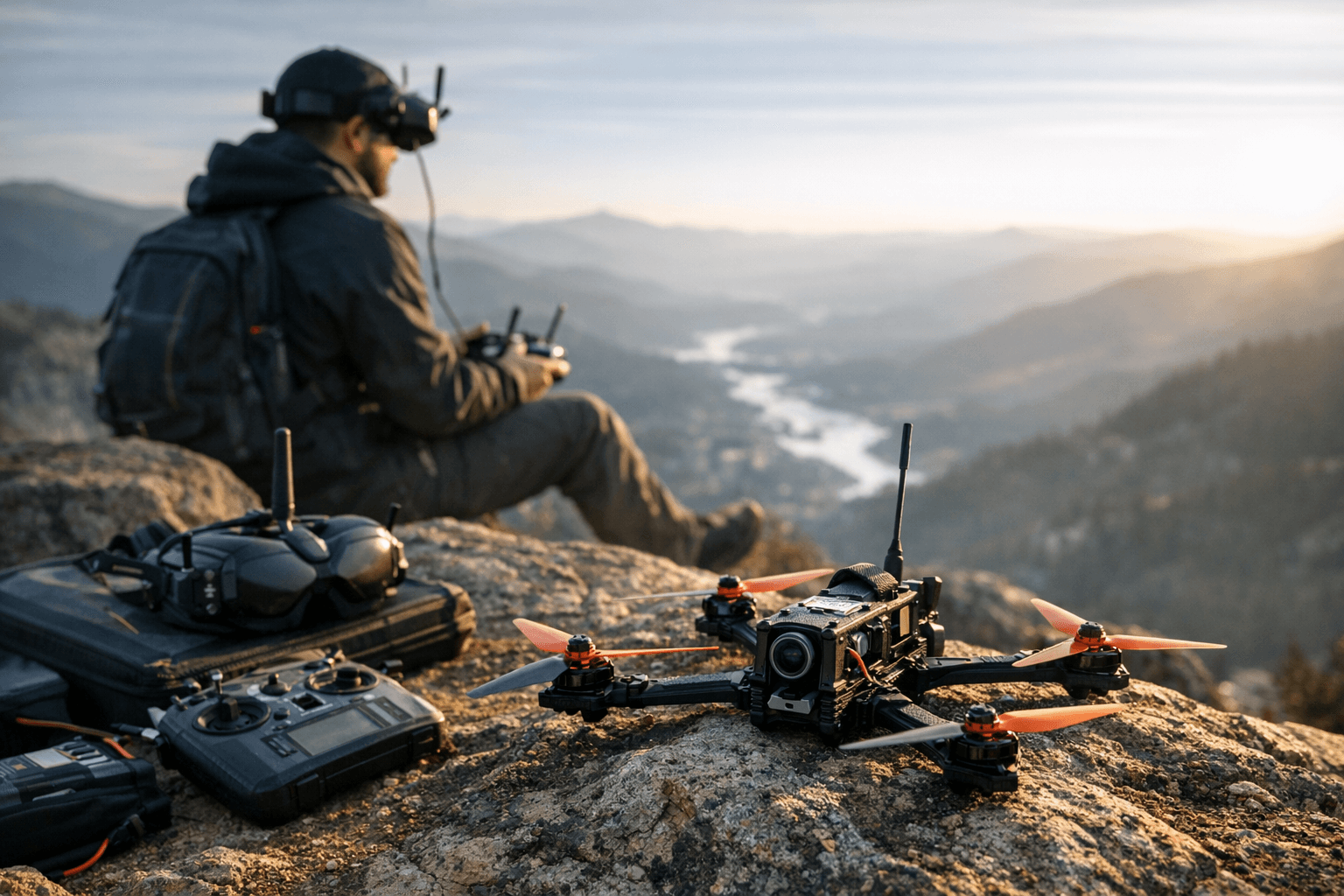
The Nazgul Evoque F5D V2 bridges the gap between a pure freestyle build and a dedicated long-range machine. Its 5-inch ducted configuration reduces prop wash and improves aerodynamic efficiency at cruise speeds, which matters when you are covering distance rather than throwing tricks. The V2 revision addressed frame flex issues that affected earlier models, making it a more confidence-inspiring platform for pilots pushing into unfamiliar terrain far from the launch point.
7. GEPRC Mark5 HD
GEPRC's Mark5 HD is a 5-inch BNF build that has developed a loyal following among pilots who run long-range freestyle lines rather than strictly point-to-point distance flights. Compatibility with both O3 and competing digital systems gives it flexibility that single-ecosystem builds lack, and the clean power delivery from its motor selection makes it well-suited to the sustained throttle inputs that long-range cruising demands. It is not the lightest option on this list, but its durability record in real-world testing is hard to argue with.
8. Walksnail Avatar HD System Builds
Walksnail's Avatar HD system has created an entire ecosystem of custom long-range builds that deserve recognition as a category. The Avatar system competes directly with DJI's O3 in latency and range, and pilots who prefer not to be locked into DJI's ecosystem have embraced it enthusiastically. Several BNF manufacturers now ship long-range frames pre-configured for Avatar HD, giving pilots a genuine alternative digital pathway without sacrificing the video quality that makes long-range flying rewarding.
9. TBS Source One V5 Custom Build
The TBS Source One V5 remains the benchmark open-source frame for pilots who want to design their long-range setup from the ground up. Its 5-inch geometry has been refined over multiple versions to balance stiffness, repairability, and weight, and the global availability of replacement parts means a crash in a remote location does not have to end a trip. Pairing a Source One V5 with a TBS Crossfire or ExpressLRS receiver and an O3 air unit remains one of the most technically capable long-range configurations a hobbyist can build.
10. ExpressLRS-Based Budget Long-Range Builds
ExpressLRS has fundamentally changed what a budget long-range setup looks like in 2026. The open-source protocol delivers link performance at 900MHz that rivals systems costing several times as much, and the hardware required to run it has dropped to price points accessible to pilots just entering the distance side of the hobby. Building a capable long-range quad around an ExpressLRS receiver, a lightweight 5-inch or 7-inch frame, and a mid-range digital or analog video system is now a realistic entry point for hobbyists who want genuine distance capability without a flagship price tag. The proliferation of ExpressLRS has arguably done more to democratize long-range FPV than any single piece of hardware released in the past three years.
The gap between the top and bottom of this list is not as wide as it once was. Digital transmission systems have raised the floor for video quality and range reliability across the board, and the BNF market has matured to the point where factory-built platforms can satisfy pilots who previously felt they had no choice but to build from scratch. The real differentiator in 2026 is matching the platform to the mission: a Pavo35 and a Chimera7 Pro are both excellent long-range tools, but they are excellent in completely different contexts. Knowing which context you are flying in is the most important spec of all.
This article was produced by Prism’s automated news system from verified source data, official records, and press releases, then run through automated quality and moderation checks before publishing. The system is built and supervised by the people who set the standards it runs under. Read our full AI policy.
Did this article answer your question?