DCL Launches 2026 Season With Three Cups, AI Grand Prix, and Riyadh Opener
DCL's 2026 season adds a $500K AI Grand Prix alongside three cups; Spain Drone Team's RedSheep led the Riyadh seeding opener by just 88 milliseconds.
The Drone Champions League's 2026 season began not at a live venue but on a simulator, where six teams raced the same track from separate time zones and the fastest lap decided who boarded a plane to Saudi Arabia. That sequence is the new competitive logic in concentrated form: earn your grid spot virtually, then defend it in person.
DCL confirmed the full 2026 structure on April 3, organizing the season around three championships - the Falcon Cup, Eagle Cup, and Hawk Cup - before a single Super Final settles the year. The architecture is the same skeleton that debuted in 2025, but the points ledger running underneath it has grown more punishing. Teams that peak for one event and fade between Cups now face a three-window reckoning with no soft entries and no resets.
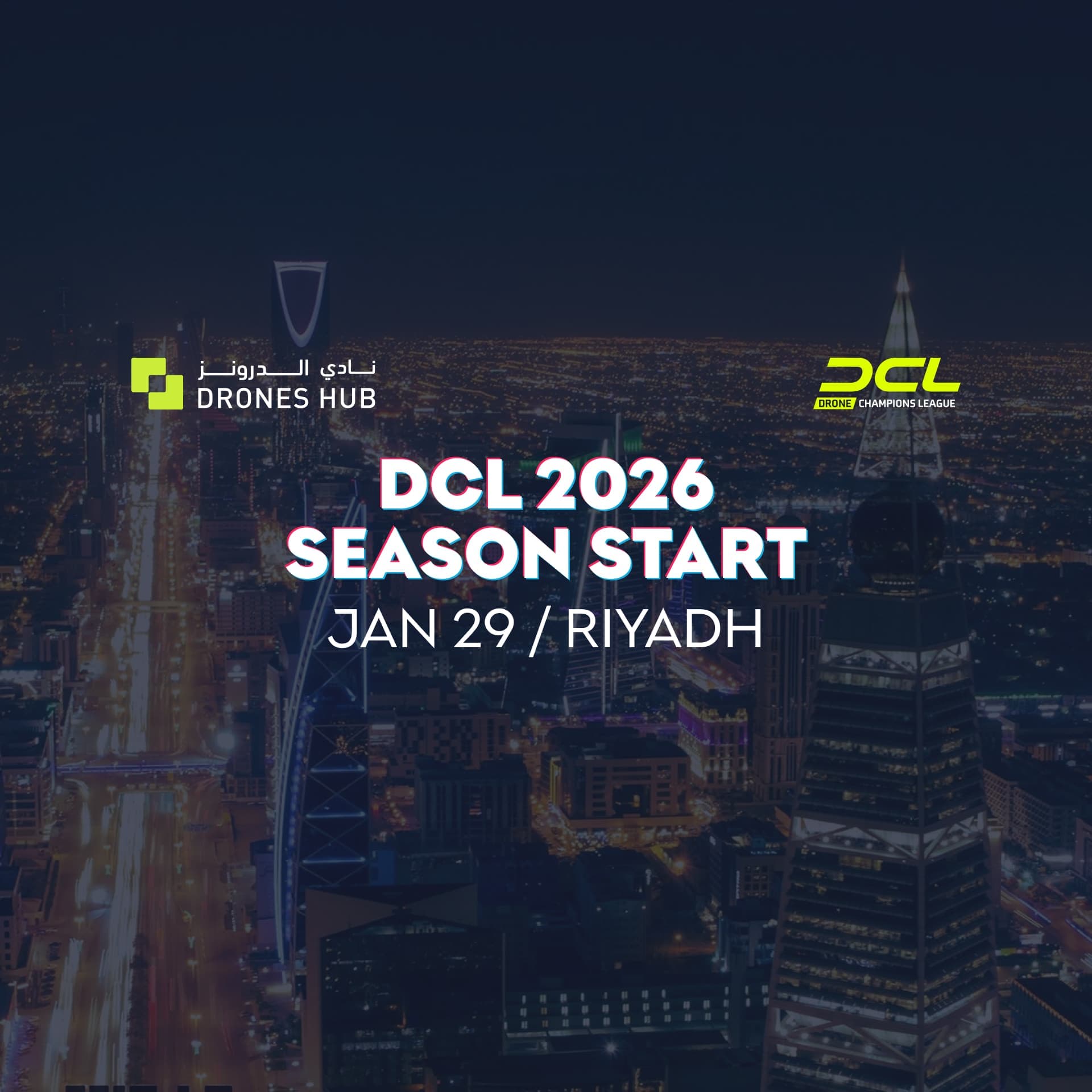
The opener set the tone early. On January 19, six DCL teams raced the DCL Simulator simultaneously from their home bases. Spain Drone Team's pilot RedSheep posted a 1:18.005, edging Raiden Racing's RDN Shaigne at 1:18.093 and the DCL Wildcard Team's Danoob at 1:19.298, to claim the three qualifying spots for Riyadh. On January 29, those teams met live at the Drones Hub Opening hosted by Tuwaiq Academy for the Falcon Cup Seeding Race Finals, completing the virtual-to-real handoff that defines DCL's competitive identity.
That 88-millisecond margin between RedSheep and RDN Shaigne matters beyond the seeding result. In a single-event format, a near miss disappears. Across three Cups, it accumulates into a structural advantage. Spain Drone Team already proved that thesis in 2025: SDT and Raiden Racing finished the Eagle Cup dead-level on total points, and the tiebreaker went to SDT on the basis of consistency across all three splits, not a single dominant run. RedSheep's 1:18.005 suggests SDT is running the same playbook in 2026.
Raiden Racing arrives as the defending Super Final champion with three DCL titles, a dynasty record in a league that only adopted this multi-Cup format last year. Their 22-9 demolition of Cyclone Racing in the 2025 Falcon Cup Finals confirmed they can execute in knockout brackets. The 2026 pressure point is whether Raiden can sustain that output across three full Cups before Spain Drone Team banks enough points on consistency to make the Super Final a foregone conclusion.

The more structurally significant addition runs on a separate track entirely. DCL confirmed the AI Grand Prix, an autonomous racing competition built in partnership with Anduril, Neros Technologies, and JobsOhio. The prize is $500,000 plus a guaranteed job at Anduril. Virtual qualification runs from April through June, with top-performing teams advancing to in-person rounds before a live final in Columbus, Ohio in November. Every competing drone is identical hardware from Neros Technologies, reducing the contest to a pure software evaluation: computer vision, path planning, and edge computing.
Anduril founder Palmer Luckey framed the competition directly: "This is an open challenge. If you think you can build an autonomy stack that can out-fly the world's best, show us." The Columbus venue ties to Anduril's Arsenal-1 hyperscale manufacturing facility in Central Ohio, and the JobsOhio partnership makes the recruiting angle explicit.
For DCL as an organization, the AI Grand Prix creates a second commercial narrative that runs parallel to the human pilot season without cannibalizing it. Engineering sponsors and defense-sector partners get their own entry point; the human pilots keep their spotlight. With Raiden and SDT already separated by less than a tenth of a second in Riyadh, that spotlight will be earned the hard way.
This article was produced by Prism’s automated news system from verified source data, official records, and press releases, then run through automated quality and moderation checks before publishing. The system is built and supervised by the people who set the standards it runs under. Read our full AI policy.
Did this article answer your question?