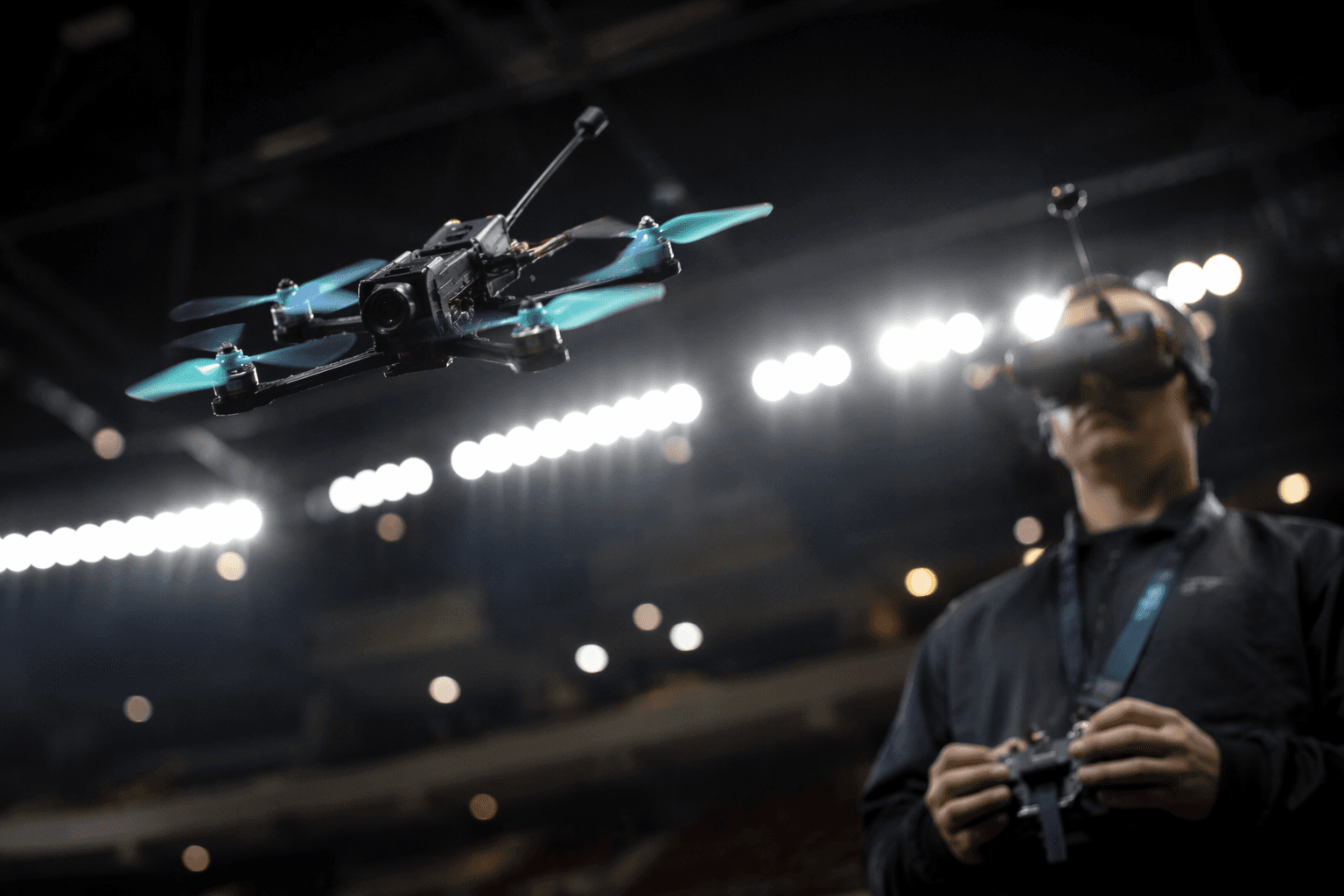
DJI goggles compatibility guide clarifies FPV racing and training setups
DJI’s goggles chart is now race gear, not accessory talk: Goggles 3 is the broadest bridge, N3 is the narrowest lock-in, and the wrong pick can ruin a field day.
DJI has turned FPV goggles into a gatekeeper, not a nice-to-have. The wrong headset is no longer a minor inconvenience, it can block a bind, force a firmware detour, or leave you swapping gear before the first lap. For racers and trainers, that makes compatibility a race-readiness issue, not a shopping detail.
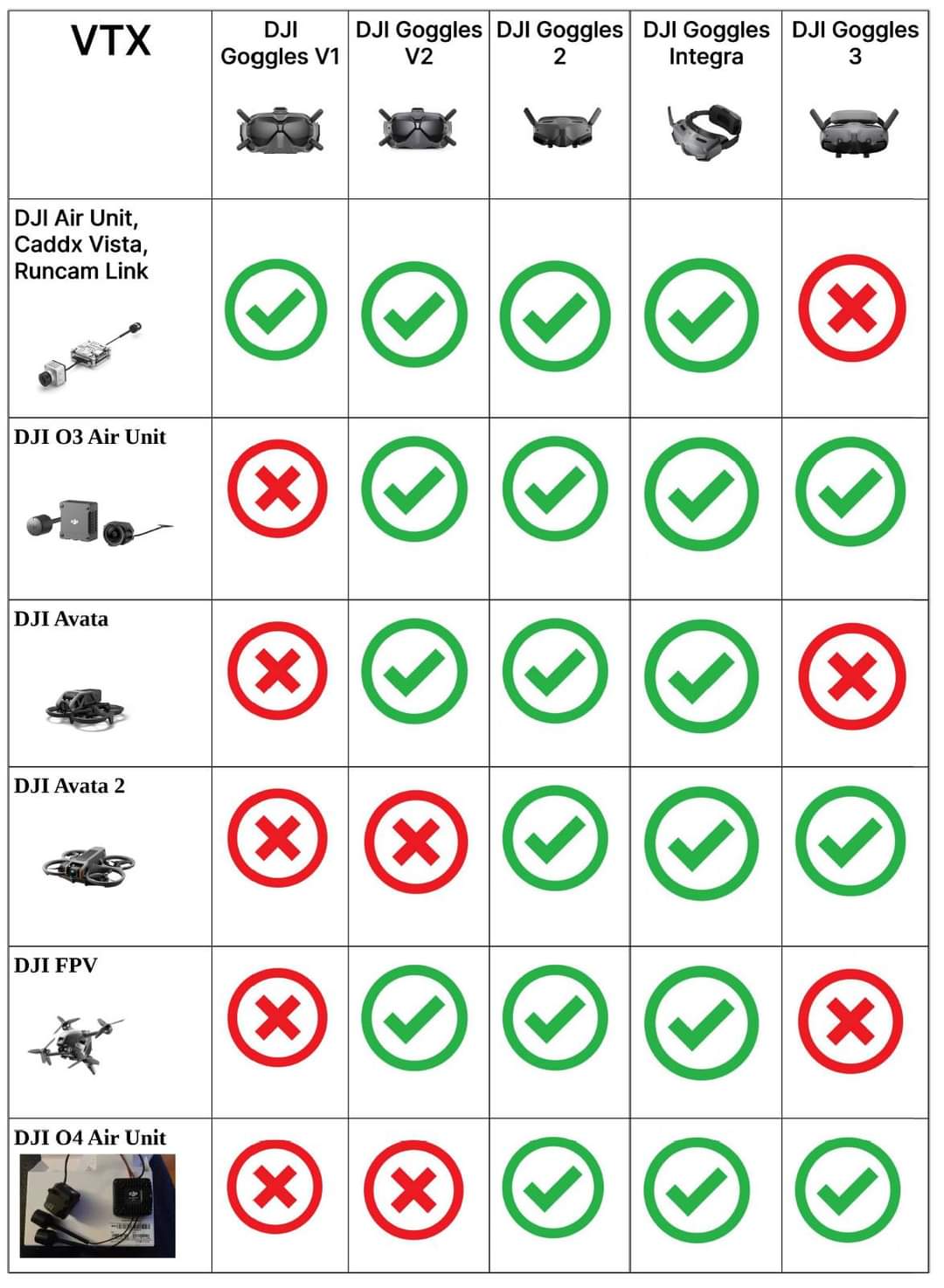
The compatibility chart is the real product
DJI’s official goggles-and-motion-controller chart uses a simple system: “” means compatible, “×” means incompatible. That matters because the company is no longer treating the headset as a generic display. DJI’s Avata 2 support page says the drone requires a DJI Goggles series product plus either a DJI RC Motion series product or a DJI FPV Remote Controller product to operate.
That is the core buying risk. You are not just choosing what looks best on your face. You are choosing what aircraft you can fly, what controller you can bind, and how much setup friction you will face before a session. DJI’s own troubleshooting advice for Avata-series link failures says to confirm compatibility first, then change the goggles to the correct drone model in Settings > About > Switch.
Where Goggles 3 fits
Goggles 3 is the broadest current bridge in DJI’s FPV lineup. DJI lists it as compatible with Avata 2, Air 3, Mini 4 Pro, the DJI O4 Air Unit Series, the DJI O3 Air Unit, and Neo. It also adds Real View PiP and built-in diopter adjustment from -6.0 D to +2.0 D, which makes it the most flexible modern headset for pilots who want one system that can move between training and more advanced builds.
For race-minded users, that breadth is the point. If you want a headset that can live across multiple aircraft families without immediately boxing you into one lane, Goggles 3 is the least specialized option in the current stack. It is especially useful if your path runs from small practice aircraft into HD race setups using O3 or O4 air units.
Where Goggles N3 makes sense, and where it does not
Goggles N3 is narrower by design. DJI says it is compatible with Avata 2 and Neo, and it must be used with RC Motion 3 or FPV Remote Controller 3. DJI also positions it around an immersive, motion-controlled flight experience, and its official product page calls out a 1080p ultra-wide screen.
That makes N3 a clean fit if your flying lives inside DJI’s newest small-aircraft ecosystem. If you are focused on compact practice, motion control, or staying inside Avata 2 and Neo, N3 is straightforward. The downside is obvious: it is not the headset you buy if you want the widest possible runway into other aircraft families. For a racer thinking one season ahead, N3 can become a cul-de-sac.
Where Goggles 2 and Goggles Integra still matter
Goggles 2 still has a place because it supports Avata, the DJI O3 Air Unit, and DJI FPV. That makes it relevant for pilots who already own older FPV or Avata-era hardware and want to keep those aircraft in rotation without forcing a full system reset. If your garage still has an O3-based build or a DJI FPV drone, Goggles 2 is one of the cleaner legacy bridges.
Goggles Integra sits in a similar middle ground, but with its own identity. DJI introduced it in February 2023 as an integrated headset with micro-OLED screens and DJI O3+ video transmission. It is part of the same larger compatibility puzzle, but it is not the broad modern bridge that Goggles 3 has become. Think of Integra as a purposeful headset from DJI’s transition period, useful if your fleet matches that generation, less attractive if you are trying to future-proof a new race kit.
Why FPV Goggles V2 is the legacy lane
FPV Goggles V2 remains relevant mainly for older FPV and Avata/O3-era setups. That is the important part: it still belongs in the conversation if you are preserving a legacy build, but it is not where you want to start if you are trying to minimize buying risk.
For competitive pilots, V2 is the kind of gear that can quietly trap you in a narrower ecosystem. If the rest of your kit is already built around it, fine. If you are buying today and want room to move between training drones, HD race rigs, and newer DJI aircraft, V2 is the most obvious dead-end among the current options.
What this means for race-day setup
The practical consequence is simple: headset choice now shapes how fast you get to the line. DJI’s support pages and manuals make clear that compatibility, firmware, and app-based configuration are part of the process, including setup through DJI Fly and DJI Assistant 2. That means a racer who buys for the wrong generation may not be dealing with a bad screen, but with a bad ecosystem fit.
- If you want the widest path across DJI aircraft and air-unit builds, Goggles 3 is the safest bet.
- If you are staying inside Avata 2 or Neo with motion control, Goggles N3 is the tightest, cleanest fit.
- If you are protecting an older Avata, DJI FPV, or O3 build, Goggles 2 keeps that hardware alive.
- If your current kit is legacy-first, FPV Goggles V2 still works, but it is not the strongest base for future upgrades.
That is the real lesson in DJI’s compatibility map: the headset is not an accessory, it is the center of gravity. In FPV racing, the fastest setup is the one that binds cleanly, updates cleanly, and lets you spend your time chasing laps instead of chasing menus.
This article was produced by Prism’s automated news system from verified source data, official records, and press releases, then run through automated quality and moderation checks before publishing. The system is built and supervised by the people who set the standards it runs under. Read our full AI policy.
Did this article answer your question?