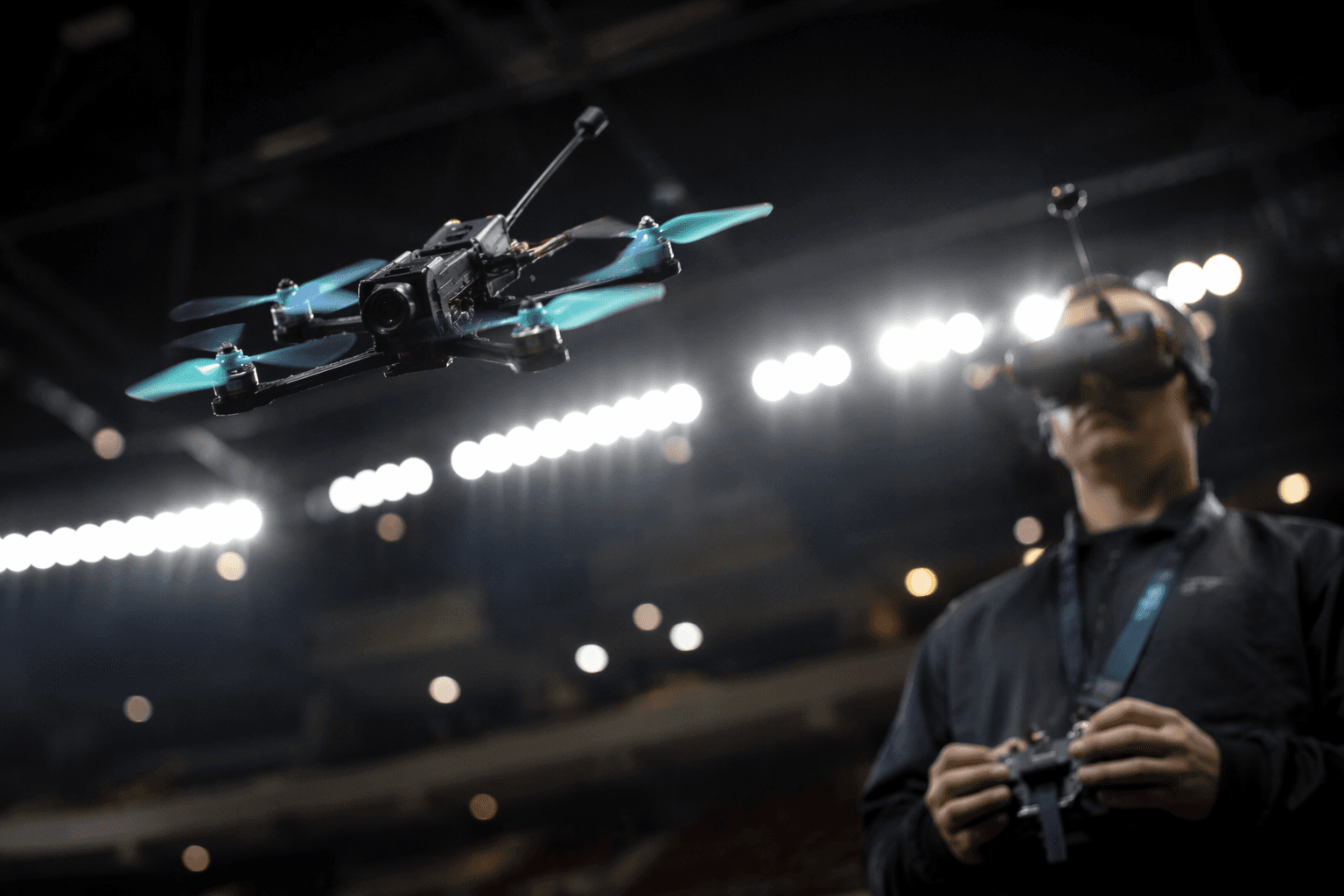
Drone racing guide spotlights five goggles and entry kits
The right goggles can decide whether a gate feels reachable or rushed, and this guide matches five FPV setups to the racers who benefit most.

The closest thing to a competitive edge in drone racing often sits on the pilot’s face. Low-latency goggles, a clean fit, and the right compatibility can mean the difference between a smooth gate line and a costly correction. That is why this guide breaks down five FPV goggles and entry kits by race-day utility, from immersive HD systems to budget DVR sets and starter bundles.
Why goggles matter before the first gate
In FPV racing, the feed is the race. DJI’s digital FPV push made that point in blunt terms, promising low latency and 720p video at 120 fps, because every millisecond matters when the drone is snapping through a turn or lining up the next gate. The bigger championship stage shows why those details matter: FAI calls the World Drone Racing Championship the biggest competition of its kind, and the 2018 championship in Shenzhen, China brought together 128 racers from 34 countries, including 44 juniors and 13 women.
That level of competition changes the buying decision. A racer is not just choosing screens or head straps, but the setup that helps with confidence, consistency, and fewer mistakes under pressure. Fit affects endurance over a long heat, latency affects reaction time, and DVR support can make post-run review useful instead of fuzzy. Compatibility matters too, because the wrong system can leave a pilot stuck with gear that looks good on paper but limits the way the drone actually flies.
Walksnail Avatar HD Goggles X for the racer who wants immersion
CADDXFPV’s Walksnail Avatar HD Goggles X are the most immersive option in the group, and the appeal starts with the view. The unit uses dual 1080p displays, a wide 50-degree field of view, and built-in head tracking, which gives the pilot a more enveloping picture of the course. For racers who want a screen that feels closer to being in the drone, that wider perspective can make the line easier to read in fast sections.
The hardware is built for flexibility as well. CADDXFPV says the Goggles X support 1080p/100FPS video, include built-in gyro hardware, and use a removable front cover with a replaceable receiver-module design meant to improve future upgrades. HDMI, AV, and CVBS inputs, plus support for analog signals, make the system useful for pilots who straddle different ecosystems instead of committing to one lane.
This is the setup that makes the most sense for a serious competitor who already knows what platform they fly and wants the sharpest possible view into it. The tradeoff is that the best performance comes when the rest of the rig can keep up. If your gear is already digital-friendly and you care about long-term upgradeability, Goggles X look like the most forward-leaning pick in the group.
APEX FPV Drone Kit for the first-season pilot
The APEX FPV Drone Kit is the most approachable all-in-one option in the guide. Its 120-degree field of view and Beginner Mode are built to lower the intimidation factor on the first flights, which matters when the pilot is still learning how fast the course really comes at them. The wider view can make initial orientation easier, and that can reduce the kind of panic corrections that lead to missed gates and oversteering.

What gives this kit its value is that it does not lock a new pilot into a dead-end path. The guide notes that it still leaves room for manual freestyle once the pilot improves, so it can grow with someone who starts on controlled laps and later wants more aggressive stick work. For a first-season racer, that balance is important: enough structure to build confidence, but enough freedom to keep developing once the basics stop feeling foreign.
Tiny Hawk Micro Drone Free Style 2 Kit for portable practice
The Tiny Hawk Micro Drone Free Style 2 Kit is the compact practice choice, and its strongest selling point is convenience. Quick setup and portability make it easier to fly often, which is usually how muscle memory sticks. In racing, that matters almost as much as top-end specs, because the pilot who gets more reps is usually the one who makes fewer small mistakes when the heat gets stressful.
This is the kind of kit that fits a racer who wants something simple enough to bring out for repeat sessions without turning every flight into a maintenance project. It is especially useful for pilots who need a practice tool they can reach for on a weekday, not just a race-day machine. The virtue here is repetition, not spectacle.
BETAFPV VR03 for the budget racer who still wants DVR
BETAFPV’s VR03 goggles fill the budget lane without stripping out one of the most useful features for learning: DVR recording. BETAFPV says the VR03 is a newly developed successor to the VR02 and adds DVR recording, which gives racers a way to review lines, look for missed throttle inputs, and study where a lap started to unravel. That makes them more than a cheap pair of goggles, because the recording function turns each flight into something a pilot can analyze afterward.
For a budget club racer, that combination can be more valuable than fancy extras. You may not get the immersive feel of higher-end systems, but you do get a practical path to improvement. DVR helps separate a bad lap from a bad habit, and that distinction is where a lot of progress begins.
DJI Goggles Racing Edition for the serious ecosystem player
DJI’s Goggles Racing Edition sit at the premium end of the guide and were introduced on November 22, 2017 for drone racers, aerial enthusiasts, and RC hobbyists. DJI says the goggles carry dual 1080p HD screens, OcuSync wireless transmission, Automatic FHSS technology, and head tracking. The package was built for pilots who want to stay inside a broader DJI ecosystem without sacrificing the racing-focused features that matter under pressure.

The Racing Edition’s value is not just image quality, but the way it ties into a larger digital FPV environment built around low latency and fast video delivery. That makes it a natural fit for serious competitors who already own or plan to build around compatible DJI gear. For racers who want premium hardware with a clear lineage and a system-level approach, this is the most complete closed-loop option in the group.
How to match the setup to the racer
The cleanest way to choose is to match the goggles to the problem you are trying to solve.
- If you are a first-season pilot, the APEX FPV Drone Kit is the easiest way to reduce early mistakes while you learn how to read a course.
- If you are a budget club racer, the BETAFPV VR03 offers a useful balance of affordability and DVR, which makes practice more productive.
- If you are a serious competitor with compatible gear, the Walksnail Avatar HD Goggles X and DJI Goggles Racing Edition both target the performance edge from different directions, one through immersion and upgradeability, the other through a mature premium ecosystem.
- If you want a small, repeatable practice tool, the Tiny Hawk Micro Drone Free Style 2 Kit is built for quick sessions and frequent flying.
The bigger lesson is that goggles are not an accessory choice. In a sport shaped by low latency, sharp visuals, and international competition, the right setup changes how a pilot sees the line, how long they stay composed, and how often they make the same mistake twice.
This article was produced by Prism’s automated news system from verified source data, official records, and press releases, then run through automated quality and moderation checks before publishing. The system is built and supervised by the people who set the standards it runs under. Read our full AI policy.
Did this article answer your question?