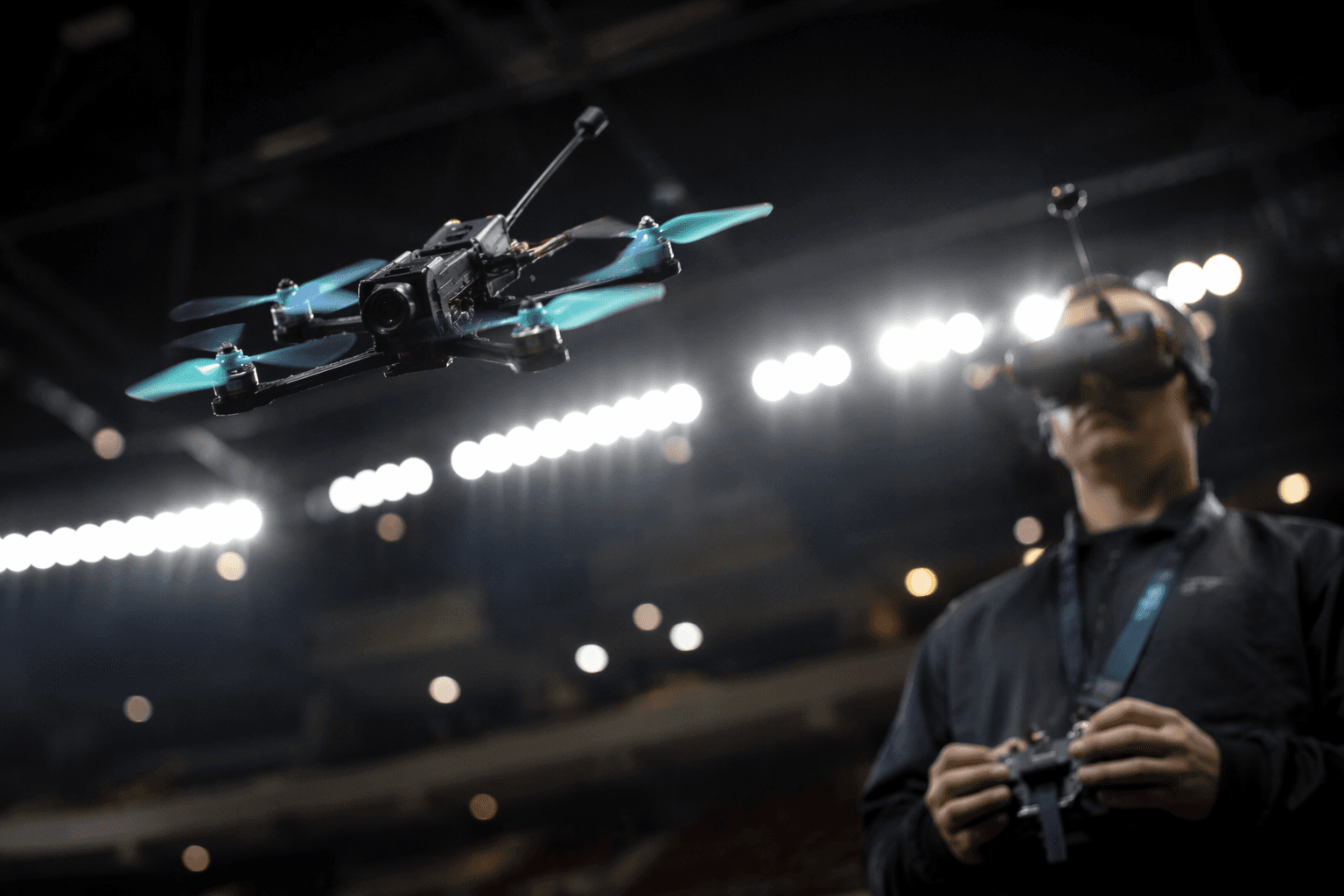
Drone racing pilots rely on software as much as flying skill
Drone racing is no longer won on sticks alone. From Betaflight to ExpressLRS and simulators, the real edge now lives in the software stack.

Drone racing starts to look a lot different once you stop treating the quad like a toy and start treating it like a system. The fastest pilots are not just reacting at the gate, they are managing firmware, radio links, simulators, logs, and setup tools that shape every lap before the motors ever spool up.
The hidden edge is software
Oscar Liang’s June 14 tutorial, *Useful Apps and Software for FPV Drone Pilots*, lands on the clearest truth in modern FPV racing: flying is only part of the job. The software side matters just as much, because pilots need tools to configure the flight controller, bind the radio link, update their systems, and diagnose what went wrong when the quad feels wrong in the air.
That matters because drone racing is brutally sensitive to setup. A poor flight controller configuration can make a fast machine twitchy or unstable, while a clean tune can mean the difference between clipping a gate and carrying speed through the corner. In a sport where tenths of a second and inches of clearance separate a clean lap from a crash, the laptop is part of the pit crew.
Start with the flight controller
Betaflight sits at the center of that setup for a reason. It describes itself as the world’s leading multirotor flight-control software for the global FPV drone racing and freestyle community, and its Betaflight App is the tool pilots use to configure flight controllers running Betaflight firmware. That makes it the first stop when a build needs to fly correctly, not just fly at all.
For pilots on Betaflight 4.4 and higher, the app goes a step further: it can build a custom firmware file in the cloud and flash it to the flight controller. That kind of workflow matters because it reduces friction between update, tune, and test. The less time spent fighting setup, the more time spent finding pace.
Radio links are race equipment too
A race rig is only as good as the link between the radio and the quad, which is where ExpressLRS has become essential. It describes itself as a fully open radio control link built for maximum range, speed, and data throughput, and it supports both 900 MHz and 2.4 GHz with packet rates up to 1000Hz.
That spec sheet tells you why racers care. High packet rates help keep control inputs responsive, while the 900 MHz and 2.4 GHz options give pilots flexibility in how they build around range and environment. ExpressLRS also organizes its getting-started flow in a practical way: configurator first, then radio and transmitter module setup, then flight controller and receiver setup, followed by before-you-fly checks and troubleshooting. That sequence mirrors how pilots actually prepare, from the bench to the staging lane.
Many racers also pair that with EdgeTX, which calls itself community supported software. On a sport that evolves fast and leans heavily on shared knowledge, that matters as much as any feature list. The software on the radio is not just a menu system. It is part of how pilots bind, switch, check, and adjust under pressure.
Training in the sim is part of real training
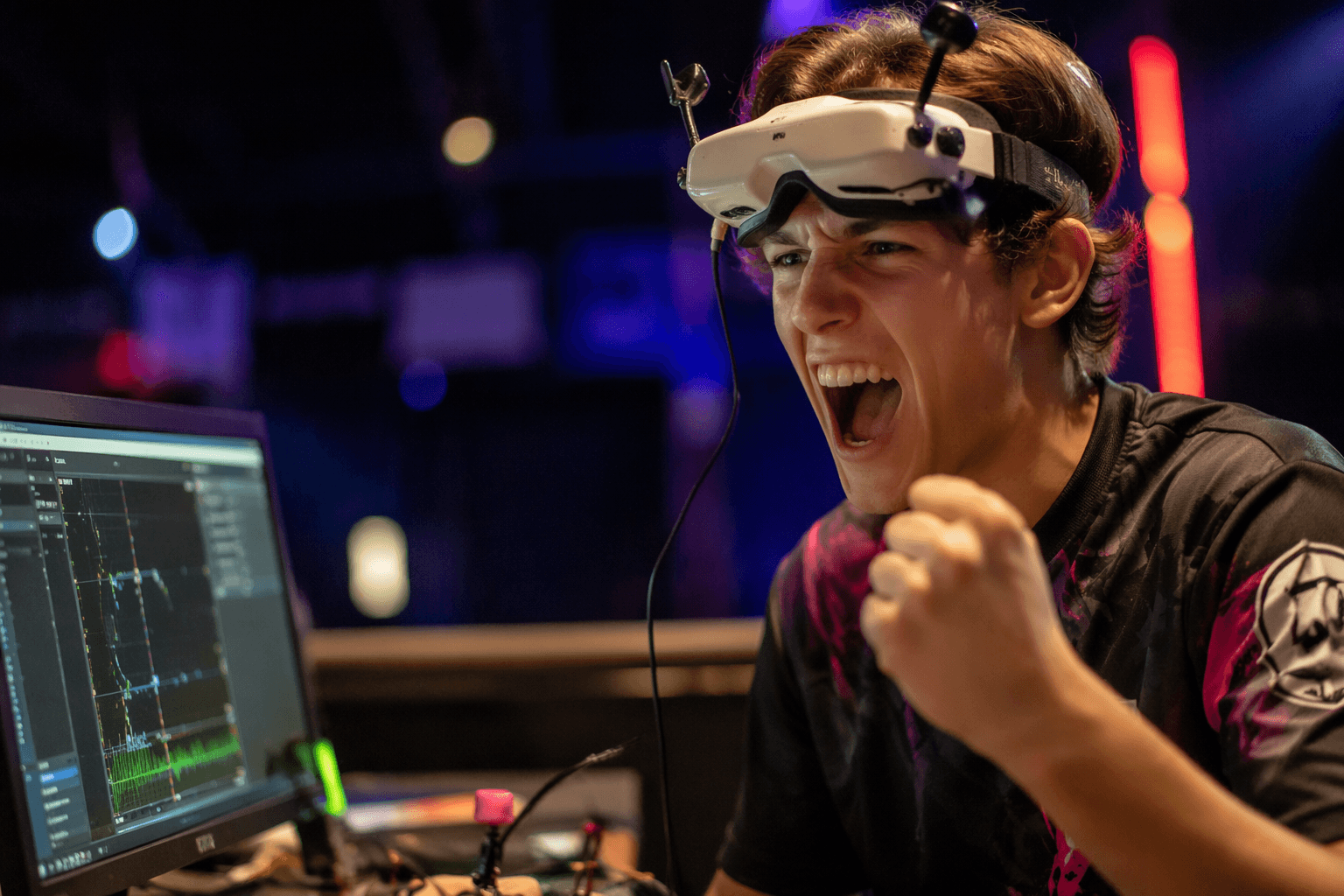
The simulator is no longer a warm-up toy. It is where muscle memory gets built cheaply, where new lines are tested without breaking props, and where the gap between theory and track speed gets narrowed before the first battery is charged. Oscar Liang’s simulator roundup reflects how broad that market has become, listing VelociDrone, Liftoff, DRL Simulator, TRYP FPV, Uncrashed, FPV.SkyDive, FPV Logic, Tiny Whoop simulators, and others.
That mix tells you the sport has split into different training needs. Some sims are built for high-speed race lines, others for freestyle motion, and the Tiny Whoop options serve the indoor, lightweight side of FPV. The key point is not that one sim rules them all. It is that the modern pilot has choices, and those choices shape how quickly stick work turns into lap time.
DJI’s own Virtual Flight was maintained until March 21, 2024, and is no longer maintained. That shift pushed users toward third-party simulators, which is a useful reminder that in FPV, software support can age out quickly. If the sim is part of your training plan, it has to stay current enough to keep practice realistic.
Logs tell the truth after the lap
When the quad flies badly, the answer is often buried in data. Betaflight’s Blackbox feature records raw flight-controller data for offline analysis and debugging, and Blackbox Explorer is the tool used to view and analyze those logs. This is where tuning stops being guesswork and starts becoming diagnosis.
That matters on race day, but it matters even more after race day, when a pilot is trying to understand whether a bounce-back came from tune, prop wash, noise, or a setup issue that only appeared at speed. Blackbox gives racers a way to see what the controller saw, not just what the pilot felt. In a sport built on instinct, that kind of evidence can save hours of blind changes.
The sport grew up around this kind of stack
Drone racing’s organized form took shape in the mid-2010s, and the institutions around it help explain why software became so central. The International Drone Racing Association was founded on April 3, 2015. The Drone Racing League was founded in 2015 and launched publicly in January 2016. Those dates mark the point when the hobby started hardening into a serious competitive scene with repeatable formats, structured events, and professional stakes.
The grassroots side grew just as fast. MultiGP says it has more than 30,000 registered pilots and 500 active chapters worldwide, which speaks to how widespread the local racing ecosystem has become. Its 2024 MultiGP International Open drew more than 200 flying pilots from around the world, and the MultiGP World Cup at that event attracted over 160 pilots vying to qualify. That is a big field by any measure, and it explains why preparation has to be layered, not casual.
The international calendar adds even more weight. The 2024 FAI World Drone Racing Championship took place in Hangzhou, China, from October 31 to November 3, 2024. Once a sport is staging world championships and large qualifier-driven events, the margins matter everywhere, from battery choice to radio setup to whether the pilot’s sim time has translated into repeatable race pace.
What the practical stack looks like
For a racer trying to put the whole system together, the order matters as much as the tools themselves:
- Use the simulator to build throttle control, gate discipline, and muscle memory before risking hardware.
- Use Betaflight and the Betaflight App to configure the flight controller, tune the quad, and flash firmware when needed.
- Use ExpressLRS, and often EdgeTX on the radio side, to lock in a responsive, reliable control link.
- Use Blackbox Explorer after flights to read the controller’s raw data and fix what the airframe is actually doing.
- Use the sim, the configurator, and the logs together, because the fastest improvements come when practice, setup, and analysis all point in the same direction.
That is the real story behind Oscar Liang’s guide. Drone racing still rewards reflexes, nerve, and clean lines through the course, but the competitive infrastructure around those laps has become just as important. The pilots separating themselves now are not only the ones who fly hard. They are the ones who know which software to trust, when to tune, and how to turn every tool into a faster next lap.
This article was produced by Prism’s automated news system from verified source data, official records, and press releases, then run through automated quality and moderation checks before publishing. The system is built and supervised by the people who set the standards it runs under. Read our full AI policy.
Did this article answer your question?