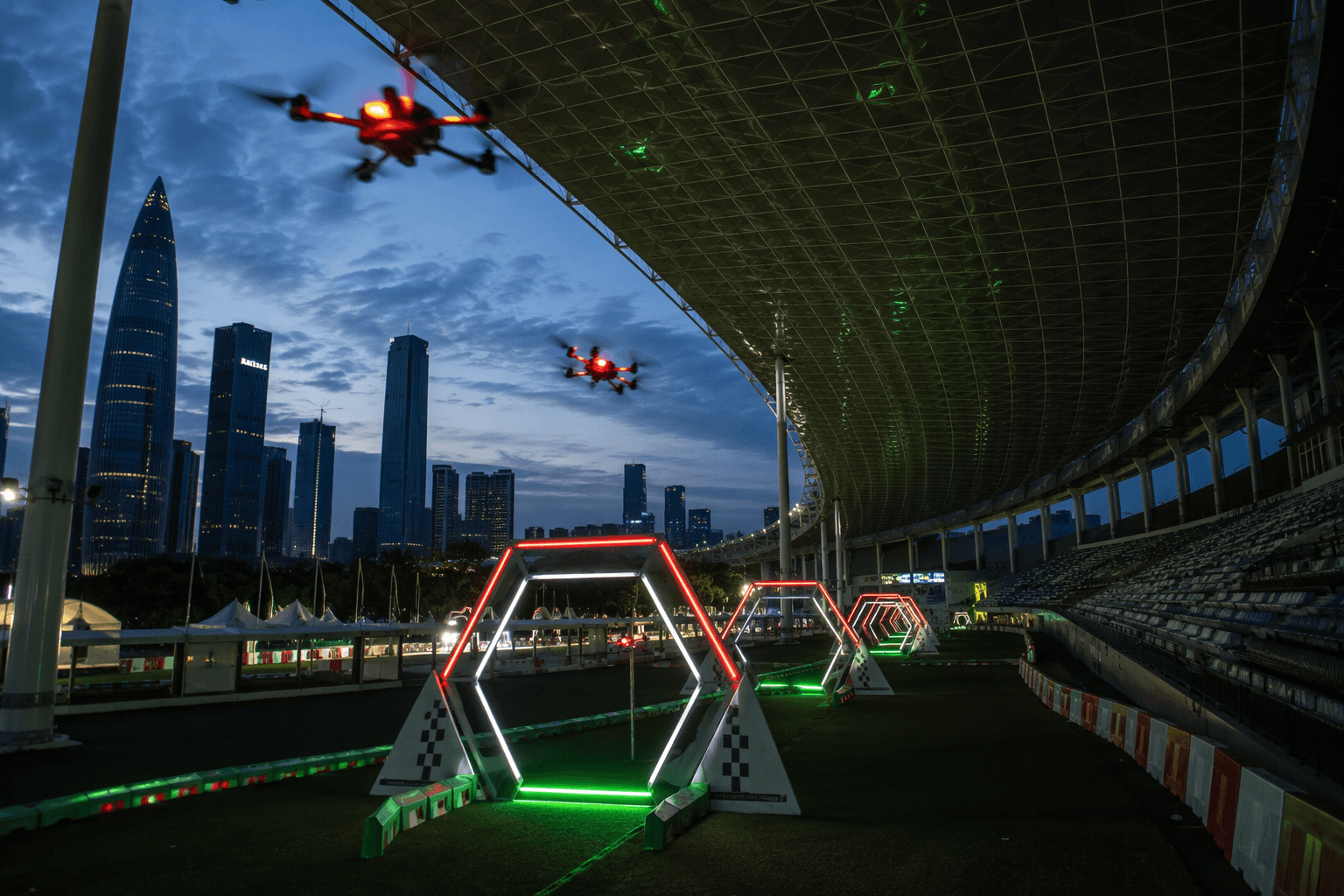
Drone racing pushes robotics to the limit in autonomous navigation test
Drone racing is robotics’ harshest benchmark because gate-lined courses force perception, planning, control, and recovery to happen in milliseconds. NASA and competition teams have used it to test autonomy from 2017 to 2019.
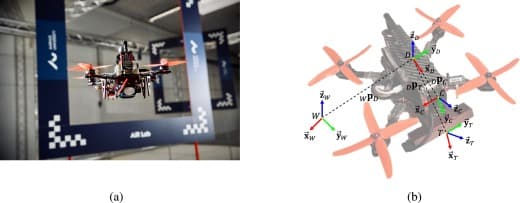
Race speeds exceed 80 km/h, accelerations go beyond 4 g, and a drone still has to make decisions on a tens-of-milliseconds scale. A drone has to spot gates, estimate its position, plan the next move, and keep flying while everything is happening at speed, on limited onboard compute and sensors. That combination has made the sport more than a spectacle: it is a brutal stress test for autonomous navigation.
Why drone racing became the benchmark
The appeal for robotics researchers is simple, even if the execution is not. Race tracks with gates and obstacles force perception, planning, control, and state estimation to work together at the same moment, not in isolation. The task compresses nearly every hard autonomy problem into one visually straightforward competition.
At that pace, motion blur handling, high dynamic range sensing, aerodynamic disturbance, model uncertainty, and the behavior of unpredictable opponents all come under real pressure.
What the 2023 survey established
The 2023 survey frames autonomous drone racing as a proxy for high-speed navigation, not just a niche hobby. It ties the work to surveying, search and rescue, and last-mile delivery, where machines also have to move quickly through complex spaces and react in real time. The survey identifies itself as the first survey on the state of the art in autonomous drone racing.
Autonomous drones in racing have to perceive, reason, plan, and act on a tens-of-milliseconds timescale while carrying only limited onboard hardware. That constraint compresses the core challenges that show up in many other aerial autonomy tasks.
How competition hardened the problem
Drone racing is not a laboratory curiosity detached from sport. The tracks are built around the same gate-heavy, obstacle-rich layout that defines FPV competition, and that setup is exactly what makes the benchmark useful. A drone cannot rely on broad open-space navigation; it has to thread a course, recover from error instantly, and stay stable while the environment keeps changing around it.
That is why the sport has become a proving ground for autonomy teams. The course design is familiar to FPV pilots, but for robots it is merciless, because the machine must solve a live perception-and-control problem every fraction of a second.
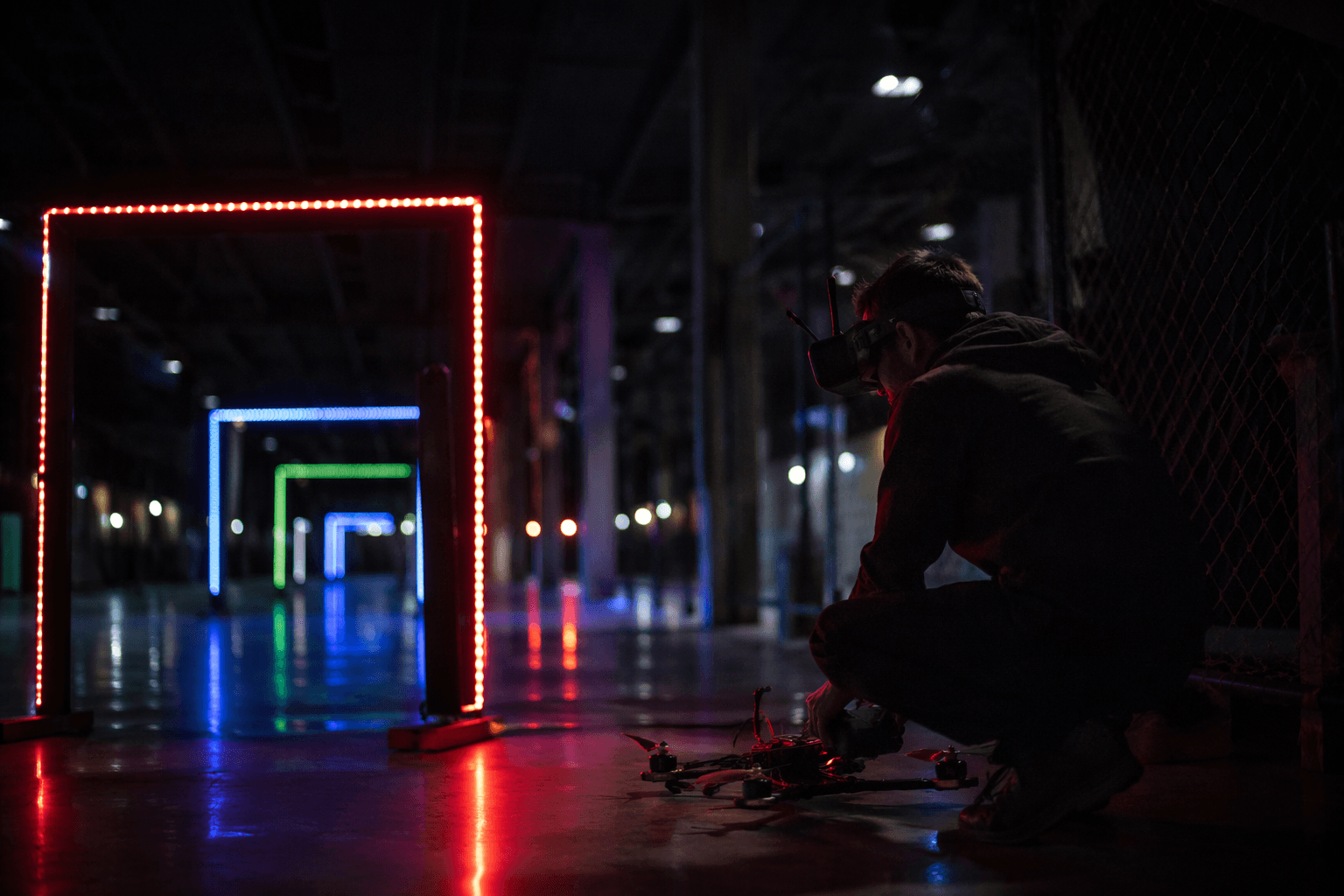
The 2019 race that showed how far autonomy had come
The winning paper from the 2019 AI Robotic Racing Competition laid out a serious autonomous racing stack. Human pilots can fly tracks at up to 190 km/h, and the winning system still had to work under severe real-time resource limits. Its approach combined a deep neural segmentation network for gate detection, active vision, robust state estimation, and risk-based control.
That system reached about 9.2 m/s in the final race. Even with that performance, it still lost to one of the best human pilots.
Why NASA’s 2017 race matters to the story
The research lineage did not start with competition trophies. NASA’s Jet Propulsion Laboratory staged a drone race on October 12 after two years of drone-autonomy research funded by Google, pairing an AI-controlled drone against a professional human pilot on a twisting obstacle course. NASA said the AI aircraft was slower but accurate, which captured the state of the field at the time.
NASA tied the work to future uses in warehouses and disaster-area navigation, the sort of places where a machine must move quickly, avoid obstacles, and recover from mistakes without human control.
From novelty to standard testbed
Drone racing now sits inside a broader robotics ecosystem that depends on public contests and standardized challenges. NASA’s robotics pages list international autonomous and student competitions. Robotics has long advanced through benchmarks that are visible, repeatable, and hard to game. Drone racing fits that tradition because it makes progress legible: faster gate detection, tighter control, better recovery, cleaner state estimation.
Later IEEE work calls autonomous drone racing the de facto benchmark for aggressive aerial autonomy in uninstrumented arenas.
This article was produced by Prism’s automated news system from verified source data, official records, and press releases, then run through automated quality and moderation checks before publishing. The system is built and supervised by the people who set the standards it runs under. Read our full AI policy.
Did this article answer your question?