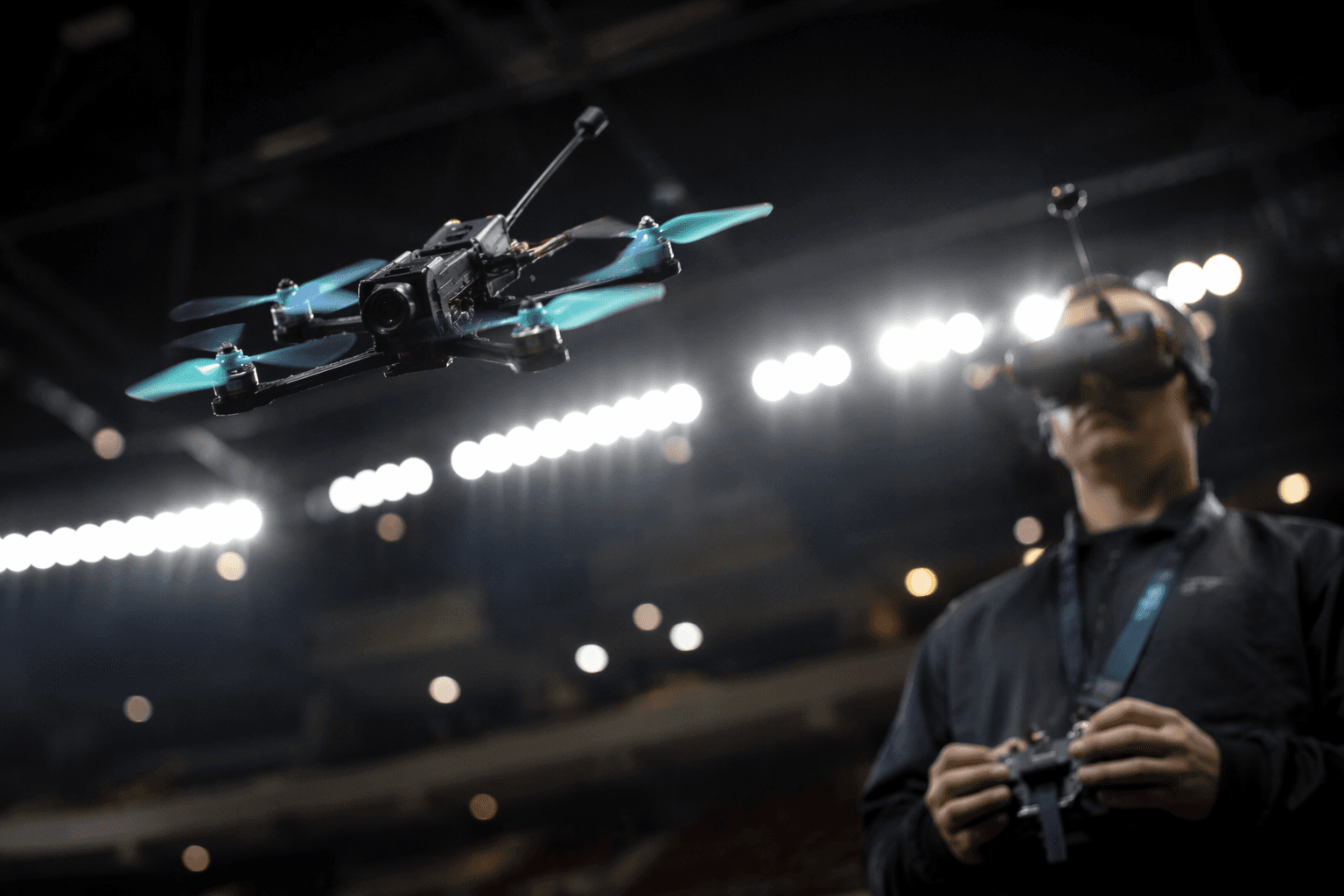
Drone racing’s 2026 rules standardize tracks, gates and lap timing
Drone racing’s 2026 rules turn the track into the story: fixed gate sizes, flagged landmarks and a first-gate timer create fairer, faster races.

Drone racing is no longer being sold as a pile of obstacles and a stopwatch. The 2026 rulebooks treat the course as the sport’s engine: a closed racing circuit with measured gates, fixed flag heights and timing that begins at a specific point, not when the drones simply launch. That shift matters because the geometry is what makes a lap feel fast, chaotic or brutally fair.
The track is now the sport’s core object
The Fédération Aéronautique Internationale’s Sporting Code Volume F9 Drone Sports 2026 Edition took effect on January 1, 2026, and it does something important right up front: it points organizers to dedicated track design and construction guidelines for F9U class drone racing. The FAI also defines the Drone Racing World Cup as a series of open international events, with pilots from around the world racing on different tracks for CIAM medals and diplomas awarded to the top three finishers in the annual ranking.
That framing pushes drone racing away from the idea of a one-off spectacle and toward a repeatable competitive format. The course is not background decoration. It is the central piece of sporting infrastructure, and the rulebook now says so in plain terms.
What standardized geometry actually looks like
MultiGP’s 2026 Track & Build Guide turns the abstract idea of a fair circuit into measurements that builders can actually use. The standard gate opening is capped at 7 feet wide by 6 feet tall, and flags must stand at least 8 feet high. A lap timer starts the moment a pilot passes the first gate, which means the opening sequence of the course is not just visual theater. It is the clock’s trigger.
The guide also gives builders concrete spacing and offset references, including a 64-foot spacing to gate 2, 57.6-foot and 53-foot offsets for later layout points, and a 16-foot relationship between gate placements and flag markers. Those numbers are small in the sense that they fit on a diagram, but they are huge in the way they shape racing. A course with repeatable measurements can be rebuilt in a park, a warehouse or a gym and still force pilots into similar choices about speed, throttle and line.
That is where the watchability comes from. Standardization does not flatten the sport. It creates a known baseline so the best pilots still win on execution, not on guessing which venue gave them the friendliest layout.
Why one course feels fast and another feels messy
The difference between a clean track and a chaotic one often comes down to line geometry, not just obstacle count. A 7-foot by 6-foot gate is tight enough to punish hesitation, but not so tiny that the track becomes random. An 8-foot flag marker gives pilots a vertical reference point they can read at speed, which helps define approach angles and cornering lines without making the circuit feel like a maze.
That balance is where track engineering starts to matter more than raw hardware. A gate placed with a 64-foot run-up can encourage acceleration and a long, committed approach. A 57.6-foot or 53-foot offset can force a late correction, changing whether a pilot can carry speed through the turn or has to scrub it before the next obstacle. Even the 16-foot relationship between gate and flag placement changes the visual cue a pilot gets at full speed, which can make a course feel clean, busy or unforgiving.
In practice, that is how organizers shape drama. Wider spacing can produce high-speed lines and more passing chances. Tighter geometry compresses the field and raises the risk of contact. The best tracks are not the wildest ones on paper. They are the ones that make pilots choose between a safe lap and a risky line that could win the race.
Why the rules make the sport portable
MultiGP’s organizer resources show how deliberate the sport has become. Its hub centralizes rule books, safety regulations, manuals and guides, class specifications, gate and build diagrams, chapter tier requirements and a racing gates build manual. That kind of consolidation matters because it gives local organizers a shared language for putting on a race without reinventing the sport every weekend.
MultiGP says it has more than 30,000 registered pilots and 500 active chapters worldwide, and it describes itself as the world’s largest drone racing league and FPV community. That scale only works if a chapter in one city can build a track that feels recognizable to pilots in another. Portable flags, repeatable gate dimensions and standardized build diagrams let the sport travel without losing its identity.
This is also why drone racing fits so many venues. A course that is measured in known relationships rather than improvised guesswork can be assembled in parks, fairgrounds, warehouses and gyms while still preserving the same competitive logic. The track becomes modular infrastructure, not a one-night stunt.
The modern rules now define the race, not just the flying
The 2025 World Games drone-racing rules define the discipline as multiple multirotor aircraft flying together through a closed racing circuit. That definition lines up with the FAI’s current approach and with MultiGP’s build standards: the race is not simply about who has the fastest drone. It is about how well a pilot handles a closed loop built to exacting dimensions.
That is the cleanest way to read the 2026 rule set. The FAI gives the sport its international structure, including the Drone Racing World Cup and its annual medals-and-diplomas format. MultiGP gives organizers the practical measurements that make a course buildable and comparable across venues. Together, they make the hidden part of drone racing visible: the track is where fairness is designed, speed is tested and chaos is controlled just enough to keep fans leaning in.
A good drone racing course now does more than host a race. It manufactures the kind of pressure that makes overtakes possible, crashes believable and every lap worth watching.
This article was produced by Prism’s automated news system from verified source data, official records, and press releases, then run through automated quality and moderation checks before publishing. The system is built and supervised by the people who set the standards it runs under. Read our full AI policy.
Did this article answer your question?