EnergyReservoir highlights lightweight battery sweet spot for drone racers
Lightweight 4S packs still look like the race-day sweet spot, and OVONIC’s 184-gram, 100C battery tops the chart for crisp laps and quick resets.
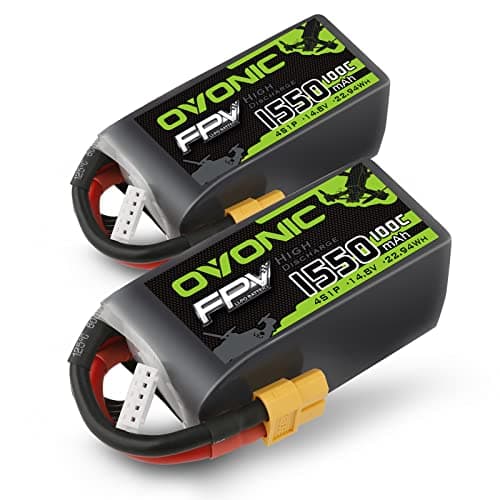
1. OVONIC’s 4S 1550mAh pack is the clearest lap-time pick.
EnergyReservoir puts the OVONIC 4S 1550mAh 14.8V 100C Lipo Battery with XT60 at the top because it gives racers exactly what technical tracks punish and reward: instant punch without excess mass. At 184 grams, it stays light enough to help the quad change direction fast, and the claimed 350-cycle lifespan plus fast-charging performance means less time waiting between heats and more time putting clean laps together.
2. Light weight still matters more than raw spec sheet muscle.
The roundup’s real message is that racing batteries are judged by how they behave in the air, not by a single headline number on the label. A lighter pack preserves agility, reduces drag, and keeps the quad feeling sharp through corners, which is why the 184-gram OVONIC beats bulkier alternatives when the goal is to clear gates cleanly instead of simply advertising a bigger milliamp-hour figure.
3. High discharge is the difference between a saved line and a scrubbed exit.

That 100C rating is not just marketing language in a sport built on split-second throttle changes. When a pilot punches out of a corner or corrects after an aggressive maneuver, the battery has to dump current instantly, and the roundup treats that burst response as part of race craft, not a luxury feature.
4. Heavier 6S packs still have a job, but it is a different one.
The comparison table in the roundup makes the tradeoff obvious with a 6S 4500mAh pack that weighs 612 grams. That kind of battery can bring longer flight times and make sense for larger-form-factor classes such as X-Class, but the added mass tends to blunt the snappy feel racers want on technical layouts, which is why endurance and agility remain opposite ends of the same tuning decision.
5. The 4S-versus-6S debate is now a class-structure question, not a religion.
MultiGP’s current class rules are built around fair competition, with Open Class allowing multirotors under 800 grams flying weight and Pro Spec set up as a 7-inch class with a 6S 2200mAh limit and a 1200-gram maximum all-up weight. With more than 30,000 registered pilots and 500 active chapters worldwide, those choices ripple across a huge racing community, while the Fédération Aéronautique Internationale’s 2026 drone-sports code taking effect on June 1 shows the international side of the sport remains tightly organized.

6. The math still explains why 4S holds up for race-day consistency.
A 4S pack runs at a nominal 14.8 volts, while 6S jumps to 22.2 volts, and that higher voltage can cut current draw. GetFPV’s long-running technical explainer showed that at 2,500 watts, a 4S pack would need to supply about 169 amps, while a 6S pack would need about 112 amps, which helps explain why 6S can reduce voltage sag and improve responsiveness, even if it also forces pilots to balance weight and capacity more carefully.
7. The smartest racers treat battery choice like setup work, not shopping.
Oscar Liang’s battery guide reinforces the same conclusion from another angle: 6S can improve responsiveness, reduce sag, and sometimes extend flight time, but those gains only matter if the pack still matches the build’s weight target and motor setup. That is the reality check EnergyReservoir drives home, because in current competitive racing the best battery is not the one with the loudest specs, it is the one that keeps the quad light, consistent, and fast enough to finish cleaner laps.
This article was produced by Prism’s automated news system from verified source data, official records, and press releases, then run through automated quality and moderation checks before publishing. The system is built and supervised by the people who set the standards it runs under. Read our full AI policy.
Did this article answer your question?