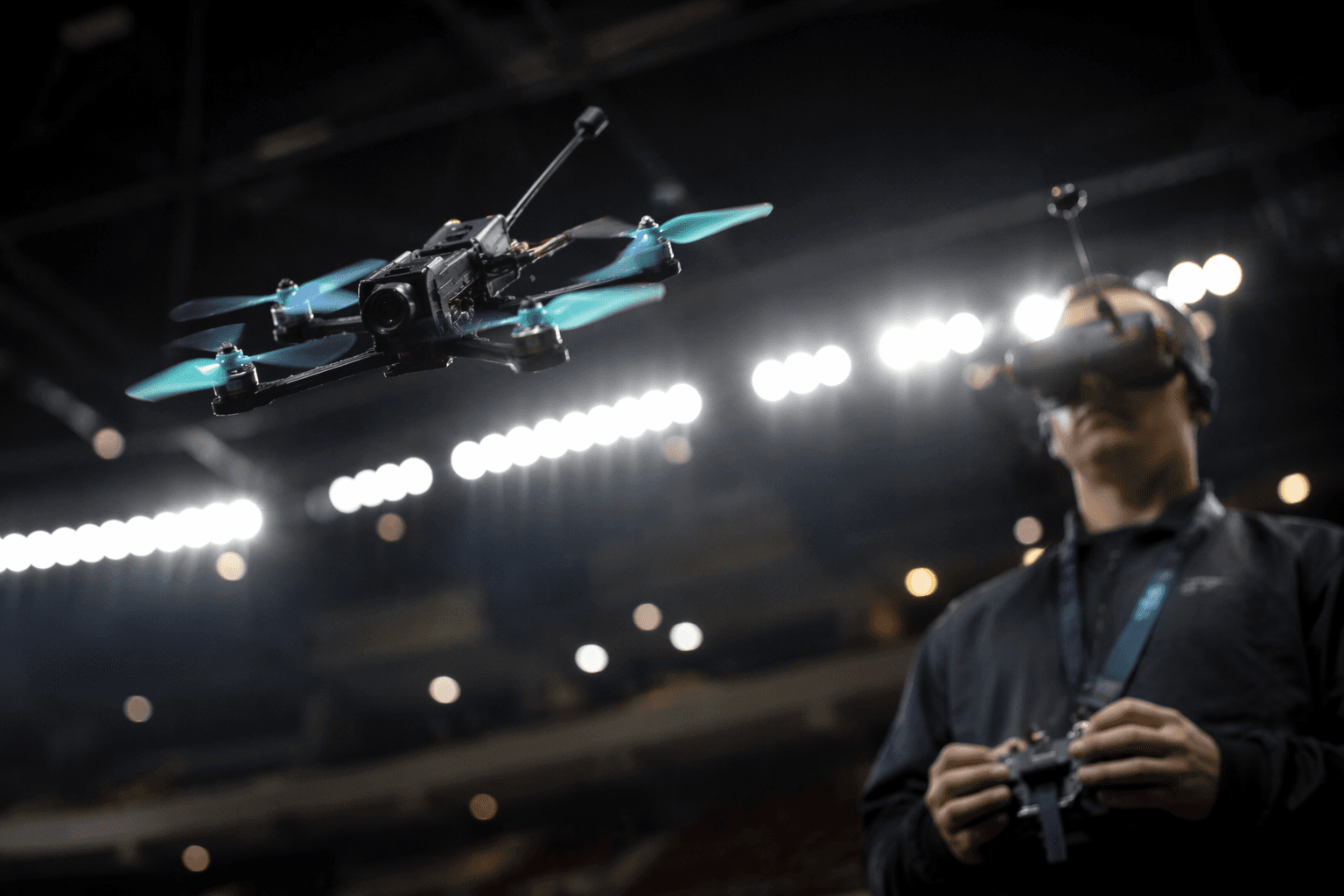
FPV drone racing builds skills, but combat demands patience and judgment
Elite FPV racers have the hands, but combat rewires the mind. War rewards patience, target discipline, and the judgment to wait for the shot that matters.

FPV racing gives you a head start, not a combat badge
The obvious story is wrong, and that is what makes it useful: elite FPV racers are not plug-and-play combat pilots. Racing gives you fast hands, clean stick inputs, and comfort inside a first-person video feed, but battlefield flying asks for a different mindset entirely, one built around patience, discipline, and mission judgment.
That gap matters because the sport and the war are asking drones to do opposite jobs. On a race course, the pilot is chasing lap time, punching through gates, and keeping momentum at all costs. In combat, the pilot may need to slow down, stalk a target, hover at the edge of the fight, or hold position until the angle is right and the drone is worth spending.
What transfers from the track
FPV racing still builds real value, and the transfer is not subtle. A racer learns how to react instantly, keep the drone stable through chaos, and make tiny corrections without oversteering. The first-person video feed also feels natural to people who have spent years staring into controllers, screens, and simulators.
The skills that carry over are concrete:
- fast reflexes under pressure
- precise stick control
- spatial awareness in a narrow field of view
- comfort making decisions from a video link instead of from direct line of sight
- the ability to stay calm while the drone is moving at speed
That is why younger, tech-savvy recruits often pick things up quickly. Ukrainian drone schools told Business Insider in December 2025 that gamers and people already comfortable with joysticks, controllers, and long periods of screen-staring tend to learn FPV fastest. The hardware may be military, but the learning curve still rewards the same motor habits that make good racers look effortless.
What combat forces pilots to unlearn
Combat flying is where the myth breaks. Racing teaches aggression, constant forward motion, and an instinct to squeeze every second out of a line. War punishes that if it becomes mindless. A battlefield pilot has to know when to wait, when to hide, when to preserve the drone, and when to commit.
That is the central contrast Reuters has pushed in its wartime drone coverage: Ukraine’s operators often fly low and deliberately, or hold position before attacking, which is the opposite of the continuous momentum that defines a race course. The best combat pilots are not just quick. They are deliberate enough to resist the racer’s instinct to rush every opening.
The unlearning is just as important as the learning:
- attack speed becomes controlled approach
- constant forward pressure becomes patience
- maximizing a lap becomes preserving the drone for the decisive strike
- racing instinct becomes target discipline
- split-second improvisation has to be balanced with mission judgment
That is why military trainers keep saying that racing skill is only the foundation. It gets a recruit to the door, but it does not finish the job.
Ukraine turned FPV into a training bottleneck
Ukraine’s experience shows how quickly this skill set became strategic. By December 2023, one Ukrainian FPV drone school said it had trained about 400 proficient pilots since opening in June 2022. That number sounds large until you remember how quickly the front line eats drones and how many operators the war keeps demanding.
The same school said combat FPV training can take about 200 hours in simulation, plus the loss of three to five drones before a pilot truly gets comfortable. That is the part outsiders miss. The bottleneck is not just building more drones. It is producing enough operators who can fly them well enough, fast enough, and under pressure.
The schools are trying to compress a brutal learning cycle. Ukraine’s drone training ecosystem, including the Blakytne Nebo school for aerial drone operators and groups such as Dronarium and Dignitas Ukraine, exists inside a war that keeps raising the bar. Trainers are not just teaching takeoffs and landings. They are teaching people how to survive long enough in the air to matter.
FPV in Ukraine is not a hobby story anymore
FPV drones in Ukraine are used for more than strikes. They also scout Russian positions and help find targets, which means the operator’s job stretches from reconnaissance to attack, often in the same mission chain. That makes the pilot a battlefield sensor as much as a weapons user.
Reuters footage has shown Ukrainian soldiers preparing FPV drones with explosives before strikes, a blunt reminder that this is frontline warfare, not a sports demo. Other Reuters reporting in July 2024 described a drone ecosystem moving fast enough to include AI-assisted FPV and expanding innovation while combat was still underway. Then in November 2025, Reuters Connect showed a Ukrainian serviceman launching an FPV drone with an AI-assisted targeting system in the Kharkiv region, proof that the front is already forcing the next version of the skill set.
The broader war map matters too. FPV work has become central across Ukraine, from Kyiv to the fighting areas around Donetsk Oblast, Kharkiv region, and Pokrovsk, where the need for trained operators keeps rising. The sport may be the doorway, but the battlefield has turned drone flying into a strategic capacity issue.
Western militaries are watching closely
NATO and other Western militaries are studying what Ukraine has learned because the lesson is obvious and uncomfortable: training pipelines have to evolve as fast as the threat does. NATO has said Ukrainian training programs had to change rapidly to keep pace with battlefield drone threats, which is another way of saying the old timelines are already obsolete.
That is also why the comparison between racing and combat matters. Western planners can admire the racer’s reflexes, but they cannot confuse speed with readiness. The future operator has to be able to do both: react like a pilot and think like a hunter.
So yes, FPV racing builds the right hands. It builds the eye, the reflex, and the confidence to fly through a tiny video window at speed. But combat demands something harder to teach and easier to miss: patience when speed feels natural, judgment when impulse feels good, and the discipline to wait for the one shot that counts.
This article was produced by Prism’s automated news system from verified source data, official records, and press releases, then run through automated quality and moderation checks before publishing. The system is built and supervised by the people who set the standards it runs under. Read our full AI policy.
Did this article answer your question?