FPV Drone Strikes U.S. Army Medevac Black Hawk at Baghdad Base
A $6M U.S. Army medevac Black Hawk was struck by an FPV drone costing a few hundred dollars at Baghdad's Victory Base Complex, rattling the racing world's regulatory footing.
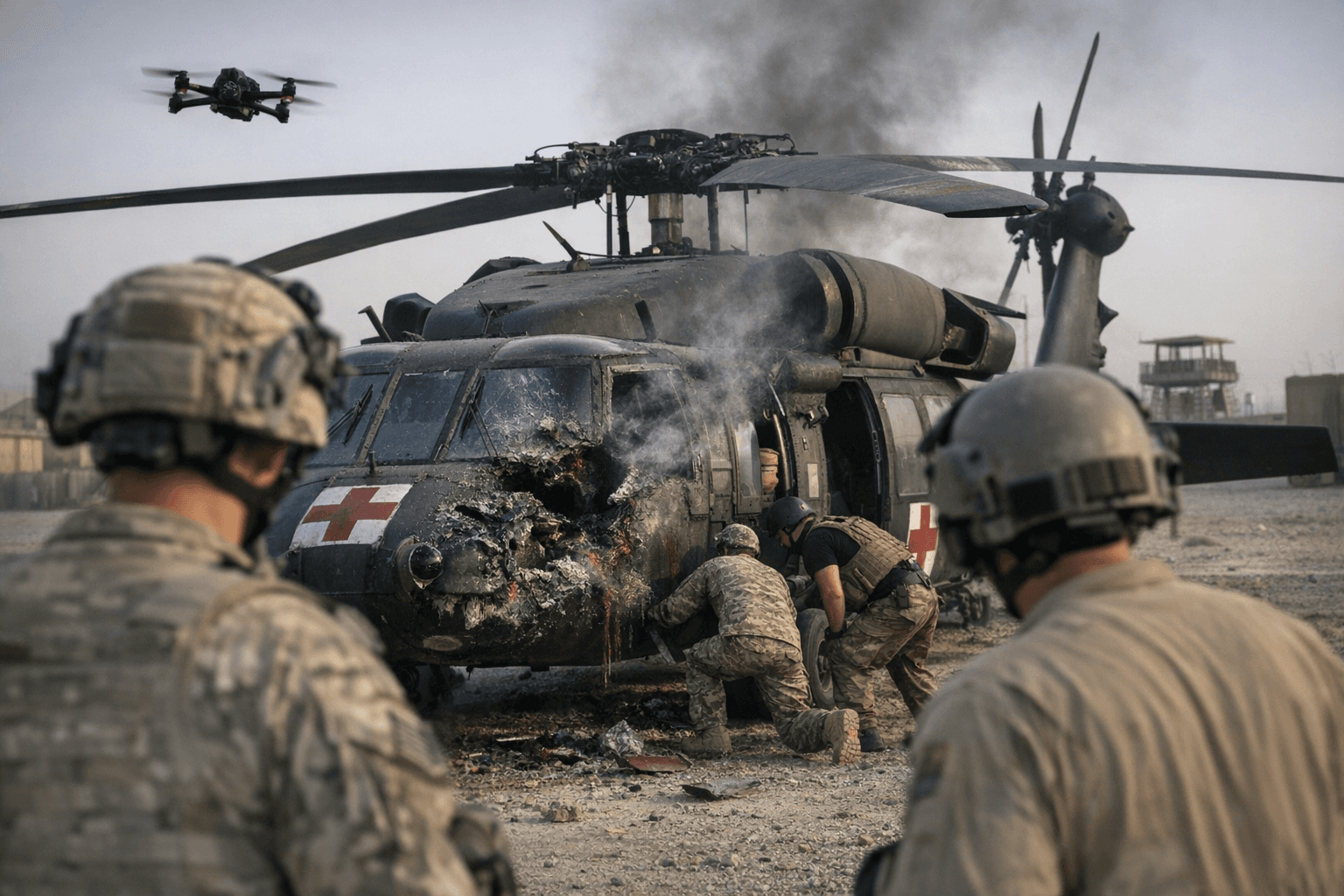
The footage circulating from Victory Base Complex does not look like a racing clip. It looks like racing technology turned against itself. An Iran-backed militia's FPV drone navigated low across a compound surrounding Baghdad International Airport and, according to open-source video and OSINT analysis, struck a parked HH-60M Black Hawk configured for medical evacuation. The video feed, shot from the drone's first-person view, cuts out just before impact on or near the main rotor. The red cross identification panels on the airframe are visible in the frames before it does.
The targeted helicopter belonged to Charlie Company, 2nd Battalion (General Support), 4th Regiment, 4th Infantry Division Combat Aviation Brigade, and its estimated value sits around $6 million. The weapon that struck it costs a few hundred dollars to build. That gap, a five-figure kill ratio in favor of the attacker, is not a glitch in the math. It is the point.
The same attack window also claimed an AN/MPQ-64 Sentinel radar, a container-based air-defense system whose rotating antenna was clearly active when the second FPV munition reached it. The Sentinel cues short-range air defense weapons, including the National Advanced Surface-to-Air Missile System. Losing it compounds the exposure of every other asset inside the wire.
What concerns counter-drone analysts most is something the footage itself reveals: no signal degradation appears in the video feed, even as the craft flies low behind structures. That kind of signal stability inside a hardened military installation points either to a launch position extremely close to the target or to a fiber-optic control link, a technology that produces no radio frequency emissions for conventional RF-based detection systems to catch. Defense Secretary Pete Hegseth had established a dedicated counter-drone task force after acknowledging "there's no doubt that the threats we face today from hostile drones grow by the day." The Baghdad footage suggests that task force has ground to make up.
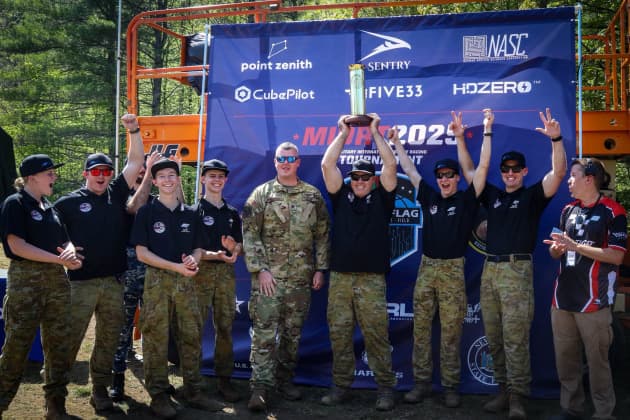
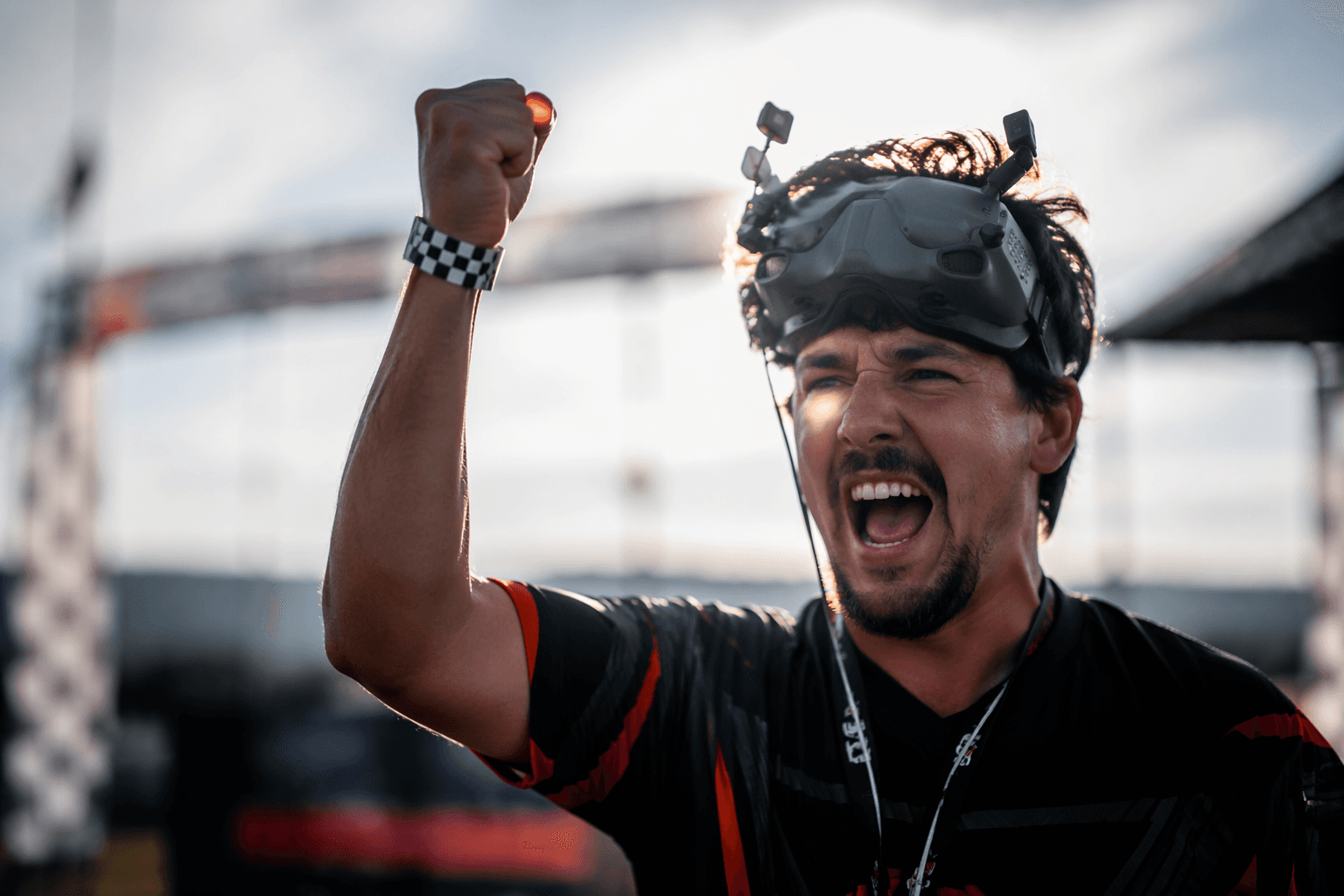
For the FPV racing community, the reputational math is almost as brutal as the tactical math. The same high-bandwidth video transmission, low-latency flight controllers, and agile airframe geometry that make competitive FPV racing spectacular are the core specifications that make attack drones lethal. Every time footage like this goes viral, the sport absorbs collateral damage it did nothing to cause. Regulators who cannot distinguish a MultiGP race pilot threading gates at 90 mph from a militia operator threading a blast wall respond to both with the same blunt instrument: tighter restrictions.
The FAA's Remote ID mandate already requires nearly every racing drone to broadcast identifying information in flight, functioning essentially as a digital license plate. Events held outside FAA-Recognized Identification Areas must comply, and enforcement is tightening heading into 2026. League organizers operating under frameworks like the FPV Freedom Coalition's safety guidelines, which require visual observers at all race events and explicit protocols near airports and restricted airspace, are positioned to demonstrate that organized racing operates within a disciplined, transparent structure that bears no resemblance to what happened at Victory Base Complex.
The bright line between sport and weapon exists. The racing community's job now is to make sure regulators can see it, before the next viral strike clip draws it somewhere else.
This article was produced by Prism’s automated news system from verified source data, official records, and press releases, then run through automated quality and moderation checks before publishing. The system is built and supervised by the people who set the standards it runs under. Read our full AI policy.
Did this article answer your question?