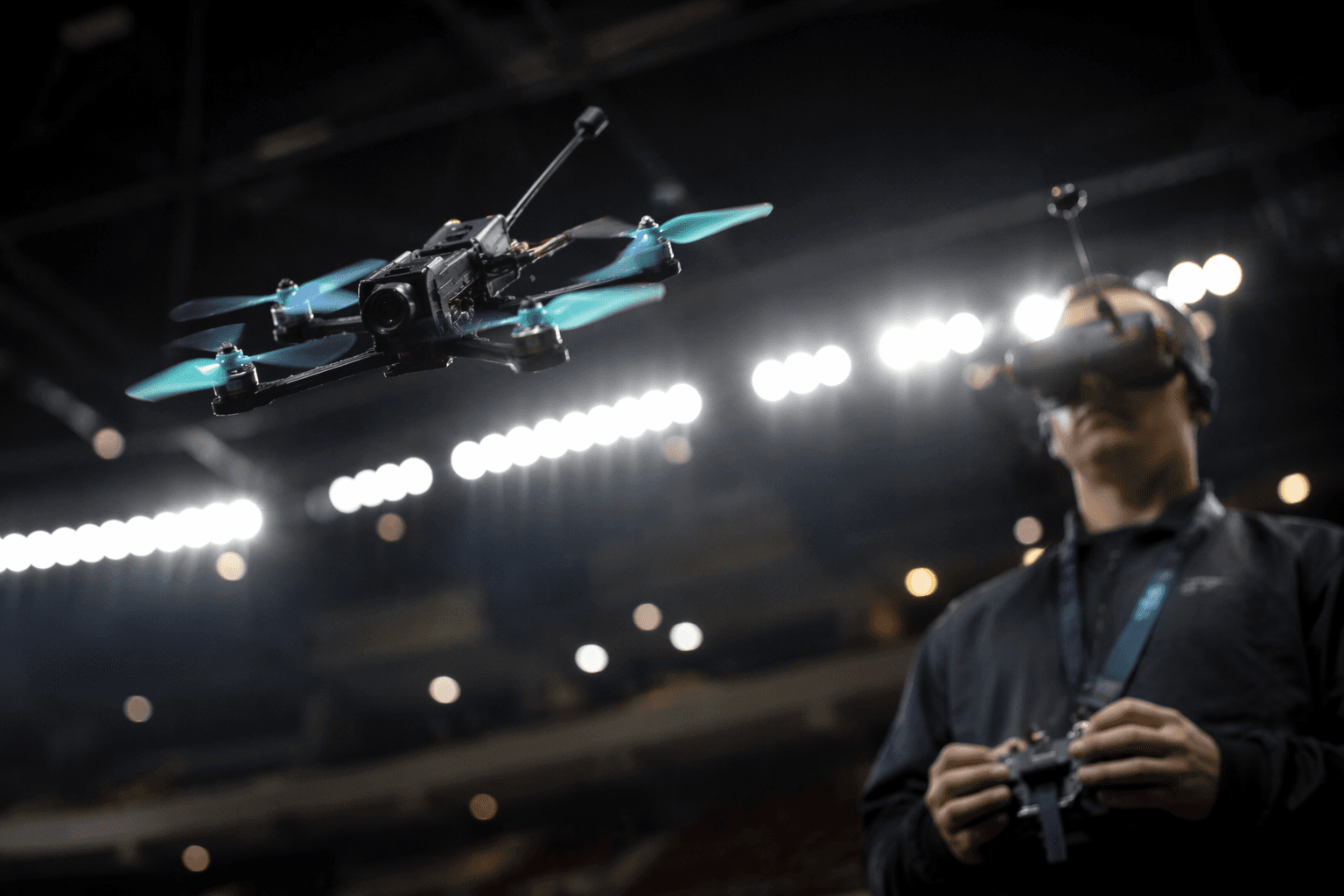
FPV goggles turned drone racing into a high-speed sport
FPV goggles gave drone racing its competitive language, turning a model-aircraft hobby into a fast, judgeable sport built on live vision, speed, and split-second control.

In drone racing, the pilot sees the course through the drone’s live camera feed, not from a distant patch of ground. FPV goggles gave the sport that defining rule. That change turned a model-aircraft curiosity into something that looks and feels like racing, with speed, line choice, gate precision, and crash risk all compressed into a view that fans can follow in real time.
The cockpit view that made drone racing legible
The Fédération Aéronautique Internationale defines the modern drone racer as a machine flown through first-person view, with pilots wearing goggles and steering from the live video stream carried by the drone’s onboard camera. That is the crucial difference from traditional line-of-sight flying. In FPV, the pilot is not watching a speck in the sky and mentally translating distance; the pilot is in the cockpit, reacting to what the drone sees as it dives, climbs, and snaps through the course.
That shift made the sport easier to understand as competition. A gate missed by inches, a turn taken too wide, or a recovery made just before impact is visible in the same frame as the decision that caused it. Instead of a distant aircraft circling for style points, FPV produces a race with a clear point of view, clear mistakes, and clear speed.
Why the hardware matters as much as the pilot
Drone racing is built around equipment chosen for performance, not just flight. The drones are generally built by the pilots themselves for speed and agility, and FAI says they can reach speeds over 100 mph.
The camera is only part of the setup. Each drone carries an LED light device with selectable colors so race officials and spectators can identify different machines during competition. At high speed, identification matters, especially when several pilots are threading the same course at once.
What FPV changes in the moment of racing
FPV racing compresses decision-making into fractions of a second. When the drone is moving at more than 100 mph, the pilot has to process the next gate, the angle of the turn, and the available margin for error almost instantly. That makes reaction time part of the spectacle, because every correction is made at speed, and every correction can save or end a run.
The sport also rewards a very specific kind of line choice. In an FPV race, the fastest route is rarely the most obvious one from the ground. A pilot has to pick the cleanest path through obstacles, then trust the drone to hold that line through a sequence of turns, drops, and accelerations. The result is a race style where precision is not separate from aggression; the best runs combine both.
Crash risk is part of the appeal, not a side effect. Because the pilot is seeing the course from the drone’s perspective, there is little room to coast. A late correction can mean clipping a gate or losing control entirely, which is why FPV racing feels so immediate. Every lap becomes a sequence of high-risk choices that spectators can understand without needing to know the engineering behind the frame.
Why the sport took off with younger and tech-focused audiences
At FAI’s 2017 conference, FPV was the main force behind drone sports’ rapid rise. The sport fit a generation that already understood gaming interfaces, fast reflexes, and digital competition, while still rewarding real-world engineering and manual control. That combination gave drone racing a different cultural reach than older model flying, which had often been more about hobbyist craftsmanship than live competition.
One speaker at that conference said the goggles make the pilot feel as if they are flying inside the drone. The experience is tunnel-like and intense, closer to a flow state than to traditional remote piloting. That sensory pull is part of why drone racing can attract people who may never have cared about aircraft in the first place.
The sport also sits at the intersection of engineering and play. Pilots build machines for speed and agility, then put those machines into a contest that rewards reflexes, precision, and nerve. That mix gives drone racing a pipeline feel, with skills that can start in gaming and move into real competition.
Why the goggles remain the sport’s defining edge
FPV binds the hardware, the speed, and the spectacle together. The goggles make the pilot’s view the public view, the onboard camera makes that view possible, and the colored LEDs help the race remain readable when several machines are tearing through the same airspace.
This article was produced by Prism’s automated news system from verified source data, official records, and press releases, then run through automated quality and moderation checks before publishing. The system is built and supervised by the people who set the standards it runs under. Read our full AI policy.
Did this article answer your question?