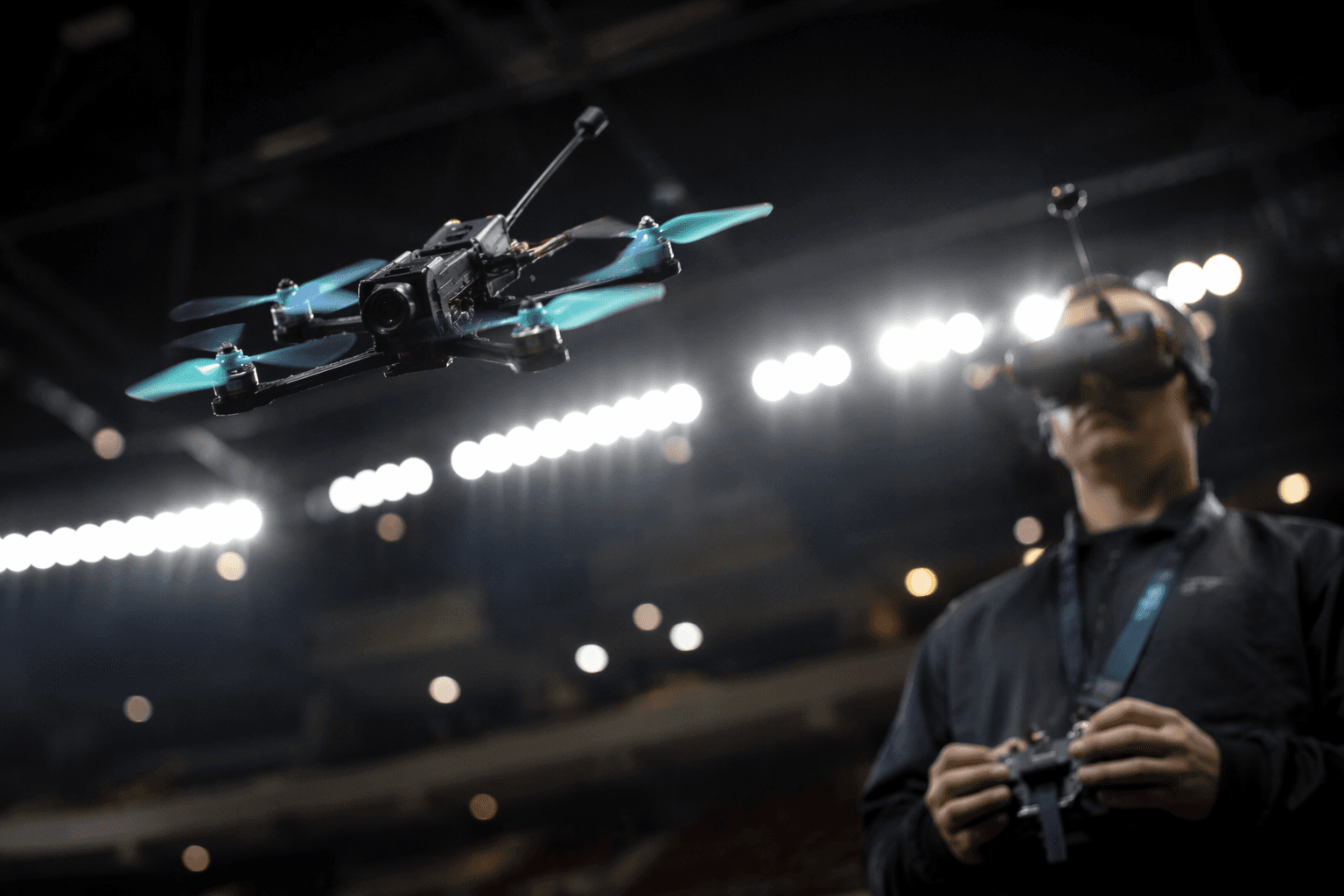
FPV racing leans on lighter motors and faster digital video links
Lighter motors and faster video links are turning FPV racing into a game of fractions, where cleaner lines and fewer mistakes matter as much as raw speed.

The real edge in FPV racing is shrinking every gram and every millisecond
The current FPV conversation is not about a single breakthrough drone. It is about the parts pilots trust when the gate closes: lighter motors, faster digital video links, and build hardware that survives hard landings without turning a heat into a rebuild. FPVStorerc’s latest community update puts that shift front and center, with lightweight high-thrust motors, low-latency VTX camera systems, and full build accessories emerging as the most sought-after upgrade categories.
That matters because race speed is no longer only about throttle. A lighter frame and an efficient motor set help a quad jump out of corners harder. A cleaner video link helps a pilot commit to a split-second gap without hesitation. Better build accessories cut the odds that a rough touchdown ends the day early. In practice, the most valuable upgrades are the ones that make a pilot more confident on lap four than lap one.
Motors still decide how hard a quad comes off the corner
The headline upgrade in this cycle is not flashy carbon or a new shell. It is motor performance. FPVStorerc’s update singles out lightweight high-thrust motors, and that combination tells the whole story: racers want acceleration without carrying dead weight. The goal is not just top-end speed on an open straight, but the punch to correct a line, recover after a dip, and stay competitive through a technical section.
That is why builders continue to lean on familiar names like T-Motor, iFlight, and Sequre. In a sport where one bent arm or weak motor mount can wipe out a heat, consistency is worth almost as much as peak output. The smartest race builds are the ones that balance thrust, durability, and serviceability, because a motor that is easy to trust is often faster over a full event than a more exotic setup that only looks better on paper.
What to look for before you buy
- Lower weight without giving up punch out of turns
- A motor that stays consistent under repeated heat runs
- Parts that are easy to replace between rounds
- A cost-to-performance balance that matches your local track and crash rate
Digital video is now a performance part, not just a convenience
The other major shift is in the goggles. The article’s emphasis on low-latency VTX camera systems reflects how much FPV racing now depends on image quality and signal consistency. A clear feed helps a pilot hold a clean line through a narrow gap; a delayed or unstable feed can turn a safe entry into a clip and a missed lap.

That is why the market in 2026 is still being discussed as a tradeoff among analog, DJI, Walksnail, HDZero, OpenIPC, and newer systems. Each option offers a different balance of latency, image clarity, ecosystem flexibility, and price. For racing, the core question is simple: do you want the sharpest picture, or the quickest response when the gate is coming fast?
RotorBuilds offers useful historical context here. Its archive points to DJI’s late-2019 arrival in FPV as a turning point, when digital feeds began to look less like a novelty and more like a real racing option. That shift helped move the sport away from the old analog-versus-digital debate and toward a more practical question: which system gives you the confidence to attack a track at speed?
The video-link tradeoff that matters on race day
- Analog still appeals to pilots who prioritize low delay and simplicity
- DJI and Walksnail offer strong image quality, which can help with visibility and judgment
- HDZero remains a low-latency choice that fits race-first decision making
- OpenIPC and newer systems broaden the field for pilots comparing cost and customization
For active racers, that tradeoff is not academic. A cleaner image can help with discipline through a technical course, while lower latency can make the aircraft feel more locked to the pilot’s hands. The best setup is the one that makes a pilot braver without making the system fragile.
The build itself is still part of the competition
FPVStorerc’s focus on full build accessories is a reminder that reliability often decides more races than raw spec sheets do. Connectors, mounts, wiring, and other small components are what keep a machine together after repeated hits. When those pieces are sorted, a pilot spends less time repairing between heats and more time dialing in lines.
That is also why the current market still feels so build-centric. Pilots who race regularly want parts they can tune, replace, and trust. The update suggests there is still strong demand for exactly that kind of inventory, which is usually a sign that club racing and local event participation remain active enough to reward steady refresh cycles.
The sport’s rulebook and event structure keep pushing incremental gains
FPV racing does not exist in a vacuum. The Fédération Aéronautique Internationale governs drone racing under its F9U class, and its 2025 Sporting Code became effective on 1 May 2025. The FAI also frames the Drone Racing World Cup as a series of open international events and says the World Drone Racing Championship is the sport’s pinnacle competition.
That structure helps explain why the parts market keeps tilting toward optimization instead of gimmicks. Standardized race formats reward equipment that is repeatable, durable, and easy to tune. In a sport built on precision, small gains in motors, batteries, props, and video systems are the difference between a clean podium run and a lap spent chasing lost time.
MultiGP is the other major pillar of that ecosystem. It calls itself the largest professional drone racing league in the world and says it has more than 30,000 registered pilots and 500 active chapters worldwide. That scale matters because it shows the sport is not a boutique corner of aviation tech. It is a broad grassroots racing network that depends on parts availability, upgrade cycles, and fast repair turnaround.
Standardized racing keeps the pressure on hardware choices
MultiGP’s collegiate racing materials for 2026 show how tightly the sport is being codified. Its CDRA rules use standardized track and gate requirements, including gates no larger than 7 feet wide and no taller than 6 feet. That kind of structure rewards the exact type of incremental hardware improvement FPVStorerc is highlighting, because pilot skill gets filtered through the limits of the build.
Hangzhou showed how global and technical the sport has become
The scale of the top tier was on display at the 2024 FAI World Drone Racing Championship in Hangzhou, China. The event ran from 31 October to 3 November 2024, drew more than 100 pilots from 33 nations, and featured a triple-level track that stretched 650 meters with 55 obstacles. That is not casual hobby flying. It is a full-speed technical test where equipment choices directly affect whether a pilot stays inside the line.
The results reinforced the sport’s depth. Yuki Hashimoto, Bai Xize, and MinJae Kim sat atop the overall and junior podiums, while Luisa Rizzo led the women’s podium. Those names matter because they show how international the competition has become and how younger pilots are increasingly shaping the front of the field. When the best racers in the world are separated by tiny mistakes, the demand for faster links and more responsive hardware only grows.
FPV racing is now defined by the same logic that drives other elite sports: the margins are small, the equipment matters, and confidence is built one component at a time. The pilots who gain the most this season will not be the ones chasing the loudest product launch. They will be the ones who choose the right motor, the right video system, and the right build parts to make every lap feel a little cleaner and a little faster.
This article was produced by Prism’s automated news system from verified source data, official records, and press releases, then run through automated quality and moderation checks before publishing. The system is built and supervised by the people who set the standards it runs under. Read our full AI policy.
Did this article answer your question?