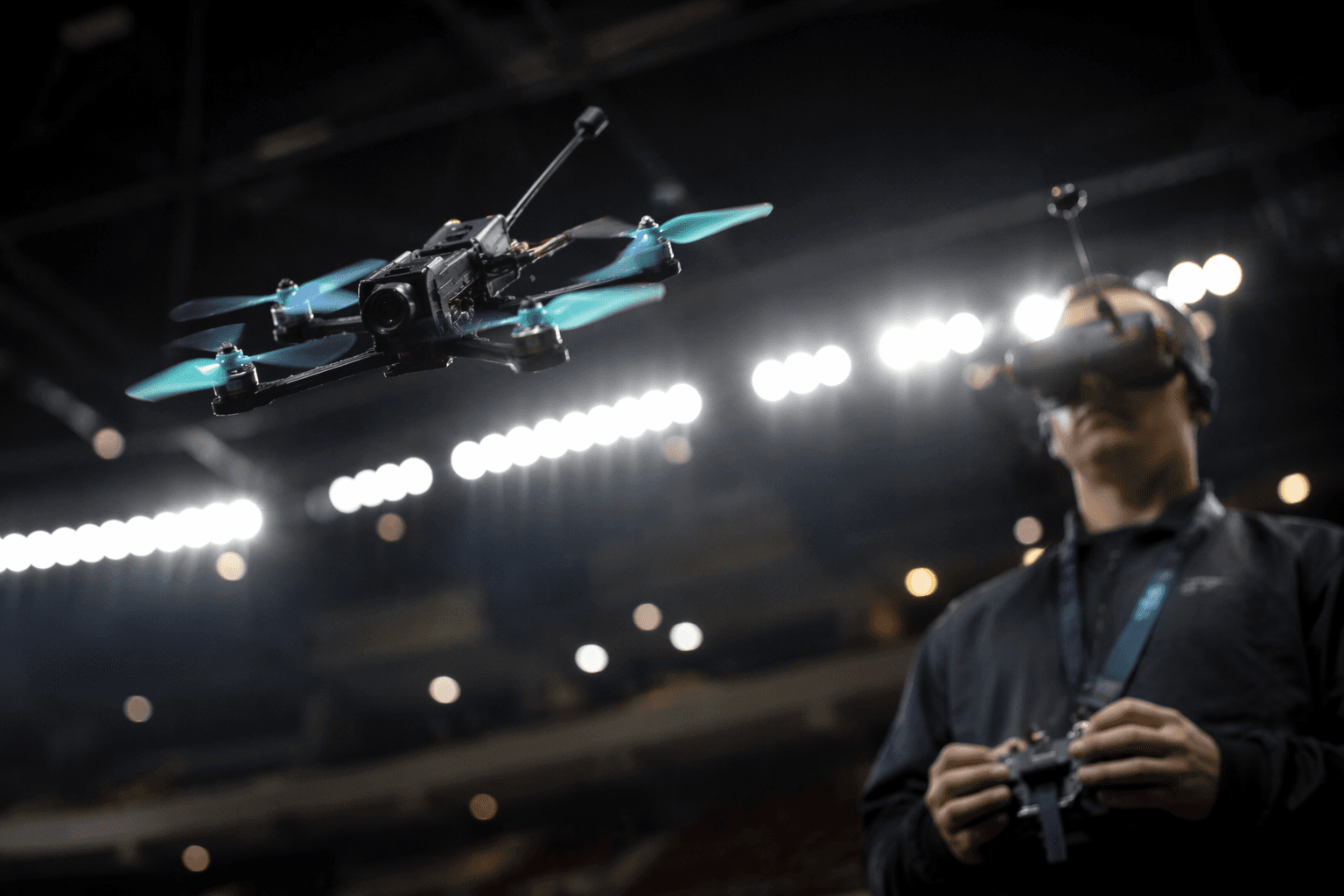
GoodiesRC guide helps new pilots build a race-ready quad
GoodiesRC’s setup guide turns a first quad into a race-day tool, with the 5-inch frame, Betaflight setup, and failsafe checks doing the heavy lifting.

A pile of FPV parts has to become a quad that can survive a club gate line. GoodiesRC’s June 25 setup guide focuses on the choices that decide whether the first launch becomes a clean lap or a pile of broken props and frustration.
Build for compatibility first
The first decision in a race-ready build is not the camera or the prop choice. It is whether the frame, motors, ESCs, battery voltage, camera, and video transmitter all belong together in the same system.
The guide points builders toward a 5-inch frame, which remains the practical center of gravity for many racers because it balances speed, control, and parts availability. A frame that is too small can feel twitchy and underpowered, especially once a pilot starts threading tighter club gates. A frame that is too large can feel sluggish and less suited to the quick directional changes that define regional race courses.
That balance also makes sense inside the sport’s rule structures. MultiGP, which calls itself the largest professional drone racing league in the world, says its class system is built to level the field so skill matters more than equipment. Its Open Class allows multirotors under 800 grams flying weight with a maximum frame size of 305 mm diagonal motor-to-motor, while Pro Spec is a separate 7-inch class with equipment limits and a 1200 g AUW maximum. A 5-inch build sits squarely in that racing ecosystem, close to the size most new pilots can actually keep running, repairing, and tuning without getting buried in cost or complexity.
Wire it cleanly, then make it behave in Betaflight
The next layer is physical assembly. Motors, ESCs, camera, and video transmitter have to be matched cleanly, then wired so the quad is not fighting loose connections or a rat's nest of power and signal lines. Clean wiring reduces the chance that the first hard landing turns into a dead component or an intermittent fault that only appears halfway through a heat.
Once the hardware is in place, binding the radio and configuring the flight controller in Betaflight becomes the real checkpoint. Betaflight calls itself the world’s leading multi-rotor flight control software for the FPV racing and freestyle community, and its role in a race build is bigger than menu setup. Rates, tune, and failsafe behavior all have to be confirmed before the quad is ready to send through a gate at speed.
If the tune is sloppy, the machine can bounce, wobble, or drift when the pilot needs it to snap through a turn. If the rates are wrong, the quad may feel disconnected in the air, forcing the pilot to make corrections that cost time and confidence. If the failsafe is not right, a lost link can turn a normal lap into a crash, a fence strike, or a lost pack.
Why Betaflight 4.5 setup discipline matters
Betaflight 4.5 is an incremental release from 4.4, and the release notes say previous PID and filter values generally do not need to change. The same release notes make one thing non-negotiable: a full chip erase is mandatory when flashing.

The release notes also warn that Angle, Horizon, and GPS Rescue users should not reuse previous values and should start from the new defaults. Even for race-focused pilots, that warning reinforces a larger point about setup discipline: do not assume old settings are safe just because they worked in a different model or firmware state. The machine has to be treated as a whole system, not a pile of remembered numbers.
Betaflight began as open-source MultiWii code based on Arduino 8-bit boards.
Failsafe is not optional
The most important bench work in any first race build is the failsafe check. Betaflight’s guide recommends flight-controller-based failsafe and explicitly says not to rely on receiver-based failsafe. That distinction matters because a racing quad is exposed to signal loss every time it disappears behind a gate, a wall, or another pilot in a packed lane.
Betaflight’s failsafe sequence is built around timing. Signal validation lasts 100 milliseconds, then the system holds last-known-good values for 300 milliseconds before Stage 1.
Testing before takeoff follows the same logic. A proper setup includes a bound radio, a clean arm sequence, current firmware, and a machine that responds the way the pilot expects when the signal disappears or the throttle is cut.
What the guide gets right, and where real entry-level racing still pushes back
The strongest part of the setup advice is its sequence. Choose a compatible stack, wire it carefully, configure Betaflight, test the bench behavior, then fly with a plan. That is the order that keeps new pilots from blowing through parts on day one and wondering why the quad feels unstable in a gate-heavy course.
It also reflects the reality of first-time race hardware in 2026: beginners often try to shortcut the build and end up paying for it in broken arms, smoked electronics, or a quad that will not arm cleanly. The guide pushes in the opposite direction, toward a machine that is predictable enough to trust before the first launch and durable enough to survive the learning curve.
This article was produced by Prism’s automated news system from verified source data, official records, and press releases, then run through automated quality and moderation checks before publishing. The system is built and supervised by the people who set the standards it runs under. Read our full AI policy.
Did this article answer your question?