Luceed FPV ranks the best FPV video systems for 2026 racers
HDZero edges the 2026 race-day ranking, but DJI, Walksnail, analog, and ArtLynk still fit different pilots and budgets.

1. HDZero
Luceed FPV's ranking starts where race laps are won: HDZero. It transmits uncompressed video and claims less than 1 millisecond fixed latency, which is exactly the kind of edge that matters when you are threading gates, diving into a split-S, and trying to keep the picture locked when the airspace gets crowded. HDZero also sells the Race V3 transmitter for racing frames, a signal that this system is built first for control feel, not just pretty footage.
That makes HDZero the clearest buy for elite racers chasing qualifying margins. In a sport where MultiGP says it now has more than 30,000 registered pilots and 500 active chapters worldwide, milliseconds matter more than marketing language, and HDZero is the one system in this list that speaks that language most directly.
2. DJI O4 Air Unit Series
DJI takes the next spot because it is the strongest all-around digital option for racers who also care about what comes off the goggles and into the edit. DJI launched the O4 Air Unit Series on January 9, 2025, and says the lineup offers higher resolution, lower latency, and extended range, with the O4 Air Unit weighing 8.2 grams and the O4 Air Unit Pro using a 1/1.3-inch sensor with 4K/120fps recording.
That combination gives you a cleaner picture through gates without giving up the premium feel that has pulled so many pilots toward digital FPV. If you race hard but also want one build to handle practice clips, sponsored content, and the occasional freestyle line, DJI is the most complete package in the field.
3. Walksnail
Walksnail remains the middle-lane choice in a market that no longer has a single default stack. Its Avatar line is positioned as a digital HD FPV ecosystem, and that matters because the 2025-2026 cycle has turned FPV into a true three-way digital fight instead of a one-system march away from analog.
For club pilots, Walksnail is often the compromise that makes sense: more modern image quality than analog, less single-mindedly race-optimized than HDZero, and part of the broader move that has made budget HD systems a real factor in buying decisions. If your priority is a balanced setup for mixed use, not pure tenths-of-a-second hunting, Walksnail sits in the part of the grid where value and versatility still matter.
4. Analog
Analog keeps its place because cost still decides what gets flown on a Tuesday night and what survives a full season of crashes. MultiGP's current educational material says analog was historically the only viable choice for racers because of its extremely low delay, and that legacy still explains why so many pilots trust it when they want simple, cheap, and familiar gear.
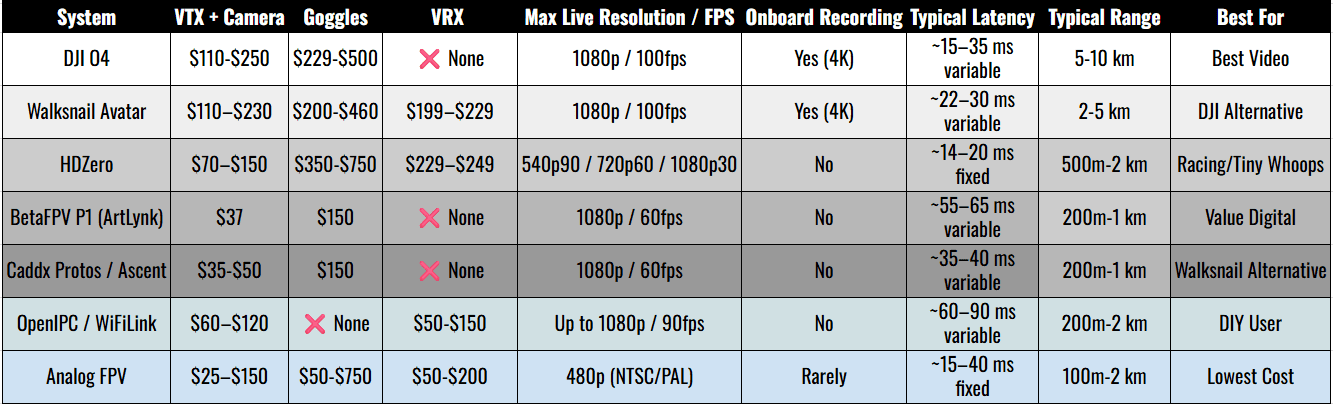
The problem is that the market around it has changed. Budget HD systems have raised expectations for image quality, and once you have seen a cleaner digital feed through a gate complex, analog stops looking like the universal default and starts looking like the budget-first option it now is. For club pilots on a tight budget, it remains the lowest-cost way to keep flying, but it no longer defines the performance ceiling.
5. ArtLynk
ArtLynk is the wildcard in Luceed FPV's five-way snapshot, and its place on the list says as much about the market as it does about the product itself. The important point is not that every racer needs to buy into a fifth system, but that the FPV ecosystem has fragmented enough that a ranking can now include DJI, Walksnail, HDZero, ArtLynk, and analog as separate buying paths.
That fragmentation is the real story for 2026 racers. MultiGP says digital FPV is now standard in its world, while its 2026 eSport season uses VelociDrone as the official simulator, which shows how race culture now stretches from real gates to virtual laps. In the United States, the FAA says Part 107 governs most non-recreational flying under 55 pounds, while recreational flyers must pass TRUST, so the smartest buying decision is not just about video quality. It is about how often you race, how hard you crash, how much you want to spend over a season, and whether you are buying for a podium push now or waiting for the next hardware cycle to settle down.
This article was produced by Prism’s automated news system from verified source data, official records, and press releases, then run through automated quality and moderation checks before publishing. The system is built and supervised by the people who set the standards it runs under. Read our full AI policy.
Did this article answer your question?