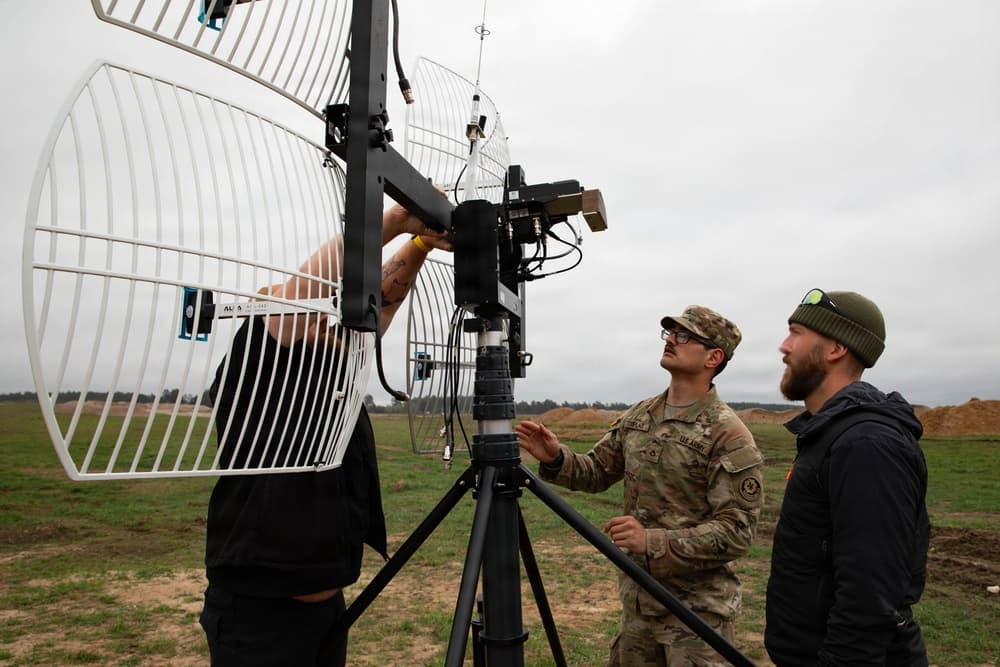
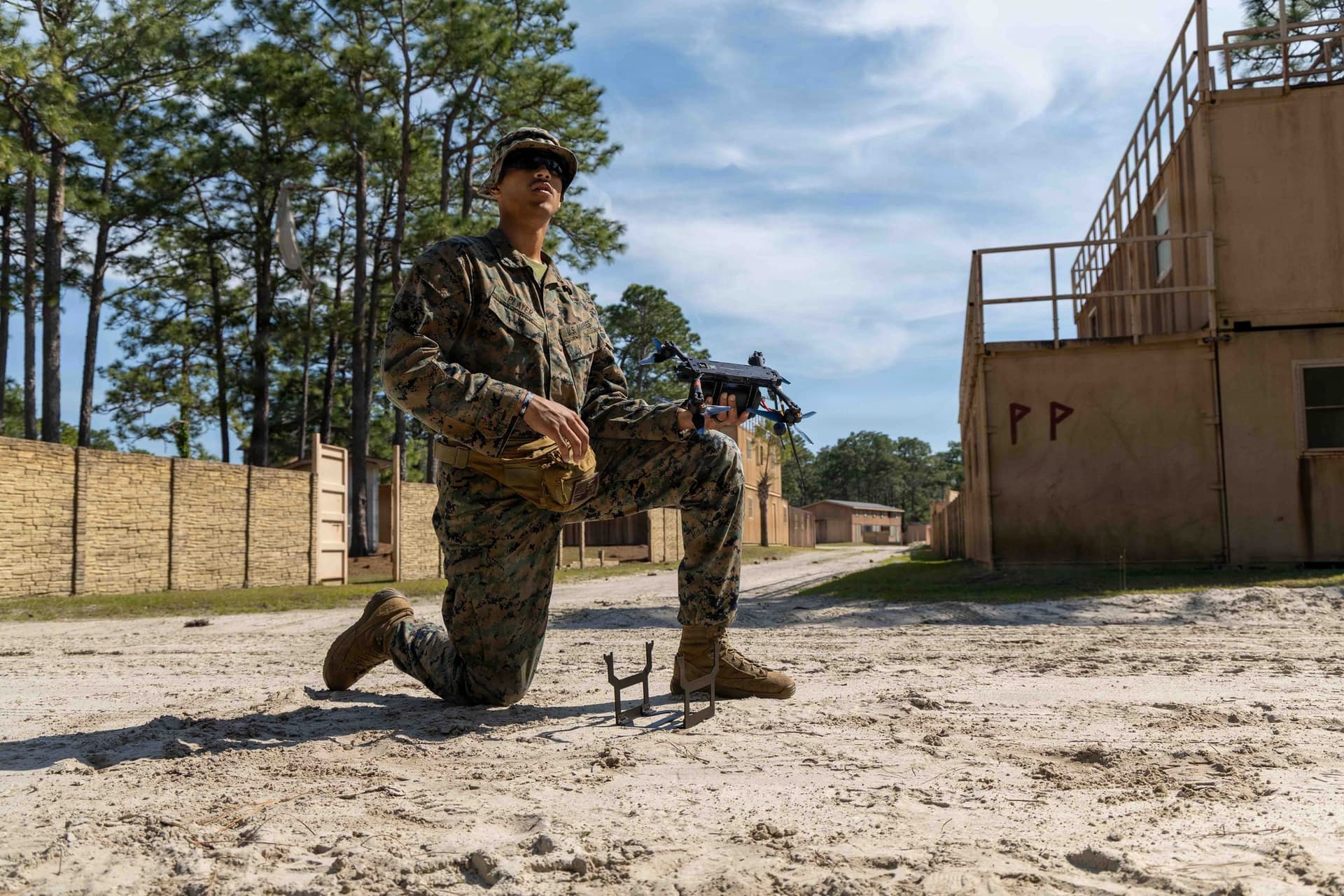
Marine Corps drone course in Okinawa stresses safety and simulation
Camp Hansen’s drone class put safety and simulation ahead of speed, a military blueprint that looks a lot like the best path for FPV racing.
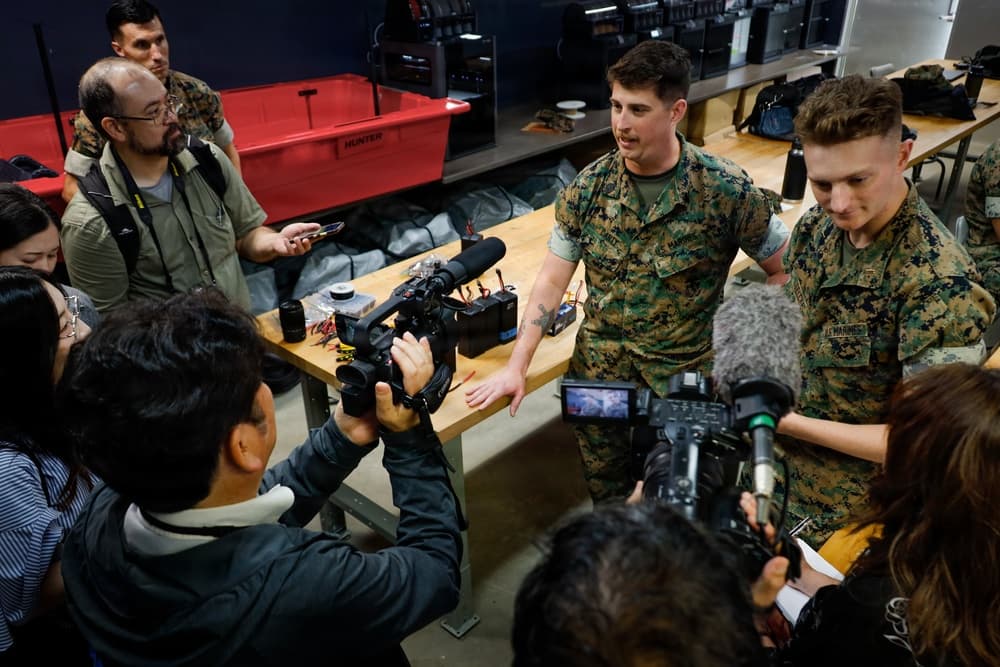
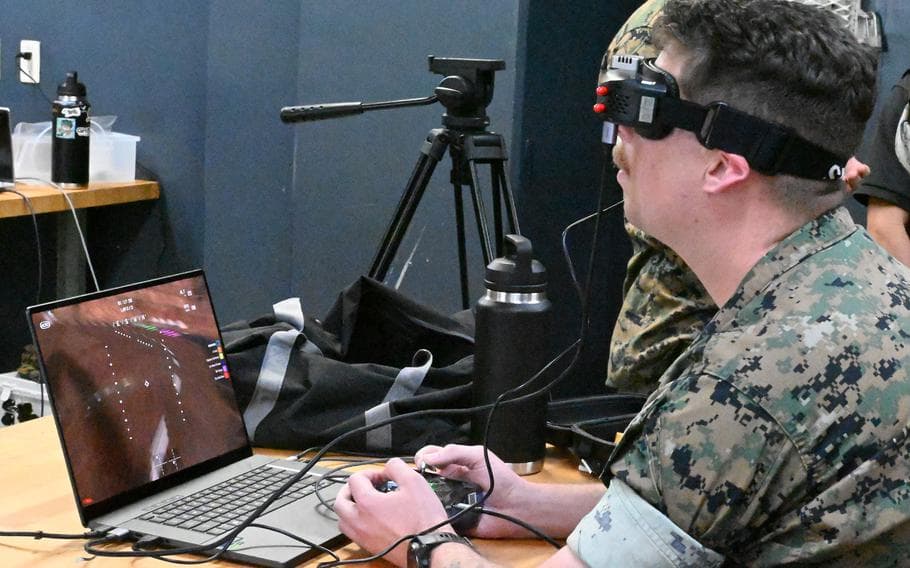
The Marine Corps is building its drone program the hard way, and that is exactly why it matters. At Camp Hansen in Okinawa, Japan, a basic drone operators course put safety, simulation and controlled progression front and center, with Staff Sergeant Shawn Carty, a sensors chief with 3rd Battalion, 12th Marine Regiment, 3d Marine Division, answering questions from local news media as the class unfolded. The point of the event was not spectacle. It was discipline: the Expeditionary Operations Training Group’s Unmanned Systems Branch was highlighted for advancing adaptive manufacturing, improving drone simulation capabilities and reinforcing a defensive mindset around small unmanned systems.
That approach tracks with the Marine Corps’ broader small-UAS training plan. In MARADMIN 624/25, dated December 29, 2025, the service established six pilot courses and eight certifications for drones, including Basic Drone Operator, Attack Drone Operator, Attack Drone Leader, Payload Specialist, Attack Drone Instructor and Payload Specialist Instructor. Those courses are open to Marines of any military occupational specialty, and the service said the pilot program is designed to validate prerequisites, instructional methods, resourcing needs and certification standards before becoming a long-term framework. Marine Corps Training and Education Command also designated seven regional hubs, including III Marine Expeditionary Force, with Weapons Training Battalion at Marine Corps Base Quantico serving as the interim central hub.
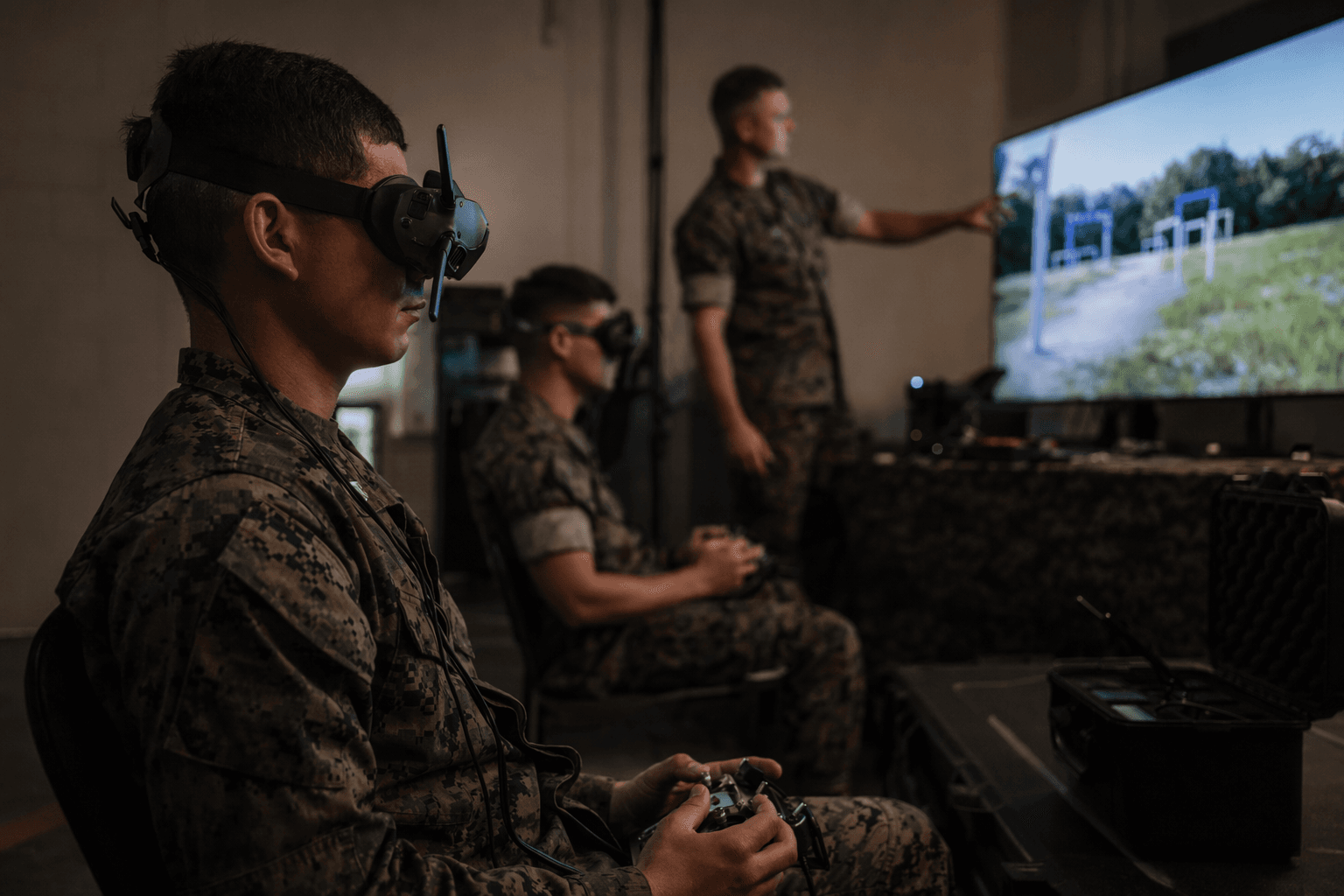
For drone racing readers, the lesson is obvious: the best FPV pilots are built on the same foundation the Marines are trying to formalize. Simulation is where new flyers learn stick control without destroying hardware, and the Okinawa course underscored that logic. The Marine Corps is not just teaching pilots to fly; it is teaching them to understand the full system, from the platform itself to the support gear that keeps it in the air. That mirrors the sport’s own reality, where frame design, batteries, propellers, radios, sensors and repair knowledge separate a clean lap from an expensive crash.
The training pipeline around Okinawa has moved fast. On November 6, 2025, Marines with EOTG’s Unmanned Systems Branch used first-person-view drones that could be remotely piloted or flown autonomously, while additive manufacturing produced custom adapters, including modifications to carry M67 fragmentation grenades. III MEF said that work took about 30 days of training and preparation for range operations and marked the first time additive manufacturing techniques had been fielded in Okinawa. By March 9, 2026, III Expeditionary Operations Training Group and U.S. Naval Special Warfare Command had carried out the Marine Corps’ first live-fire drone strike against a maritime surface vessel from a naval surface craft. The message is clear: the service wants a pipeline that starts with safety, advances through simulation and ends with operational readiness, and drone racing may not be far behind if it wants the same kind of maturity.
Know something we missed? Have a correction or additional information?
Submit a Tip