Marines train on Neros Archer FPV course at Camp Lejeune
Marines ran Neros Archer FPV drills at Camp Lejeune, turning race-style throttle control and recovery into squad-level reconnaissance and strike training.
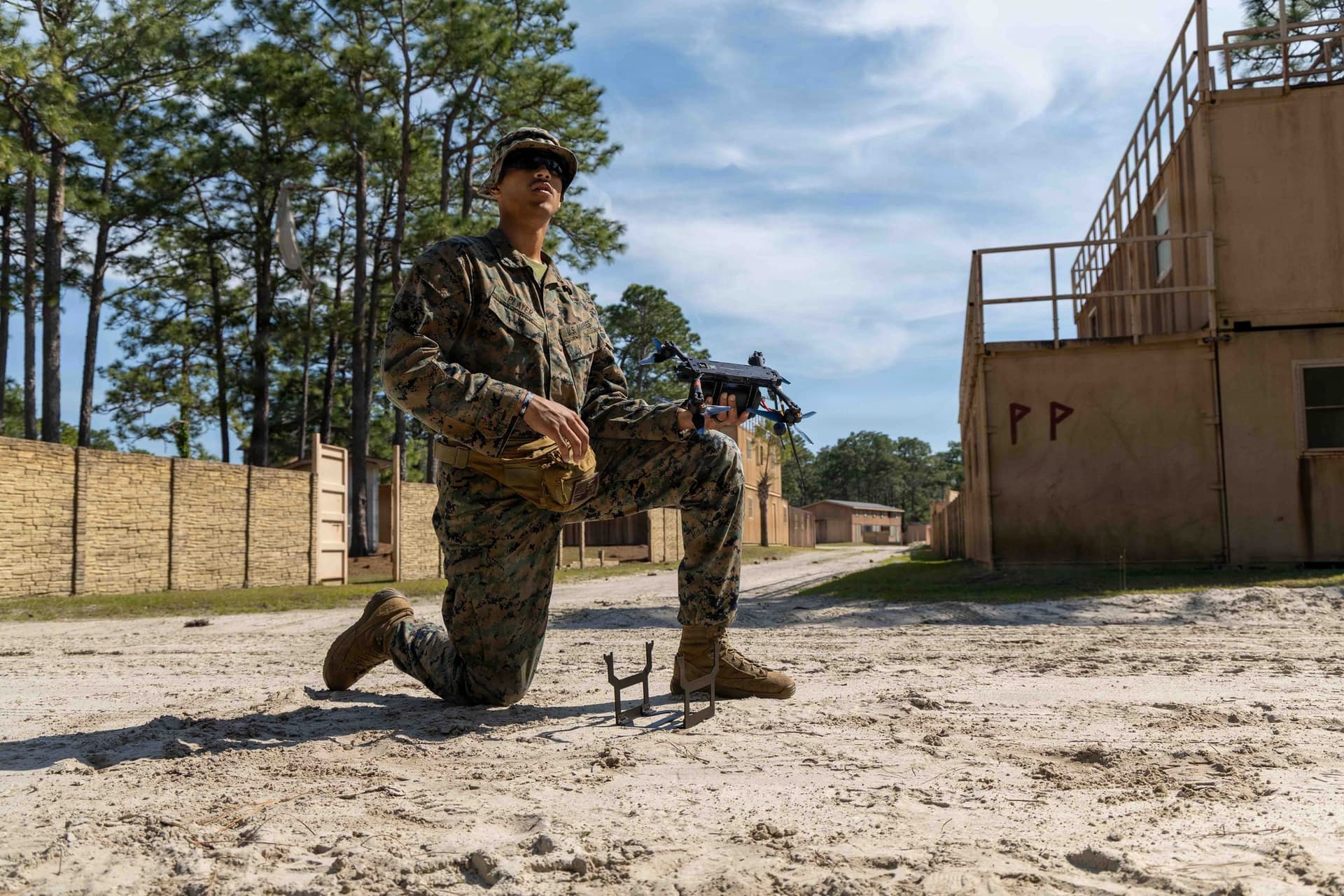
The clearest sign that FPV is becoming a real pipeline, not a side skill, came at Camp Lejeune: Marines with the 24th Marine Expeditionary Unit put the Neros Archer through a structured course built around the same close-quarters control that drone racers prize, but with reconnaissance and precision strike as the end state.
A DVIDS video posted May 12 showed Marines from 3rd Battalion, 2nd Marine Regiment taking part in the course at Marine Corps Base Camp Lejeune, North Carolina. The video placed the training from April 20 through April 22, while related image captions from the same sequence showed Neros Archer activity at Camp Lejeune on April 22 and again on April 28. Another DVIDS video page said Marines from 3rd Battalion, 2nd Marine Regiment were participating on May 5, underscoring that this was not a one-off demonstration but part of a broader run of FPV instruction.
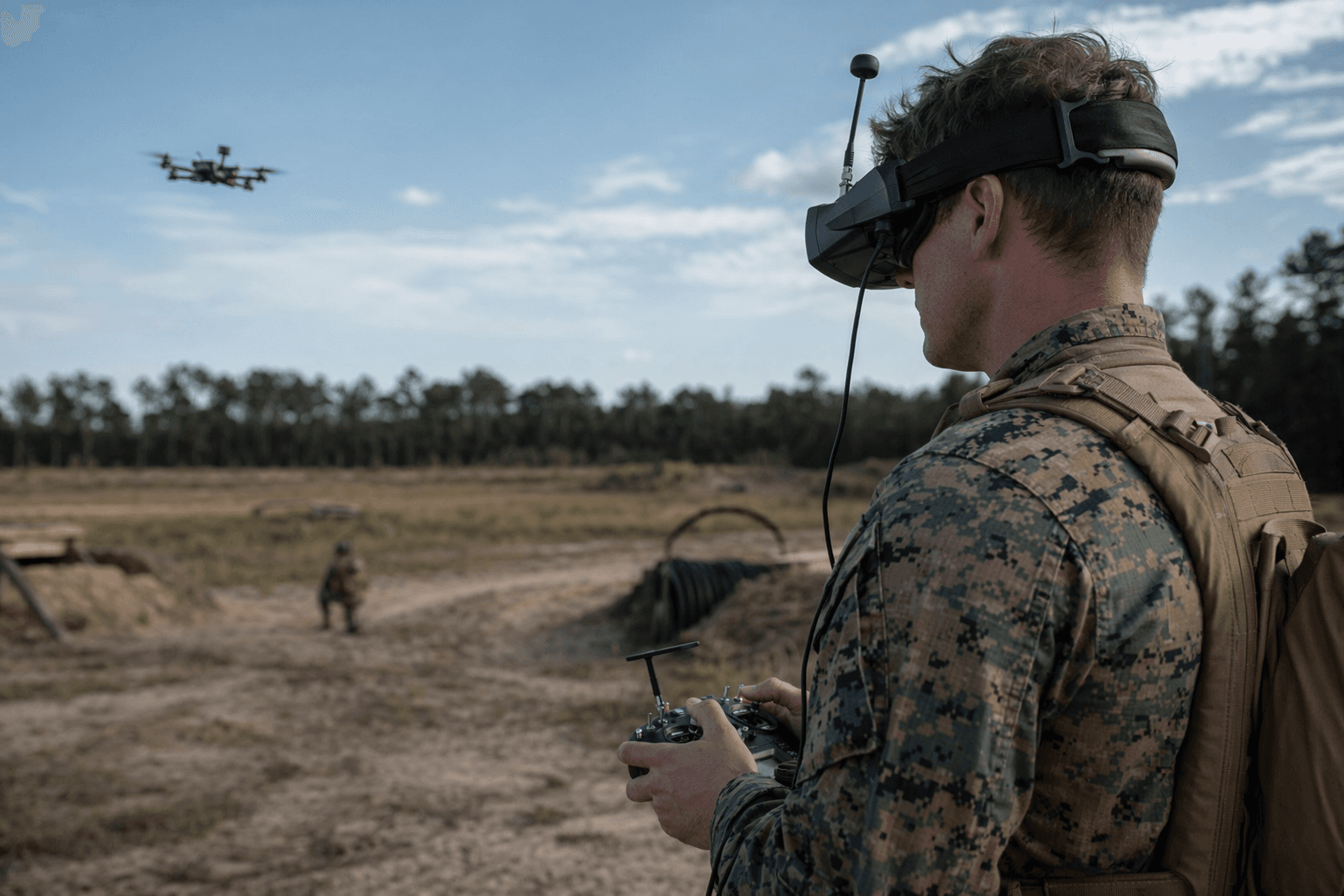
Hosted by 2nd Marine Division, the course was designed to give the unit advanced FPV piloting skills and tie those skills directly to squad-level reconnaissance and precision strike capabilities. That is where the military and the race shop overlap most sharply. The controls still demand tight line choice, rapid orientation correction and calm hands under pressure, the same fundamentals that separate a smooth qualifier lap from a crash into the fencing. The difference is mission purpose: here, the payoff is battlefield utility, not podium time.
The visual record matters because it shows the Marines treating the Archer like a system that has to be learned, repeated and trusted. DVIDS captions identified Cpl. Edmund Comire as a drone instructor with 2nd Marine Division, and Cpl. Noah Player, a mortarman with 3rd Battalion, 2nd Marine Regiment, as a participant observing target points during the course. Lance Cpl. Allison White was credited with the video and images, giving the training a named Marine Corps visual trail as the service builds out its FPV playbook.
That playbook is moving fast. In December 2025, MARADMIN 624/25 established approved training requirements for small unmanned aerial systems, part of a framework intended to certify hundreds more Marines. Marine Corps and Defense Department reporting said that by May 2026, infantry, reconnaissance battalions and littoral combat teams were expected to be equipped to employ FPV attack drone capabilities. In September 2025, MARADMIN 412/25 had already laid out guidance for fielding the Neros Archer, while noting it was not yet a program of record.
The 24th MEU’s own training arc gives the course added weight. The unit had previously composited as MAGTF-Next, then moved through MEUEX in December 2025 and CERTEX in February 2026 before the spring FPV work at Camp Lejeune. For drone racing, the lesson is obvious: a true development ladder is not just backyard flight time. It is hardware familiarization, repeatable drills, and progression under pressure, built until fast hands become reliable skill.
Know something we missed? Have a correction or additional information?
Submit a Tip