PropWashed prop tests bring data-driven precision to FPV racing props
PropWashed turns prop choice into a numbers game, using a mobile test truck to expose what really changes lap time, throttle feel, and crash survivability.
Why prop testing matters in FPV racing
In FPV racing, prop choice is not a side detail. It can decide whether a quad snaps out of a gate, holds a line through a turn, or survives the kind of light contact that ends a weekend if the setup is fragile. PropWashed’s prop tests attack that problem head-on, replacing the usual forum back-and-forth with repeatable measurements that make prop comparisons worth something.
That shift matters because the sport moves fast and the hardware margin is tiny. Racing drones can exceed 100 mph, so small changes in thrust, efficiency, grip, and recovery do not stay small for long. If one prop gives better acceleration but chews battery or another feels smoother but loses bite, that tradeoff shows up immediately on track.
The point of the Prop Tests Truck
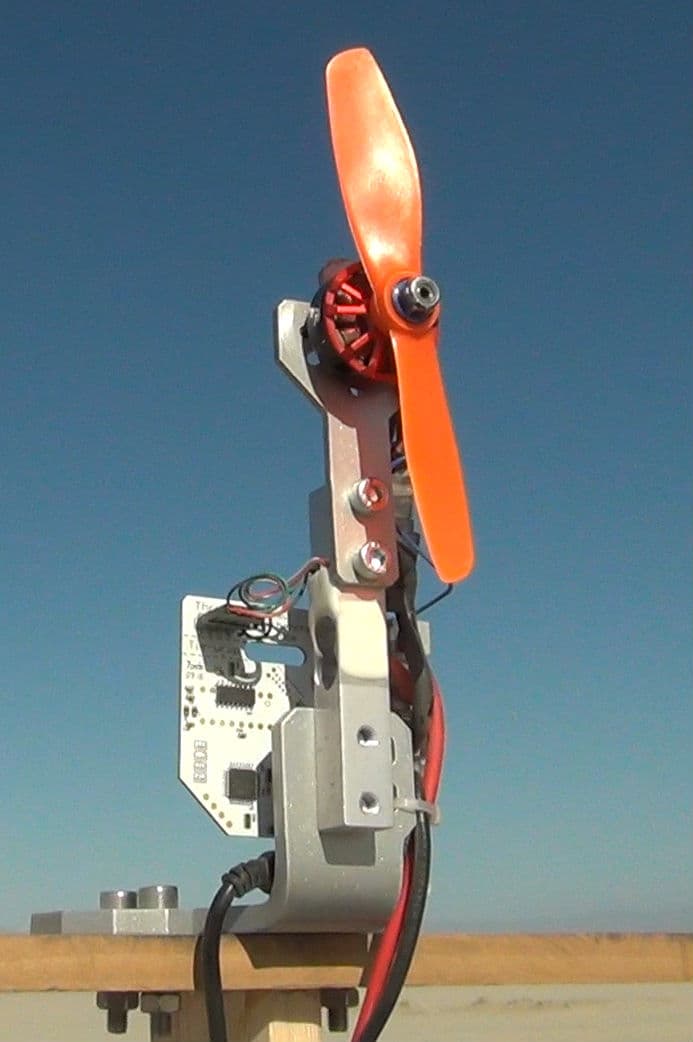
PropWashed’s central idea is simple: stop guessing. The Prop Tests Truck series uses precision measurement gear mounted on a mobile testing platform, which is a smarter setup than casual bench talk because it keeps environmental conditions consistent and standardizes the way data gets collected. When the conditions are controlled, prop comparisons become meaningful instead of anecdotal.
That is the real competitive edge here. Most racers have lived the expensive version of prop testing: buy a stack of props, burn through packs, crash a few times, and still end up unsure which setup is actually fastest. PropWashed’s approach turns that cycle into something measurable, and once the numbers are in front of you, intuition has to earn its place.
What the numbers tell you
The value of prop testing is not just in declaring a winner. It is in separating different kinds of performance that racers often blur together. A prop can be excellent for acceleration but poor in efficiency, or durable in a crash but sluggish on throttle response, and those differences matter depending on the course and the pilot’s style.
PropWashed frames the data as a way to make informed propeller choices that match both flying style and performance goals. That distinction is important because a race build and a freestyle build are not asking for the same thing. Race pilots often want the sharpest possible blend of thrust and recovery, while freestyle pilots may care more about smooth control, efficiency, and feel.
From feel to repeatable measurement
This is where PropWashed’s testing aligns with the broader engineering tradition behind prop analysis. Tyto Robotics says modern propeller test stands can measure thrust, efficiency, vibration, RPM, current, and voltage. That is not just lab jargon. Those are the variables that explain why one prop feels locked in while another feels nervous, noisy, or power-hungry.
A University of Illinois rolling-rig paper points in the same direction. Its trailer-mounted prop test rig was designed to measure flow speed, rotation rate, thrust, torque, air temperature, and pressure. That kind of setup shows why mobile testing is such a strong fit for prop evaluation: it lets testers gather controlled performance curves outside a fixed lab environment, while still keeping the measurements disciplined.
Why a truck is a smart race tool
The mobile platform is more than a gimmick. A truck-based test rig gives PropWashed a way to standardize testing without pretending every prop lives in the same real-world conditions. For racers, that matters because a prop that looks great in a loose, inconsistent comparison may not hold up once the data is cleaned up and the variables are controlled.
That is also why this feels bigger than a niche engineering exercise. The article treats empirical results as a competitive advantage, which is exactly how drone racing has matured elsewhere. In a sport where tiny hardware changes can decide whether a quad is locked in or loose, the ability to quantify those changes is no longer optional if you care about shaving real time.
FPV race culture is already standardized
The rise of prop testing also fits the sport’s wider race-course culture. FPV race gates are commercially marketed as training and competition tools by retailers such as GetFPV and RaceDayQuads, which tells you a lot about how structured the sport has become. This is not just pilots flying around open space anymore. It is a standardized discipline with course elements, repeatable lines, and equipment choices that can be evaluated with the same seriousness as any other race component.
That matters because props do not exist in a vacuum. They interact with gate spacing, turn shapes, launch style, and how aggressively a pilot brakes and punches back on throttle. The more the sport formalizes its tracks and training tools, the more useful objective prop data becomes.
The sport’s history explains the demand for data
Drone racing’s rapid growth helps explain why this kind of testing now has an audience. The Drone Racing League was founded in 2015 and launched publicly in January 2016, giving the sport an early pro-level stage. Then the first FAI World Drone Racing Championships were held in Shenzhen, China, in November 2018, and Australia’s Rudi Browning won the inaugural overall title.
That timeline matters because it shows how quickly drone racing moved from a fast-growing tech hobby to an organized sport with major events and recognizable champions. Once a sport gets that formal, the gear conversation changes too. Racers stop asking only what feels good and start asking what wins.
What this means for racers and builders
PropWashed’s testing model is valuable because it helps narrow the gap between what a prop does on paper and what it does in the air. The practical payoff is straightforward: better prop choices, fewer wasted packs, and setups that can be tuned for speed, consistency, or efficiency with less trial-and-error.
For a racer, that can mean cleaner gate exits and better recovery after a missed line. For a builder, it means choosing hardware with a reason instead of a hunch. In a sport where speed can top 100 mph and races are decided by tiny setup differences, the numbers are not a side note. They are the race.
This article was produced by Prism’s automated news system from verified source data, official records, and press releases, then run through automated quality and moderation checks before publishing. The system is built and supervised by the people who set the standards it runs under. Read our full AI policy.
Did this article answer your question?