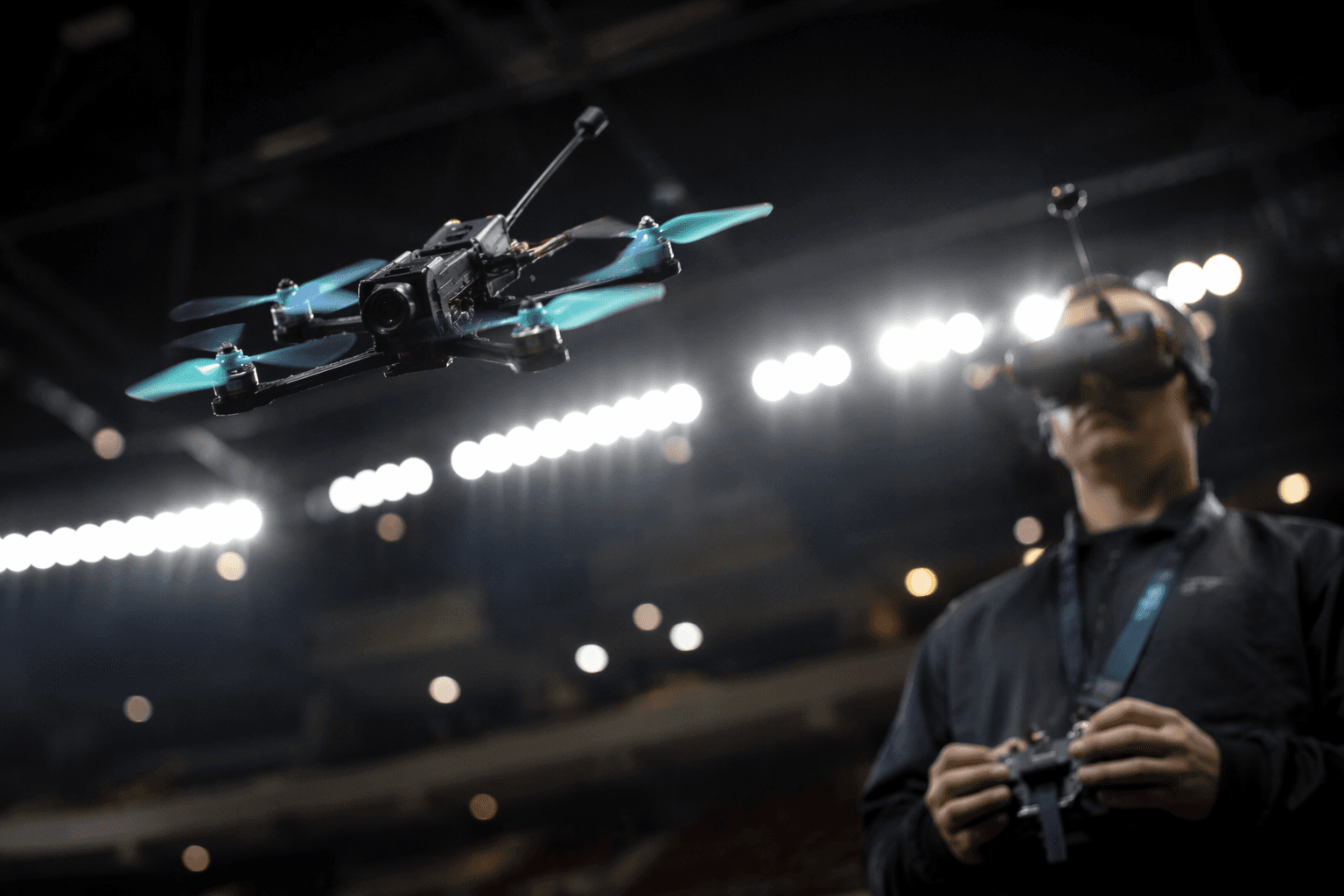
Top racing drones for 2026 spotlight DJI and Walksnail FPV systems
DJI and Walksnail now win races in the goggles, not just the airframe. The 2026 gear fight is about latency, visibility and who can hit a gate first.

1. DJI Avata 2
The Avata 2 is the clearest sign that race hardware now lives at the intersection of speed and accessibility. DJI launched it on April 11, 2024, pairs it with Goggles 3 and RC Motion 3, and backs it with ultra-low-latency transmission, an integrated propeller guard and a 155° ultra-wide field of view, all of which matter when a pilot is trying to trust a line through a tight section.

2. Walksnail Avatar HD Pro Racer
Walksnail’s Avatar HD Pro Racer is the counterpunch for pilots who want digital clarity without giving up the FPV edge. The appeal is not just the nameplate, it is the way a focused HD system can help a racer stay locked in on gates, recover faster after a wobble and keep pushing when the course gets visually busy.
3. DJI Goggles 3 and RC Motion 3
This combo matters because drone racing is no longer judged only by airframe speed, but by how quickly the pilot can process the course. DJI says Goggles 3 support ultra-low-latency transmission, and that is race-day gold when a split-second delay can turn a clean gate entry into a missed line.
4. Walksnail Avatar HD kits
Walksnail’s Avatar HD kits show why the digital FPV market has matured into a real ecosystem, not just a single drone battle. Walksnail says it was established in 2017 and sells Avatar HD kits as part of a broader platform for HD FPV users, which gives racers a modular route from practice flying to more committed competition setups.
5. Walksnail goggles
The goggles are where the race becomes real, because visibility decides how early a pilot can commit to throttle and turn-in. Walksnail’s goggle hardware strengthens the case for its ecosystem by keeping the HD feed inside a race-oriented stack, instead of forcing pilots to stitch together incompatible pieces and hope the image holds up under pressure.
6. Walksnail VTX hardware
The VTX side of the equation is easy to overlook, but it is one of the biggest competitive factors in modern FPV. When the video link stays stable, the pilot can attack tighter gaps and stay aggressive in technical sections, which is exactly why the 2026 gear conversation keeps circling back to transmission as much as raw motor power.
7. Hybrid freestyle-race builds
The strongest signal from the current market is that the line between freestyle and racing has blurred. The best-performing builds now have to absorb mistakes, recover quickly and still feel precise enough for competition, which helps explain why speed enthusiasts are gravitating toward drones that can do more than just sprint in a straight line.
8. Integrated-propeller-guard practice drones
The integrated propeller guard on the Avata 2 is not a side note, it is a race-development tool. In crowded practice lanes or on tracks where the margin is thin, that extra protection can help newer pilots learn gate timing without turning every touch into a broken-airframe problem.
9. MultiGP-rule race builds
MultiGP’s scale gives this whole hardware race its competitive frame of reference. The league says it is the largest professional drone racing league in the world, with more than 30,000 registered pilots and 500 active chapters worldwide, so the drones that matter are the ones that can survive organized racing, chapter-level repetition and the pressure of real standings.
10. School-class and entry-level race drones
MultiGP’s 2026 school racing rules, which cap gates at 7 feet wide and 6 feet tall, show how the sport is building a wider pipeline without softening the challenge. That is the bigger story behind a May 23 buyer guide ranking the top 10 racing drones for 2026: the market is now broad enough for mainstream coverage, but the machines that win still come down to low latency, clear sight lines and the confidence to hold the throttle when the gate closes fast.
This article was produced by Prism’s automated news system from verified source data, official records, and press releases, then run through automated quality and moderation checks before publishing. The system is built and supervised by the people who set the standards it runs under. Read our full AI policy.
Did this article answer your question?