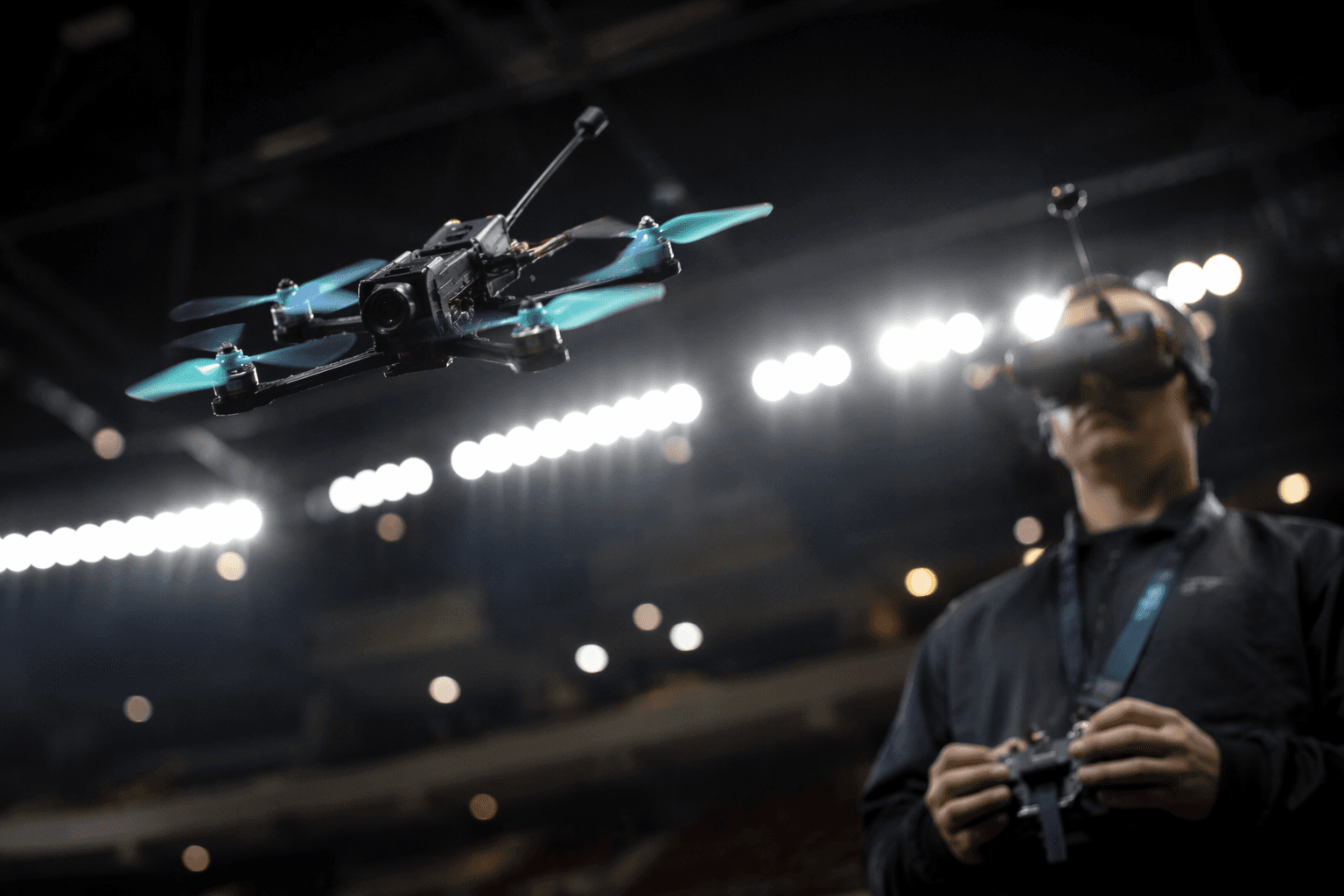
TU Delft unveils SkyDreamer, camera-only drone racing AI hits 21 m/s
SkyDreamer ran racing drones from a single camera and IMU, reaching 21 m/s and 6 g while cutting out the hand-tuned vision stack that usually slows race setups.
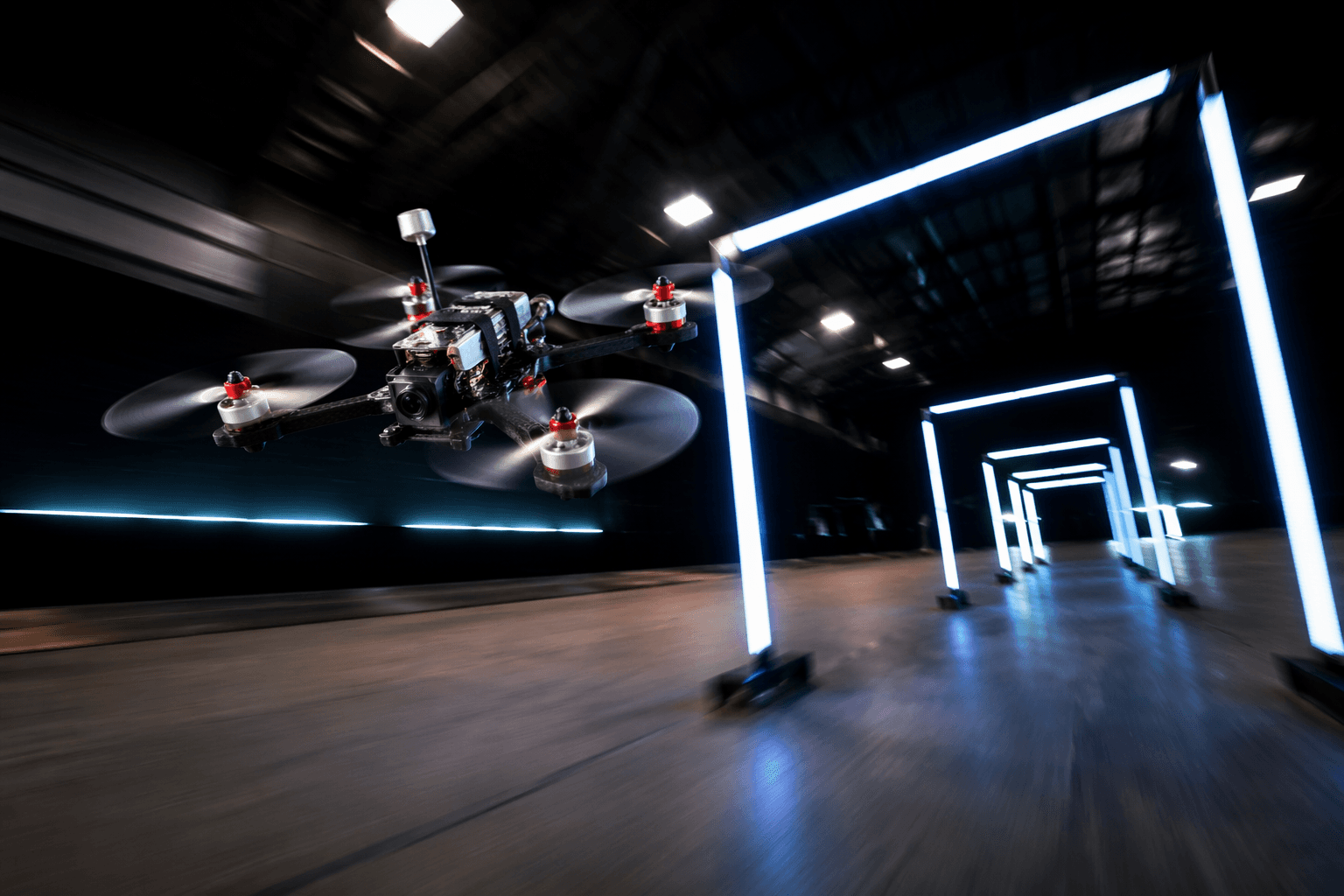
A single camera and an IMU were enough for SkyDreamer to push a racing drone to 21 m/s and 6 g, a signal that the next edge in drone racing may come from simplifying the stack as much as speeding it up. The Delft University of Technology system flew fully onboard, mapped pixels directly to motor commands and did it without traditional computer vision, filters or extrinsic camera calibration.
The team behind the work, from TU Delft’s Micro Air Vehicle Lab, described SkyDreamer in a paper submitted on October 16, 2025, by Aderik Verraest, Stavrow Bahnam, Robin Ferede, Guido de Croon and Christophe De Wagter. The system learns entirely in simulation before it ever reaches the course, then estimates its own calibration on the fly. That matters in racing terms because it trims the burden on hardware setup and reduces the number of failure points between a pilot line and a clean lap.
SkyDreamer is built as an end-to-end vision-based autonomous drone racing policy, and the paper says it is designed for rapid deployment across different drones without retraining. In testing, the drone handled tight race maneuvers including an inverted loop, a split-S and a ladder, showing that the system was not only fast in open flight but also stable enough to survive the kind of gate-to-gate transitions that decide races.
The broader benchmark for TU Delft came earlier in Abu Dhabi, where its autonomous drone racing team won the A2RL Drone Championship at ADNEC Marina Hall on April 14, 2025. In that event, TU Delft beat 13 autonomous drones in the AI bracket and then defeated three former Drone Champions League world champions in a knockout against human pilots, reaching speeds up to 95.8 km/h. The Abu Dhabi Autonomous Racing League and the Drone Champions League organized the competition, which the Advanced Technology Research Council said drew more than 2,500 spectators and carried a $1 million prize pool across four race formats.
That Abu Dhabi win also had a deeper lineage. ESA said the drone’s AI traced back to work in the European Space Agency’s Advanced Concepts Team before being adapted by TU Delft’s MAVLab, linking the racing breakthrough to a guidance-and-control approach with much wider use cases. TU Delft says the same kind of robust, efficient autonomy could matter well beyond the course, from self-driving cars and humanoid robots to delivery of blood samples and defibrillators, and even search-and-rescue missions.
The historical context matters too. The University of Zurich’s Robotics and Perception Group had already beaten human drone-racing champions in 2023, but only in a controlled laboratory setting. SkyDreamer pushes that conversation back onto the track, where the question is no longer whether AI can fly fast, but whether an end-to-end system can race cleanly enough to replace the hand-tuned stacks that have defined the sport.
This article was produced by Prism’s automated news system from verified source data, official records, and press releases, then run through automated quality and moderation checks before publishing. The system is built and supervised by the people who set the standards it runs under. Read our full AI policy.
Did this article answer your question?