Cabrinha Swift review hails new benchmark for light-wind wingfoiling
The Swift is not a novelty: it turns marginal wind into real sessions for the right riders, but the price and focus keep it from being a universal buy.

At $1,839, the 2026 Cabrinha Swift is a premium board built to stretch marginal sessions. If you ride in marginal wind, weigh more, or spend a lot of time on inland water where sessions live and die by efficiency, this is built to stretch the day. If you want one board that does everything, it is still a specialist.
What the Swift is really solving
Foiling Magazine places the Swift at the front of wingfoiling’s next evolution. Cabrinha presents the board as the first of its kind, a no-compromises wing-specific design aimed at lighter conditions. Light-wind wingfoiling is no longer a side note in the sport. It is where a lot of riders are trying to squeeze more sessions out of average forecasts, earlier flights out of weaker gusts, and less standing around waiting for the breeze to fill in.
That is the real buying guide question here: does the Swift make marginal days usable? For the right rider, yes. A purpose-built light-wind board can reduce the energy penalty of getting on foil, and that changes what counts as a rideable day.
Who gets meaningful sessions out of it
The Swift makes the most sense for riders who already have enough technique to use early lift well. That means efficient pumping, good takeoff timing, and the patience to work with the board instead of expecting it to rescue every mistake. Stronger or heavier riders, especially those riding in inland or underpowered spots, are the most obvious beneficiaries because they are the ones most likely to feel the gap between a standard board and one designed around efficiency and glide.
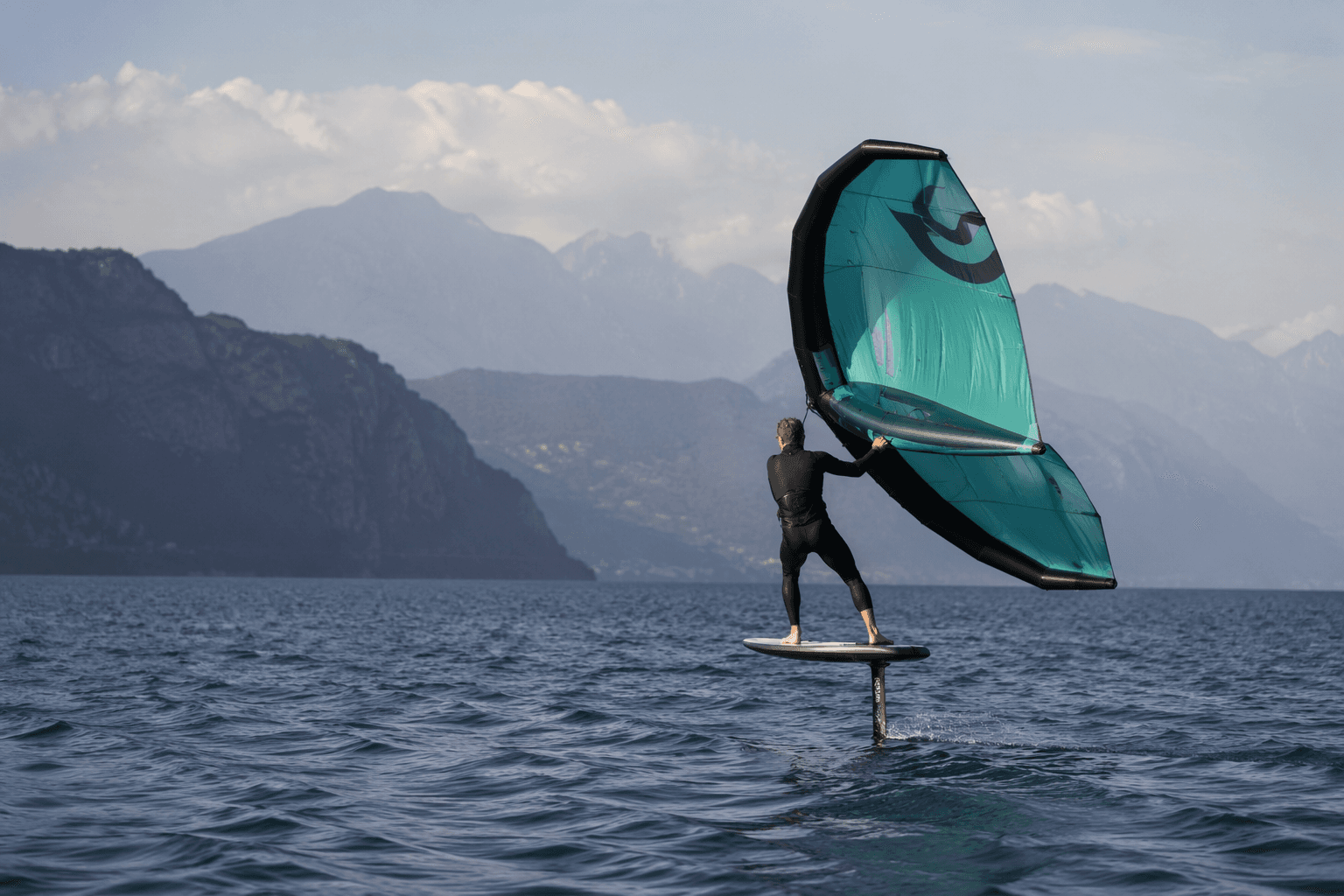
Cabrinha calls the Swift “the original mid-length foil board,” one that “started” the mid-length movement, and builds it around a narrow outline with a displacement-style hull for clean release, early lift, and acceleration in light wind. It was made for someone who wants the board to get moving sooner and stay efficient once the foil is engaged.
Cabrinha lists six sizes, from 5'8 through 6'6, which is not the spread of a pure niche toy. It is a range meant to cover different rider weights and different local wind realities, especially when the goal is to keep flying in conditions that would otherwise feel too soft.
Who will still find it too narrow
This is not the board for every wingfoiler, and that is where the honest buying advice gets sharper. If you mostly ride powered conditions, want a board that can absorb sloppy touchdowns without much thought, or need a single shape to cover every session from onshore mush to decent wind, the Swift’s specialization may feel expensive. It is designed around efficiency first, not all-around convenience.
The 2026 update adds a slightly wider mid-section for more forgiving touchdowns, a lower-profile deck for tighter foil control, updated rail and rocker shapes for cleaner release and better stability, angle-adjustable inserts, and Pro Carbon construction. Those refinements do not change the basic identity of the board. It is still built to be fast to release, early to lift, and tuned for lighter air, which makes it less universal than a broader cruiser-style shape.
How the shape has evolved
The Swift has already moved through more than one identity, and Cabrinha is not guessing at the category. The 2025 version was a previous-generation mid-length foil board with efficient glide, early lift, and light-wind performance, and Cabrinha listed five sizes then, from 5'4 to 6'9, with volumes from 50L to 125L.
Go back one more generation and the light-wind intent gets even clearer. The 2024 Swift was offered in 85L, 100L, and 125L versions, with a displacement hull, wingfoil-specific volume distribution, and sizing.
Cabrinha’s 2026 version keeps the narrow outline and displacement-style hull and adds refinements to the deck, rails, and rocker.

Why the broader sport timeline matters
Wingfoiling itself is still young enough that the equipment story is moving fast. The sport emerged from the overlap of kitesurfing, windsurfing, surfing, paddleboarding, and hydrofoiling, and it accelerated around 2019 as riders pushed it from novelty into a serious discipline. The Swift sits inside a much bigger shift: boards are getting narrower, more efficient, and more purpose-built as riders learn what actually helps in real conditions.
It is not trying to win the all-rounder contest. It reflects a sport that has matured enough to reward specialization, especially in the underpowered sessions where technique and board efficiency matter more than brute volume.
The practical buying call
If your local spot is underpowered more often than not, if you are trying to make inland wind stretch into a real session, or if you are a heavier rider tired of waiting for the forecast to turn perfect, the Swift looks like a legitimate quiver anchor for light air.
If your sessions are already powered, you want one board to cover everything, or you are still building the fundamentals that make early lift useful, it may be too specialized for the money.
This article was produced by Prism’s automated news system from verified source data, official records, and press releases, then run through automated quality and moderation checks before publishing. The system is built and supervised by the people who set the standards it runs under. Read our full AI policy.
Did this article answer your question?