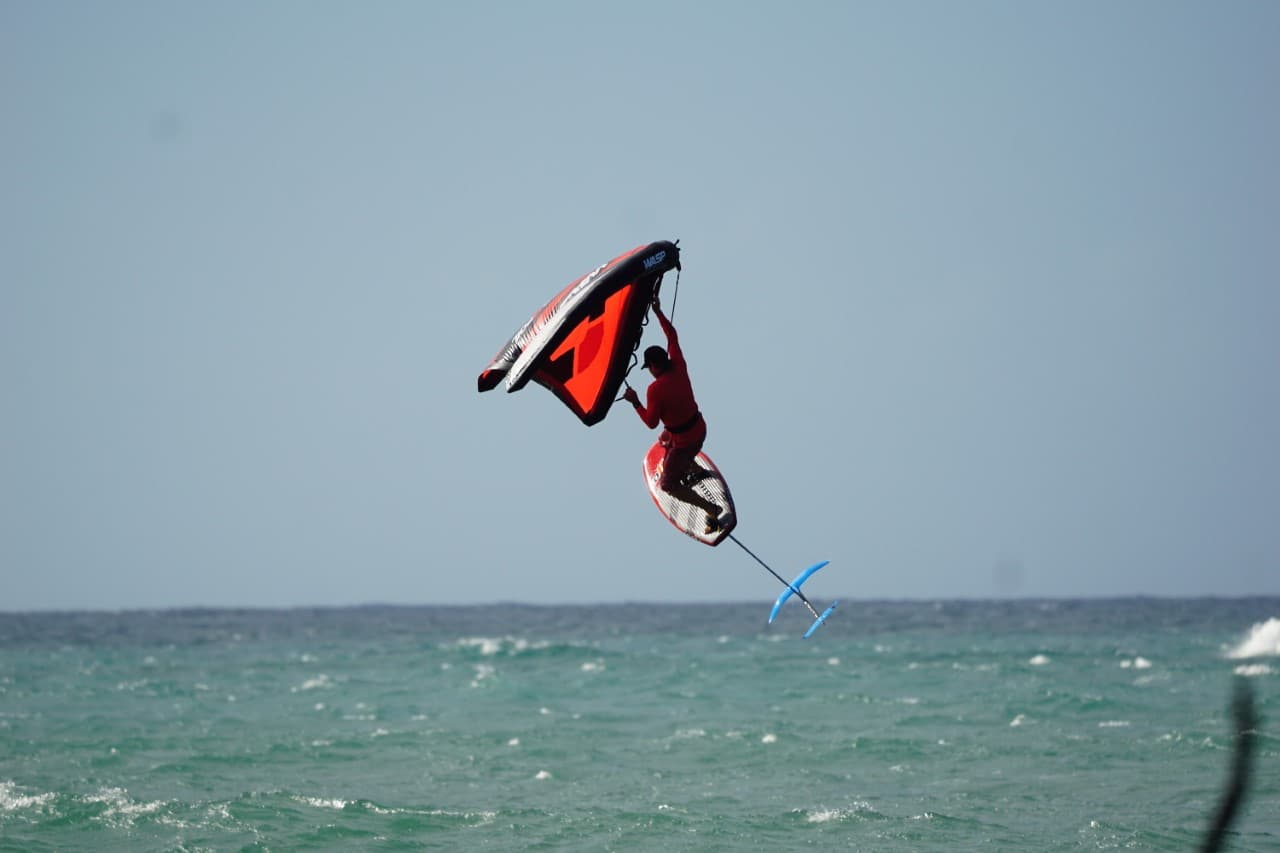
Foil surfing basics: how beginners can learn to fly above water
Foil surfing starts with three calls: the right wing, a controlled tow, and steady balance. Get those right and the board rises fast; get them wrong and progress stalls.

The board does not lift clear of the water by accident: a first foil session lives or dies on three choices: enough lift in the setup, a calm way to get moving, and the patience to stay centered when the board breaks free of the water.
How the foil gets you flying
A hydrofoil works like an underwater wing. As speed builds, the foil creates lift, raises the board or hull above the surface, and cuts drag so the rider glides with far less resistance than on a standard surfboard. That basic idea reaches back to late-19th-century boat technology, when Alexander Graham Bell and Casey Baldwin were part of the early hydrofoil lineage that inspired the modern board-sport version.
The personal-water-sports evolution came much later. Enthusiasts began experimenting with small hydrofoils attached to windsurf boards and kiteboards in the late 1990s and early 2000s, and that era set the template for the foil boards beginners see now.
What transfers from surfing, SUP, and winging
Some instincts carry over immediately. If you already surf, stand-up paddle, or wing, you know how to stay loose under motion, read water texture, and avoid locking up when the board changes speed. Those skills matter because the foil punishes tension; if you stiffen up, the board will usually tell you by bouncing, porpoising, or dropping off foil.
What also transfers is comfort in the ocean. Surfers and SUP riders already understand how to move with a shifting surface, while wing riders already know that timing matters as much as raw power.
What you have to learn from scratch
Foil surfing asks for a new stance and a new sense of center. The board starts in displacement mode, then transitions into flight, and that change is where most beginners get lost. You have to learn where to put your feet, how to stay centered over the board, and how to let the foil rise without trying to force it.
Gear position is part of that learning curve. The position of the wing in the track box affects how easily the board lifts, and smaller surfers often need more lift. Larger riders can also benefit from a more forward placement in some conditions, because the goal is not just size, it is balance between lift and control. If the foil is set too conservatively, you get repeated touchdowns instead of a clean glide.
What a first session should look like
The cleanest first start is behind a boat or jet ski. Tow foiling is widely used as a controlled way to learn the foil itself before asking it to work in waves, because it removes paddle fatigue and wave-entry timing from the equation. Once the rider is being towed at a steady pace, the focus shifts to feeling lift, keeping the board flat enough to rise, and learning not to overcorrect.
Some coaching setups make that first step even more controlled by using a jet ski or a wakeboard boat, with helmets and U.S. Coast Guard life jackets included. That kind of setup is built for repetition: short pulls, quick resets, and enough supervision to catch mistakes before they become habits.
Safe conditions matter just as much as the tow. Foil surfing belongs in uncrowded water with room to fall, room to recover, and enough space to avoid other riders. Small swells and clean lanes are easier to manage because they reduce the number of moving pieces while the rider is still learning how the board responds to speed.
Safety is part of the skill
Hydrofoils are powerful, and they can be dangerous when they are handled carelessly. The foil wing and mast sit under the water, which means the hazard is not only the fall itself but the hardware moving beneath the surface in a busy lineup.
Surf coverage in 2026 kept foil injuries and lineup conflicts in the conversation, including serious injuries involving Makalii Andrade and separate disputes over crowded breaks.
Helmet guidance is now common in board-sport safety discussions, and the sport’s governing framework has moved in the same direction. The International Surfing Association, founded on May 17, 1964, is recognized by the International Olympic Committee as surfing’s world governing authority. USA Surfing is the official ISA-recognized national federation in the United States, and the ISA has a strategic partnership with the International Lifesaving Federation on a global water-safety course and certification pathway for surfing and SUP coaches and instructors.
The common early mistakes that slow progress
Most beginner frustration comes from trying to do too much at once. The first mistake is chasing speed before the board is balanced, which usually ends with the nose bouncing or the foil breaching. The second is standing in the wrong part of the board and fighting the lift instead of letting it come up underneath you.
Another mistake is treating foil surfing like standard surfing with a more exotic board. The water may look familiar, but the habits are different: softer knees, quieter feet, and less effortful movement do more for a beginner than force.
This article was produced by Prism’s automated news system from verified source data, official records, and press releases, then run through automated quality and moderation checks before publishing. The system is built and supervised by the people who set the standards it runs under. Read our full AI policy.
Did this article answer your question?