Foil surfing progression guide helps riders choose better beginner gear
Bigger, calmer gear usually beats race-ready gear early on. Board volume, foil size and mast length decide how fast you learn, not just how fast you go.
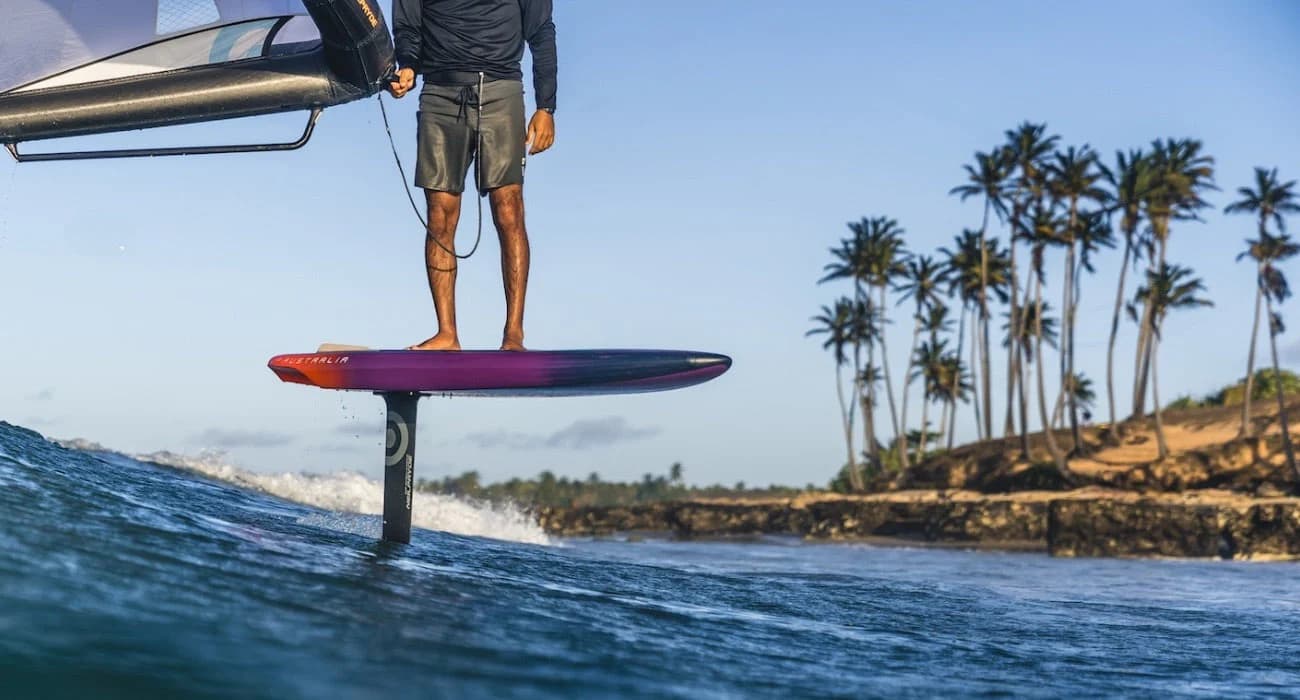
MACkite Boardsports Center’s beginner sizing chart starts riders at 70 to 100 liters if they weigh 90 to 110 pounds, 75 to 105 liters at 111 to 130 pounds, and 80 to 110 liters at 131 to 140 pounds. Kite Wing and Foil’s 2026 progression guide lands on the same point many coaches repeat on the beach: a setup that is too advanced slows learning, while one that is too timid becomes a ceiling. The real job is to find the middle ground where stability, control and usable lift let you repeat good reps instead of surviving bad ones.
The biggest mistake: oversizing ambition in the board
Board choice is the first filter, because it decides how much work you do before the foil ever lifts. That spread is wide for a reason. Early riders need enough volume and width to support stable starts, easy balance and the calm transition from kneeling to standing.
The trap is thinking a smaller board will speed progression because it feels more “serious.” In practice, a board that is too small steals focus from the actual learning targets, which are stance, foot placement and wing handling. More sink at launch means more time wrestling balance and less time building the muscle memory that makes the next session cleaner.
The next error: pairing the wrong foil to the rider and the job
Foil choice matters just as much, and this is where a lot of riders accidentally buy speed they cannot yet use. Beginners usually start with a low-aspect front wing, with one common benchmark around 1500 cm² or larger for easy lift. Front wings from 1500 to 2000+ cm² are more stable and give better low-speed lift.
That larger wing does not make you a slower rider. It gives you a wider operating window, which matters far more in the first flights, waterstarts and choppy restarts that define early progression. A bigger front wing stalls later, recovers easier and keeps the board flying at lower speed, so you spend less energy pumping the foil back to life and more energy linking runs. Foil size should match rider weight and riding style instead of pretending one setup fits everybody, and MACkite’s foil-set chart uses that approach.
Why “faster” gear often slows your progress
The smallest board, thinnest mast and most aggressive foil are not the fastest path to learning. Forgiving gear reduces the mental load because wing foiling punishes hesitation. When the setup gives you time to react, you can focus on body position, wing angle and pump timing rather than recovering from every tiny mistake.
Start forgiving, then change one variable at a time. One common sequence starts with wing surfing before full wing foiling, and MACkite’s beginner material uses that order. Each upgrade isolates a new skill instead of forcing you to solve three problems at once.
Wing size decides whether your learning reps are clean or chaotic
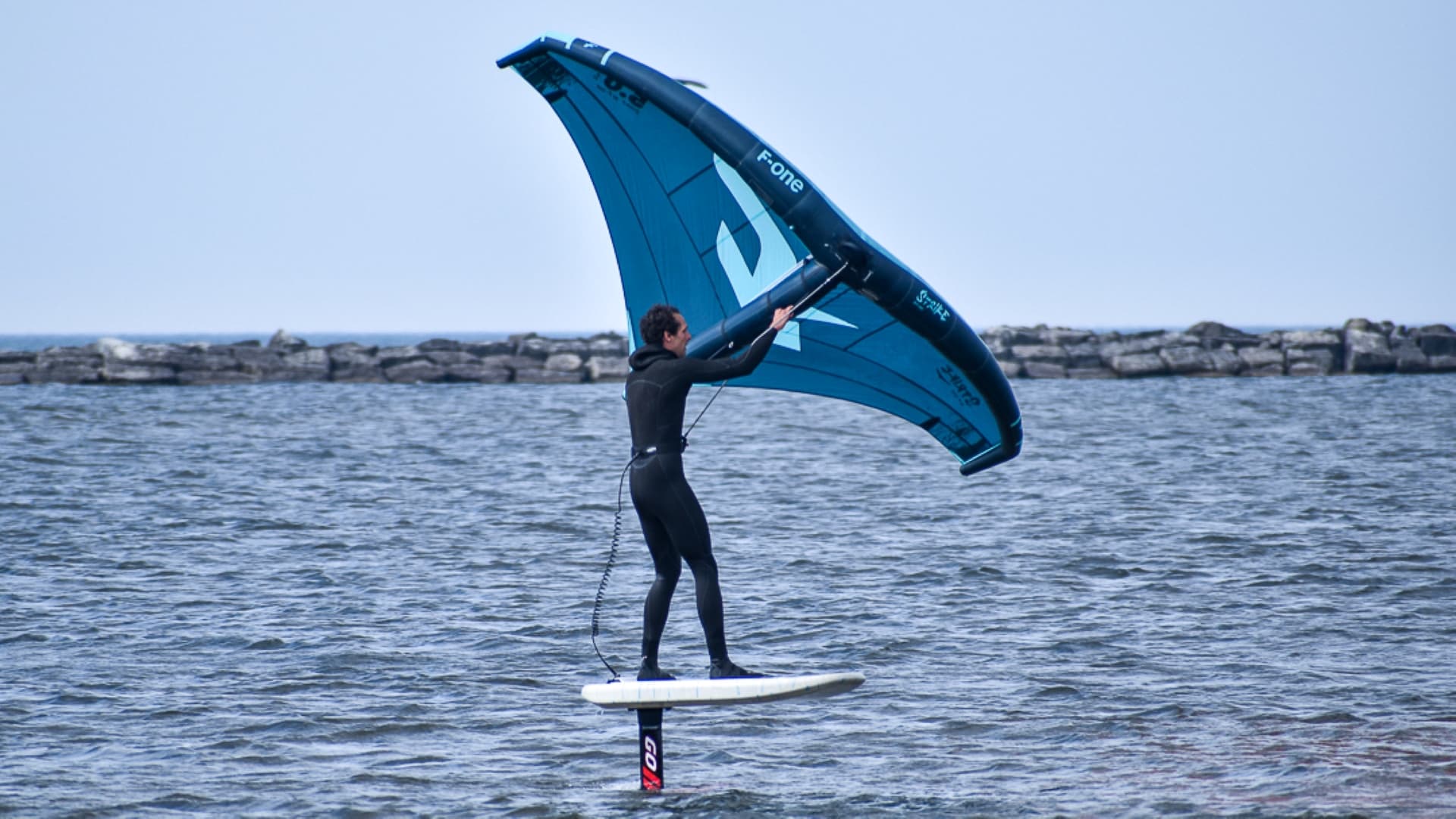
Wing size is the third lever, and it is easy to misuse because more power looks like more progress. In reality, the right wing size is about usable pull, not maximum grunt. If the wing is too small, you lose easy starts and spend too much time generating speed to get flying. If it is too large, you create extra drag, make handling messier and can overload the board and foil combination before your feet are set.
That trade-off shows up in the way retailers frame beginner gear. For early progression, wing-foil choices have to match rider weight and style, and MACkite’s set guide uses that lens because the wing has to match both body size and how much power you can manage comfortably. For learning, enough drive for clean waterstarts and controlled runs beats a wing that turns every turn and reset into a fight.
Mast length is not a prestige upgrade, it is a control tool
Mast length gets treated like a status item, but beginner guides point to a narrower range. WingFoilTips puts beginners and junior riders at about an 80 centimeter mast, while other comparison guides weigh 75, 80 and 85 centimeter options across wing, surf, kite and wake foiling. That range matters because mast length changes how much room you have for error, how much of the foil is hidden from surface turbulence and how stable the whole system feels once you are moving.
For a new rider, 80 centimeters is a practical default because it gives enough clearance to ride without constantly breaching while still staying manageable during falls and touchdowns. Shorter masts can feel calmer in some settings, but they reduce room for mistake. Longer masts can open up more performance later, but they also demand cleaner control before they pay off.
The progression plan is gear discipline, not gear gambling
The best progression path looks less like a shopping spree and more like a sequence. Start with enough board volume for your weight, then choose a large, low-aspect front wing that gives easy lift, then set mast length around the 80 centimeter starting point if you are still learning. From there, change only one piece at a time as your sessions become more repeatable.
This article was produced by Prism’s automated news system from verified source data, official records, and press releases, then run through automated quality and moderation checks before publishing. The system is built and supervised by the people who set the standards it runs under. Read our full AI policy.
Did this article answer your question?