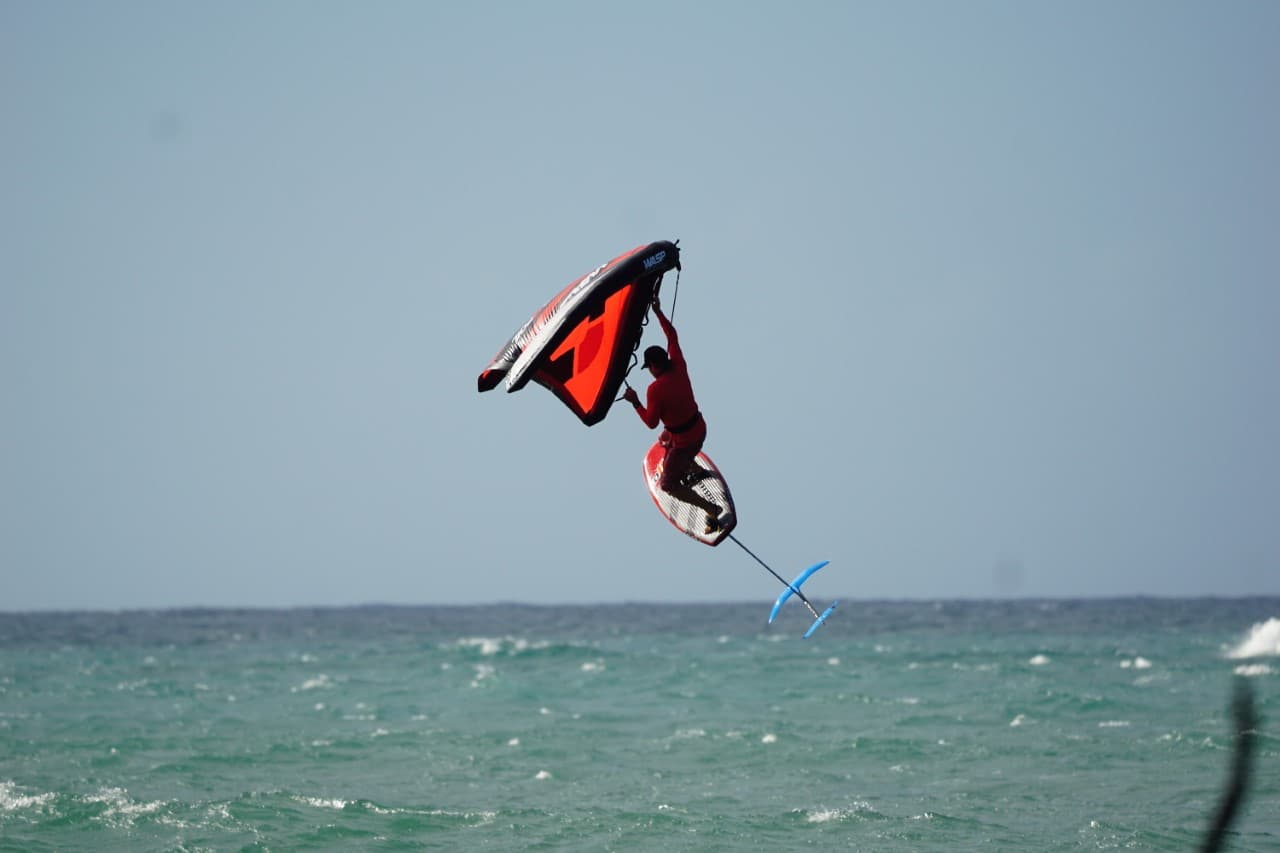
Laird Hamilton and Dave Kalama make big-wave foil surfing breakthrough at Jaws
Laird Hamilton and Dave Kalama gave foil surfing its first big-wave proof at Jaws in 2003, showing Peahi could reward speed, line choice and control.
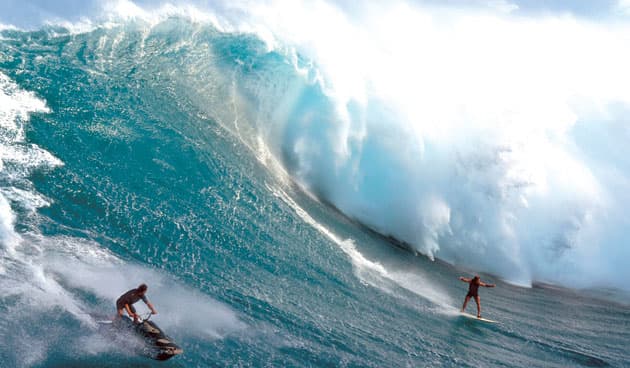
Laird Hamilton and Dave Kalama made foil surfing’s first big-wave breakthrough at Jaws in 2003, turning Peahi on Maui’s north coast into a proving ground for more than tow-surfing. The session mattered because it moved the hydrofoil from curiosity to something riders could imagine using in real heavy-water conditions.
That same year, Dana Brown’s Step Into Liquid devoted a segment to the hydrofoil, with Hamilton and Kalama gliding over wind-hacked peaks. Another surf reference places foiling in Step Into Liquid for the first time in 2003, which gives the Jaws session a fixed place in surf history rather than the feel of a one-off stunt.
Peahi was the right test site for that leap. The wave has long been described as a big-wave colossus on the north coast of Maui, a proving ground for tow-surfing and the site of the first successfully ridden 35-foot wave. It later became ground zero for big-wave riding’s paddle-in renaissance in the early 2010s. A foil that could hold together there was automatically in a different category from a novelty board.
The 2003 breakthrough changed the way riders thought about confidence, wave selection and equipment. Hamilton and Kalama had already built reputations as watermen willing to push beyond conventional surfing limits, but the Jaws session tied that mindset to hydrofoil design. The key idea was not just that a board rode above the water; it was that the foil changed the relationship between speed, drag and wave usage. In heavy surf, that meant new lines across the face, new recovery options when the section tightened, and a chance to stay on energy that a standard board might outrun or bog down on.
That logic still shapes modern big-wave foiling. Later videos and interviews continued pairing Hamilton and Kalama with foils at Jaws, and a 2011 Northcore interview description still linked Dave Kalama, foil boards, Laird Hamilton, Jaws and Newquay. The continued reference point matters because today’s big-wave foilers still judge risk, legitimacy and progression against Peahi’s standard: if a foil works there, it is no longer just experimental.
This article was produced by Prism’s automated news system from verified source data, official records, and press releases, then run through automated quality and moderation checks before publishing. The system is built and supervised by the people who set the standards it runs under. Read our full AI policy.
Did this article answer your question?