Manta Foils shares five rules for traveling with eFoil batteries
The real travel problem is the battery, not the board. Manta Foils’ five-rule checklist lines up with FAA and IATA limits that can stop a trip cold.
The battery is the part of an eFoil trip that can stop everything before takeoff. Manta Foils frames its five-rule guide around riders heading to the Caribbean, the Maldives, Mauritius, or a remote South Pacific reef, where the session is worth the logistics. The board can be packed, the mast and wings can be broken down, but the high-capacity power source brings airline limits, shipping rules, and handling risk that the rest of the kit never sees.
Rule 1: Classify the battery before you book the trip
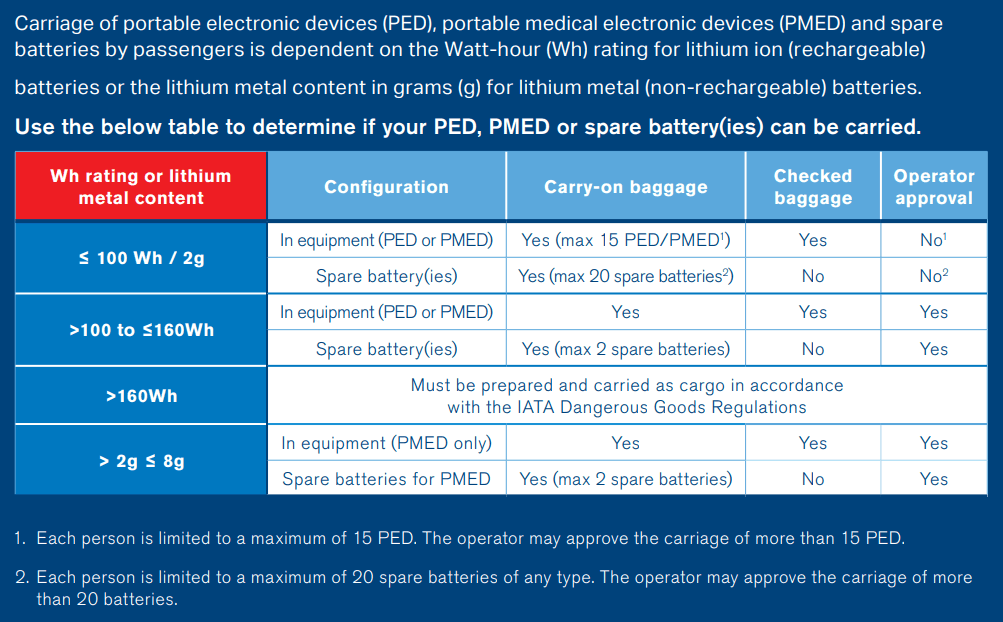
The first number that matters is watt-hours, not board length or wing size. FAA guidance is clear: lithium-ion batteries from 0 to 100 Wh are generally allowed on passenger aircraft in carry-on baggage, batteries from 101 to 160 Wh need air carrier approval, and anything above 160 Wh is forbidden on passenger aircraft.
That cutoff is the line riders need to know before they plan a flight or a shipment. FAA guidance also says passengers can carry most batteries and portable electronic devices for personal use in carry-on baggage when they follow the proper safety precautions, which means the battery is not automatically a no-go, but it is never casual cargo either.
Rule 2: Get the carrier involved early, not at the counter
Manta Foils’ checklist makes sense because the carrier is where most trips get slowed down. If the battery sits in the 101 to 160 Wh range, approval is not optional under FAA rules, and the wrong answer from an airline can turn a booked trip into a stranded board bag.
The broader 2026 battery guidance from IATA is built on the 2025-2026 ICAO Technical Instructions and the 67th Edition of the IATA Dangerous Goods Regulations, which tells you how formal this category has become. IATA’s 2026 passenger guidance also flags lithium-battery rules for power banks, small vehicles, e-cigarettes, smart luggage, baggage tags, and tracking devices, a reminder that airlines are treating battery transport as a system-wide issue, not a one-off exception for surf gear.
Rule 3: Pack for protection, not convenience
A packed battery should look like something that cannot shift, short, or take a hit. That means keeping the terminals protected and the pack secured so it does not move around during air or ground transport, because a battery is not just another hard shell item in a checked bag.

This is where eFoil owners get burned by treating the power unit like a fin or mast. The board, mast, and wings can usually be broken down into normal travel pieces, but the battery adds a high-risk layer that needs its own packing plan, especially when it is moving through more than one hand before it reaches a remote launch point.
Rule 4: Treat charge level and paperwork as part of the shipment
The battery does not just need to be boxed correctly, it needs to be ready in the right condition. One 2025-2026 IATA-linked recommendation highlighted in industry guidance is a 30% state-of-charge limit for some shipped lithium-ion batteries, and that lower charge level reflects how much the rules now focus on reducing risk before the battery ever moves.
Paperwork matters just as much. If the carrier asks for approval, battery specifications, or shipping details, those need to be ready before the box is handed over, because a missing document can stall a shipment even when the pack itself is within the watt-hour limits.
Rule 5: Assume the failure points will be boring, common, and expensive
The most likely problems are not dramatic. They are the ordinary ones: a battery over the airline limit, an approval that was never secured, a box with poor terminal protection, or a shipment that was not prepared to the carrier’s lithium-battery rules.
That is why this guide matters beyond Manta Foils’ own riders. For anyone heading to a destination where local rental access is thin and bringing your own setup is the difference between riding and watching, the battery is the gating item. If it cannot move legally and safely, the board never gets used, and the best reef on the itinerary becomes just another place you did not ride.
This article was produced by Prism’s automated news system from verified source data, official records, and press releases, then run through automated quality and moderation checks before publishing. The system is built and supervised by the people who set the standards it runs under. Read our full AI policy.
Did this article answer your question?