AEO Rises as Brands Seek AI Visibility Gains Beyond Traditional SEO
Brands are claiming 3x organic traffic gains and 30% AI visibility lifts by shifting focus to Answer Engine Optimization, bypassing traditional agency models entirely.
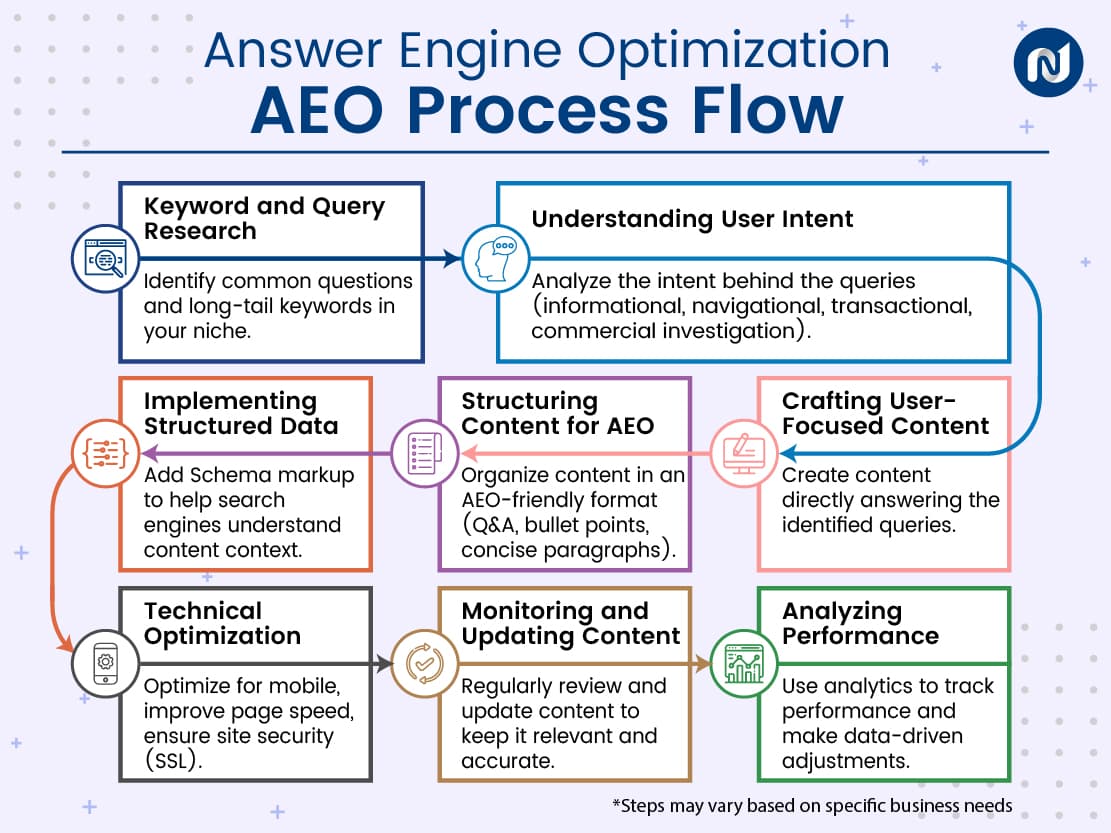
Ranking on Google used to be the whole game. Get to page one, capture clicks, convert traffic. That playbook still matters, but it no longer tells the whole story. A growing number of brands are repositioning their search strategies around Answer Engine Optimization (AEO), a discipline focused not on appearing in results but on becoming the result: the direct answer surfaced by Google SGE, Gemini, ChatGPT, or a voice assistant before a user ever clicks anything.
The performance claims circulating in the space are aggressive. Some sources are pointing to "3x organic and 30% AI visibility increases without agency costs," with brands reportedly bypassing traditional agency relationships entirely through a technique being called "LLM hijacking," where content is engineered to secure direct AI recommendations inside zero-click searches. Those numbers carry no published methodology or sample sizes, so treat them as benchmarks to interrogate rather than guarantees to quote in a pitch deck. But the underlying shift they point to is real and measurable in ways traditional SEO dashboards weren't built to capture.
What AEO Actually Is, and Why It Differs from SEO
The clearest way to understand the distinction is through the frame of intent. As one widely cited characterization puts it: "SEO (Search Engine Optimization) is the foundation. It helps your website rank in traditional search results through keyword targeting, technical optimization, authority building, and high-quality content. SEO is about earning visibility and driving organic traffic. If you don't rank, you don't compete."
AEO starts where that sentence ends. "AEO (Answer Engine Optimization) focuses on becoming the answer. Instead of simply appearing in search results, AEO structures content so AI systems can extract and display it in featured snippets, voice responses, and AI-generated overviews. It's not about clicks first — it's about selection and authority."
The tactical levers for AEO are specific: clarity of language, semantic depth, structured formatting, and schema implementation. These aren't vague content quality signals; they're architectural decisions that increase the probability of an AI system extracting your content as the most accurate and concise response to a given query, even in crowded SERPs.
Where AEO Outperforms: The SaaS Question-Keyword Scenario
AEO isn't universally superior to other approaches, and the most useful guidance on this comes from a SaaS-specific framing: "AEO is more effective than GEO for SaaS when your fastest growth lever is Google SERP visibility for high-intent, question-based searches. If users still discover and compare tools through Google, AEO wins the first click."
The practical trigger for prioritizing AEO is query structure. If your target keywords start with what, how, which, or why, and they're likely to surface featured snippets or People Also Ask boxes, AEO is the faster-returning investment. Think queries like "what is AI SEO automation?", "how does automated SEO work?", or "best AI SEO tools for startups?" Short, direct answers paired with bullet points and FAQ formatting win these surfaces more quickly than long-form editorial content.
There's a second scenario where AEO delivers immediate lift: pages that rank between positions 7 and 10 but show weak click-through rates. That's a structural problem as much as a content problem. When a page has the authority to rank but isn't formatted for extraction by AI overviews or featured snippet algorithms, AEO optimization can convert a dormant ranking into active traffic without requiring new link acquisition.
The GEO Layer: Long-Term Citation Inside AI Tools
Wellows, a platform positioning itself around combined AEO and GEO execution, draws a clear operational line between the two disciplines: "Use AEO for fast click and snippet recovery on Google. Use GEO for long-term citations and recommendations inside AI tools. Wellows makes both run in one system so you get surfaced first and chosen later."
GEO, as Wellows describes it, targets the citation layer inside generative AI tools rather than the click layer inside Google's SERP. Where AEO is optimized for the moment a user searches and an AI overview fires, GEO is optimized for the longer arc of becoming a trusted, referenced source inside ChatGPT and Gemini conversations over time. The full expansion of the GEO acronym isn't standardized across the industry yet, but its functional role is distinct: it's about being recommended, not just surfaced.
Why Neither Discipline Works Without the Other
This is the part that tends to get lost in the excitement around AI visibility gains. Orangemonke, a firm advocating for integrated search strategy, is direct about the failure modes on both sides: "If you focus only on SEO, you may rank but risk losing visibility in AI-generated overviews and zero-click environments. If you focus only on AEO without strong SEO foundations, you may never gain the authority required to be selected."
That second risk is underappreciated. AEO is a formatting and structure discipline, but AI systems select answers based partly on domain authority signals that are built through traditional SEO: backlinks, technical health, content quality signals, topical depth. A site with no SEO foundation can format its content perfectly for AI extraction and still lose the selection decision to a stronger domain. The authority that earns you the snippet or the AI reference is largely built through the same mechanisms that earn you page-one rankings.

Orange MonkE frames this integration as the competitive divide: "In today's search landscape, being visible is good but being chosen is powerful."
Measuring What Actually Matters Now
The measurement challenge is real and underserved by most current analytics setups. As the metrics framing puts it: "Measuring performance for AEO and GEO goes beyond traditional SEO. It's not just about rankings anymore — it's about whether your content is being surfaced, cited, and trusted across different search experiences."
Traditional SEO metrics remain necessary baselines:
- Organic traffic growth
- Keyword rankings and visibility
- Bounce rate and engagement signals
But AEO and GEO add a different layer of measurement. The relevant question shifts from "where do I rank?" to "am I being included or referenced inside AI-generated replies?" That means monitoring featured snippet capture rates, People Also Ask appearances, and, increasingly, whether your brand or content is cited when users query ChatGPT, Gemini, or Google SGE directly. These platforms, not just the traditional SERP, are now primary targets for content visibility tracking.
Voice Search as an Underused AEO Surface
One AEO application that often gets pushed to the back of strategy discussions is voice. "With the growth of voice assistants and conversational search, queries are becoming longer and more natural in tone. AEO marketing aligns content with how people speak, not just how they type."
Optimizing for conversational phrasing and direct-answer formatting doesn't just affect featured snippets; it also improves the probability of being the spoken result when someone queries a voice assistant. That's a distribution channel that doesn't show up in standard click-through reporting but represents real audience reach, particularly for informational and comparison-stage queries.
The structural moves that win voice results overlap heavily with general AEO tactics: concise direct answers at the top of a section, clear question-and-answer formatting, FAQ schema markup, and avoiding jargon that doesn't match natural spoken language.
The Agency Question
The claim that brands are bypassing agencies through "LLM hijacking" is the most contested framing in this space. The phrase describes a process of engineering content to be selected by large language models as a direct answer, effectively inserting a brand into AI-generated responses without paid placement. Whether that constitutes a legitimate content optimization strategy or something that raises ethical and terms-of-service questions with AI platforms is an open question that the industry hasn't resolved.
What's clear is that the structural shift toward AI-generated overviews and zero-click search has created genuine pressure on traditional agency models built around keyword ranking and traffic volume metrics. Brands capable of executing AEO and GEO in-house, or through platforms like Wellows that claim to combine both in a single system, are reducing dependency on agencies whose core deliverable is organic ranking rather than AI selection. That's a real market dynamic regardless of how the more aggressive "hijacking" framing gets defined.
The brands that are likely to lead this transition aren't abandoning SEO; they're building the authority architecture through traditional optimization and then layering AEO formatting and GEO citation strategies on top of it. The integration isn't optional: it's the floor, not the ceiling.
This article was produced by Prism’s automated news system from verified source data, official records, and press releases, then run through automated quality and moderation checks before publishing. The system is built and supervised by the people who set the standards it runs under. Read our full AI policy.
Did this article answer your question?