Agencies Boost Growth With AI Agents Handling SEO, Reporting, and Websites
AI agents handling SEO audits, reporting, and web tasks are turning agency execution work into scalable, productized services while keeping strategy firmly in human hands.
The shift is already measurable. BCG research shows AI-powered workflows cut low-value work time by 25 to 40 percent, and 90.3 percent of marketing organizations have already folded AI agents into their operational stack. For SEO and digital agencies, that figure isn't just a benchmark; it's a competitive pressure point. The agencies growing fastest right now are the ones that have figured out which work to hand to agents and which work to guard.
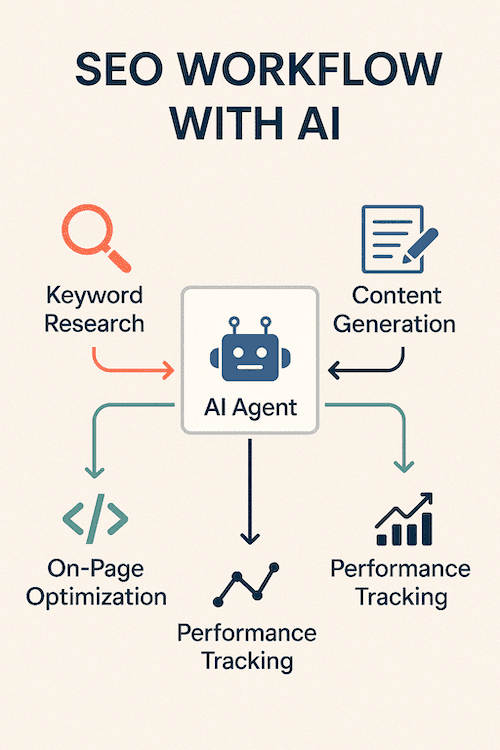
The clearest line runs between execution and strategy. Agents handle the mechanical, data-intensive layer: SERP scraping, technical audits, keyword clustering, content brief generation, CMS formatting, and automated reporting. What stays with people is the work that requires judgment: roadmaps, client prioritization, competitive positioning, and the conversations that turn a deliverable into a retained relationship. Agencies that blur this line, delegating strategy to agents or leaving pure execution to junior staff, tend to produce output that's fast but directionless.
The agentic workflow that has proven most durable involves chained, specialized agents rather than a single generalist tool. One architecture that's emerged in practice: a first agent scrapes SERP data and identifies content gaps, a second clusters topics using semantic analysis, a third generates content briefs from competitor insights, and a fourth hands those briefs to human writers who apply brand voice and original research. Frase has built its platform around this six-stage model, using MCP to connect agents from keyword research through to published, monitored content without manual handoffs.
Where agencies are finding real revenue leverage is in productizing these workflows as client-facing add-ons rather than internal efficiency plays. The market signals support the investment. The AI agents market is projected to exceed $10.9 billion in 2026, up from $7.6 billion in 2025, a compound annual growth rate above 45 percent. BrightEdge internal tracking shows AI bots including GPTBot, ClaudeBot, Perplexity Bot, and Google-Extended now account for roughly 33 percent of organic search activity, a figure that makes automated visibility monitoring a genuine client need, not an upsell gimmick.
Packaging follows the value tier. Automated monthly SEO audits with flagged recommendations sit at the entry level, priced as a lightweight retainer add-on. Automated reporting dashboards, integrated with client analytics, command a mid-tier monthly fee because they replace hours of analyst time. AI-generated content brief packages, where the agency delivers a vetted brief pipeline the client's writers execute against, represent the highest-margin add-on because they're both scalable and easily whitelabeled.

The guardrails matter as much as the workflows themselves. Agencies that have shipped AI-generated audits without a human QA pass have discovered the hard way that hallucinated citations and outdated crawl data can land with clients in a way that's very difficult to walk back. The operational standard that holds up requires a human reviewer on every client-facing output, clearly defined data access permissions so agents aren't pulling from stale or cross-contaminated sources, and documented accountability chains for who owns an error when an automated report is wrong.
Compliance is the piece most agencies underestimate until it becomes urgent. Data residency, client confidentiality agreements, and whether a given AI tool trains on client inputs all require policy decisions before the first workflow goes live. Agencies operating in regulated verticals, including healthcare, finance, and legal, face additional constraints around what can be processed automatically and what requires a licensed professional to review.
The agencies that nail this model treat AI agents the way a well-run newsroom treats wire services: fast, high-volume, and indispensable for raw material, but always filtered through editorial judgment before it reaches the audience. The execution layer scales; the strategic layer is what clients actually pay for.
This article was produced by Prism’s automated news system from verified source data, official records, and press releases, then run through automated quality and moderation checks before publishing. The system is built and supervised by the people who set the standards it runs under. Read our full AI policy.
Did this article answer your question?